What plant is the living stone? Let us introduce you to this peculiar succulent
The living stone belongs to the Aizoaceae family, also known as stone flower, and is native to southern Africa. Next, let us take a look at what kind of plant the living stone is.
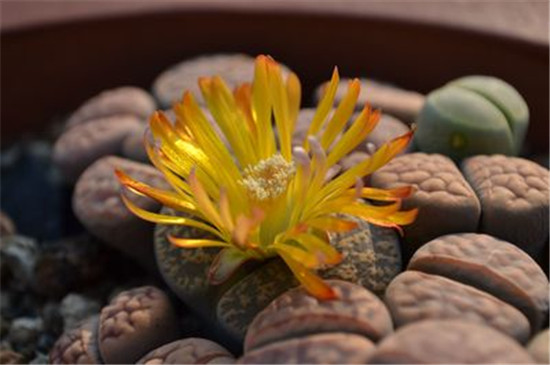
The living stone, also known as stone jade or butt flower, belongs to the Aizoaceae family and is the collective name for species in the genus Lithops, hailed as "living stones". Because of its unique form and brilliant colors, it has become a very popular ornamental plant. It is native to southern Africa, and grows and blooms only outside the rainy season. In the gravel of its native habitat, the living stone is very hard to spot; this is a self-protective trait it developed to prevent small animals from preying on it, called "mimicry".
The living stone is native to southern and southwestern Africa, commonly found in rock crevices and among gravel. It is hailed as "living stones". It grows and blooms outside the rainy season. In the gravel of its native habitat, the living stone is very hard to spot, and this is called "mimicry". Because of its unique form and brilliant colors, it can be used as an ornamental plant.
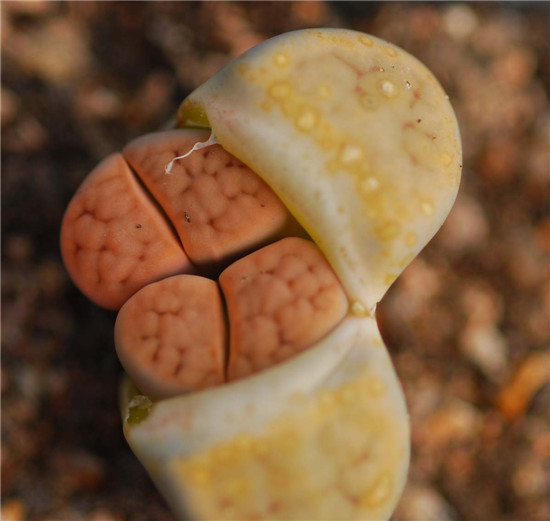
The living stone is a type of succulent plant, mainly produced in South Africa and Namibia. The plant is short and small, mainly formed by two opposite fleshy leaves joined together. The top is flat, with a fissure in the center, and flowers bloom from this fissure.
How to grow the living stone
It likes sunlight, and the optimal growth temperature is 20°C-24°C. In spring and autumn, it should be placed on a south-facing balcony or windowsill for cultivation; this is precisely its vigorous growth period, and it should be watered once every 3-5 days to promote growth and flowering. The growth pattern of the living stone is that it begins to grow between March and April, pauses growth in the hot season, enters a summer dormancy period, then continues to grow and bloom after the autumn cools, and after the flowers fade it enters the overwintering period. It likes sunlight and tolerates high temperatures, but requires good ventilation, otherwise the roots easily rot. It dislikes waterlogging. In winter, the temperature must be kept at 8-10°C.
It is native to the extremely arid, rain-scarce desert gravel areas of Cape Province, South Africa, with annual rainfall below 250mm, an average winter temperature of 10°C, and 20-25°C in summer. It goes dormant in the dry season, and the body gradually shrinks and buries itself in the soil, leaving only the top surface exposed above the ground, resembling gravel. This kind of "mimicry" serves to prevent birds and animals from eating it. To adapt to the environment, it evolved from a dicotyledonous plant into a typical succulent spherical-leaf plant, surviving on the meager moisture saved by the water-storage tissue within its cortex. Its top surface is called the "window". Inside the window there is chlorophyll for photosynthesis. The top is slightly flat, with a fissure in the middle; in autumn, plants 3-4 years old produce yellow, white or pink flowers from this fissure.
Humidity management
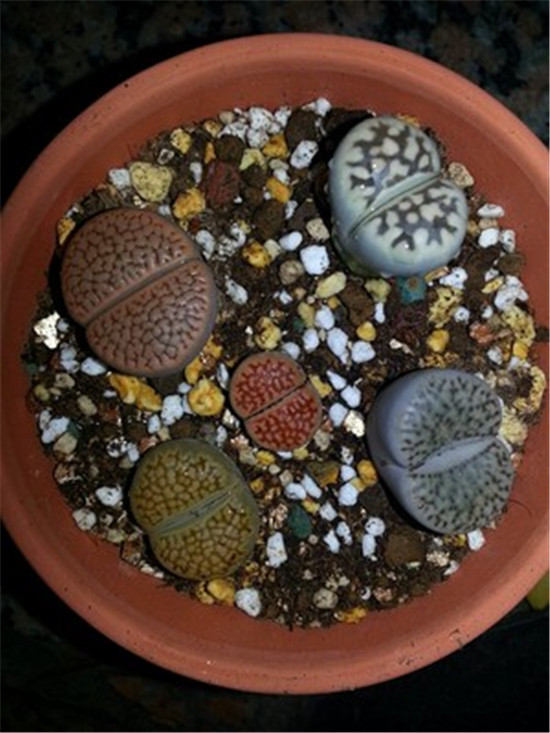
The living stone prefers a relatively dry air environment; if rainy and cloudy days last too long, it is easily infected by pathogens. It is afraid of rain, and the leaves should be kept dry at night. The optimal relative air humidity is 40-60%.
Temperature management
The optimal growth temperature for the living stone is 15°C-25°C. It is afraid of high temperatures and muggy heat, and enters a dormant state when the summer heat exceeds 33°C. It dislikes cold and frost, and the overwintering temperature needs to be kept above 10°C; it also enters a dormant state when the winter temperature drops below 7°C, and if the ambient temperature approaches 4°C, it will die from frost injury.
Fertilizer and water management
The living stone has strong drought tolerance and can grow even under arid environmental conditions, but this does not mean it should not be given water or fertilizer; its root system dislikes waterlogging, and if water accumulates in the pot, or if it is watered and fertilized too frequently, the roots easily rot. The principle for fertilizing and watering it is "alternate dry and wet, dry means thoroughly dry, do not water if not dry, water thoroughly when watering", and when fertilizing and watering, avoid getting the plant wet.
Pest and disease management
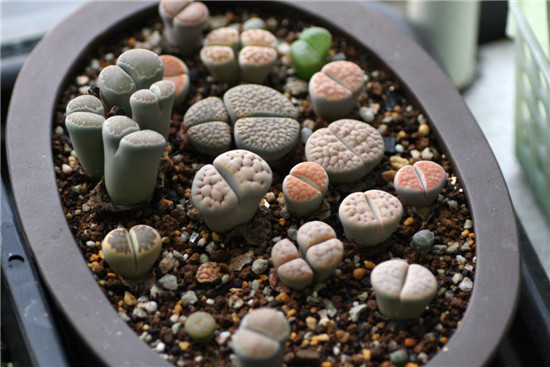
The living stone mainly suffers from leaf spot disease and leaf rot disease, which can be sprayed with 65% zineb wettable powder at 600 times dilution. Pests include ants and root-knot nematodes; use the soil replacement method to reduce nematode damage. To prevent ants, double-pot water-isolation cultivation can be used, so that ants cannot climb onto the tender, juicy spherical leaves.
The above is the full content of my summary of what kind of plant the living stone is. I hope this article can help everyone. Please also continue to follow us.