Is Oncidium easy to grow? Learn these care methods and it won't be difficult
Oncidium, also known as dancing lady orchid, golden butterfly orchid, tuberculate-lipped orchid, etc., has more than 750 native species worldwide. Next, let's take a look at whether Oncidium is easy to grow!
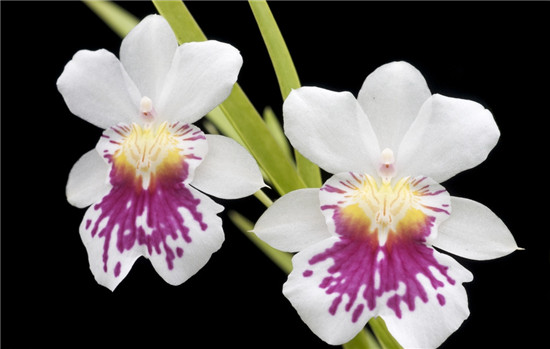
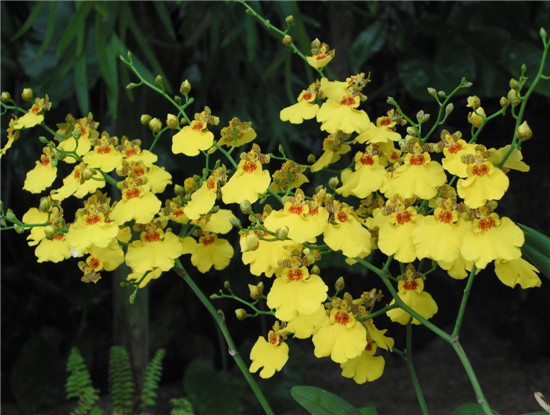
Oncidium, also known as dancing lady orchid, dancing lady orchid, golden butterfly orchid, tuberculate-lipped orchid, etc., has 1-3 leaves and can be divided into thin-leaved species, thick-leaved species and sword-leaved species. It is the general name for plants of the genus Oncidium in the orchid family. The plants are light and elegant, the flower stems are slender and drooping, and the flowers are strange and lovely, shaped like flying golden butterflies, full of dynamism. It is one of the world's important potted flower and cut flower types.
Oncidium has a unique flower shape and high ornamental value. Its inflorescence branches well, the flower shape is beautiful, and the flower colors are bright. The blooming small flowers, swaying in the breeze, are like a group of young women in dresses dancing gracefully, with their hands, heads, waists, bodies and skirts vividly lifelike. Therefore it is also called dancing lady orchid and dancing orchid. It is a new favorite among tropical orchids. Its unrestrained and refined flower posture and gentle, elegant inspiration have earned it the reputation in the floral art world as one of the "five beauties" of cut flowers.
The key cultivation points of Oncidium are:
1. Cultivation materials: in hot and humid places, use tree fern and non-oily broadleaf hardwood to make boards, pots, etc., while in dry climates, use sphagnum moss, fern roots, moss, etc. to plant in porous pots.
2. Daily management: Oncidium generally does not have very strict environmental requirements, but the winter temperature should not be lower than 15°C, and the air humidity should be around 80% in all four seasons. In spring, summer and autumn, it needs a semi-shaded environment. In winter, it can be given sufficient sunlight, but do not expose it to the scorching sun of midsummer.
Oncidium is mostly propagated by division. Generally, do not water immediately after division. When it is slightly dry, spray some water on the leaf surface. Wait until new roots grow, then water, and then spray some balanced fertilizer, but the concentration must not be too high, generally 0.6% to 0.8%. During care, do not water too much, as this easily causes root rot, and attention should be paid to ventilation and light transmission. If there are diseased plants, they should be destroyed in time and sprayed with some fungicides. During the flowering period, temperature and humidity should not be too high or too low, as this will affect flower longevity, shorten the flowering period, and even cause bud drop or early withering.
The ecological habits of Oncidium
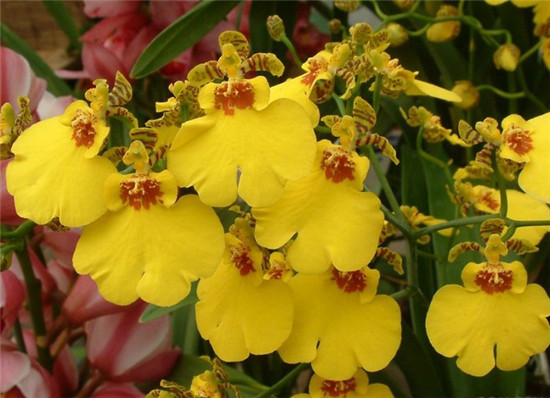
Oncidium is native to the United States, Mexico, Guyana and Peru. Original-leaf type (also called hard-leaf type) Oncidium prefers warm environments, while thin-leaf type (also called soft-leaf type) and sword-leaf type Oncidium prefer cool climates. The suitable growth temperature for thick-leaf type Oncidium is 18-25°C, and the winter temperature should not be lower than 12°C. The suitable growth temperature for thin-leaf type is 10-22°C, and the winter temperature should not be lower than 8°C.
Oncidium prefers humid and semi-shaded environments. In addition to watering to increase substrate moisture, spraying water on the leaves and ground is more important. Increasing air humidity is more favorable for the growth of leaves and flower stems. Hard-leaf type varieties have strong drought tolerance. Not watering for a long time in winter did not cause them to dry out and die, showing very strong endurance. Large-scale production requires shade nets, with a shading rate of 40%-50% being suitable. In winter, sufficient sunlight is needed, and shade nets are generally not used, which is beneficial for flowering.
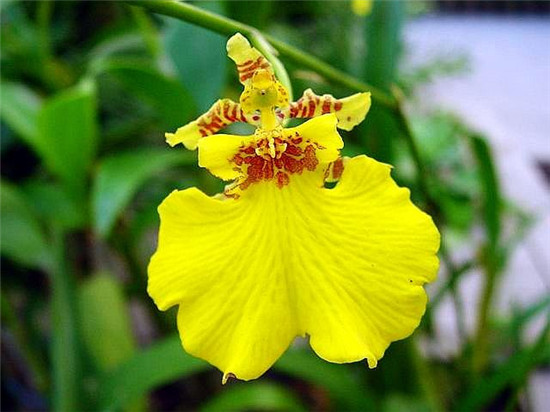
Use fern roots, moss, volcanic ash, bark chunks, etc. for pot cultivation or bed cultivation. Thin-leaf species have relatively thin leaves.
The above is the full content of my summary on whether Oncidium is easy to grow and how to care for Oncidium. I hope this article can help everyone. Please also continue to follow us.