How to care for lilacs? These care points you need to master
Lilac, also known as purple lilac, is a common ornamental flower that is very suitable for planting in courtyards. Next, let's take a look at the key care points for lilacs.
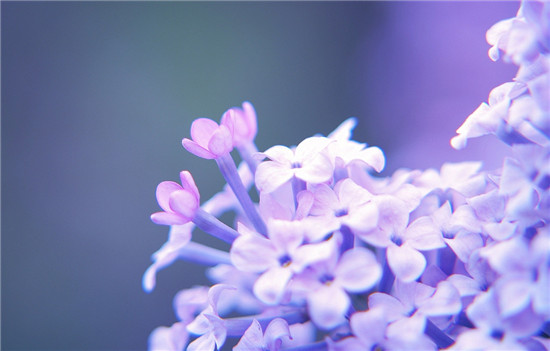
Red lilac, a shrub, up to 4 m tall. Branches upright, stout, grayish brown, with lenticels; branchlets pale grayish brown, glabrous or slightly pubescent, with lenticels. Leaves ovate, elliptic-ovate, broadly elliptic to obovate-oblong, 4-11 (-15) cm long, 1.5-6 (-11) cm wide, apex acute or shortly acuminate, base cuneate or broadly cuneate to nearly rounded, dark green and glabrous above, powdery green beneath, with appressed sparse pubescence or only bearded pubescence or pubescence along the veins, rarely glabrous; petiole 0.8-2.5 cm long, glabrous or slightly pubescent. Fruit oblong, 1-1.5 cm long, about 6 mm wide, apex mucronate, lenticels inconspicuous. Flowering period May-June, fruiting period September.
Red lilac is distributed in the coastal waters of southeastern North America. Its appearance is similar to cranberry. The emersed leaves are small and lanceolate, arranged in opposite pairs in a cross shape. Apart from the reddish color at the leaf base and stem, from a distance it looks like a green aquatic plant. The submerged leaves are narrowly lanceolate, 3 cm long and 0.4 cm wide. Those sold commercially are mostly emersed leaves. If it is moved into water for cultivation, it will gradually change into submerged leaves. During the process of becoming submerged, water quality conditions must be noted (pH 6.0-7.2, temperature 18-26 degrees), otherwise it is prone to withering. Actually, growing red lilac is not difficult, but getting it to produce a beautiful vermilion red is a test of skill, because if conditions are not very good, its color will be yellow-green or pale orange, and it will not be able to show the characteristics of a red aquatic plant. Therefore, attention must be paid to light quality and fertilizer!
Lilac care methods
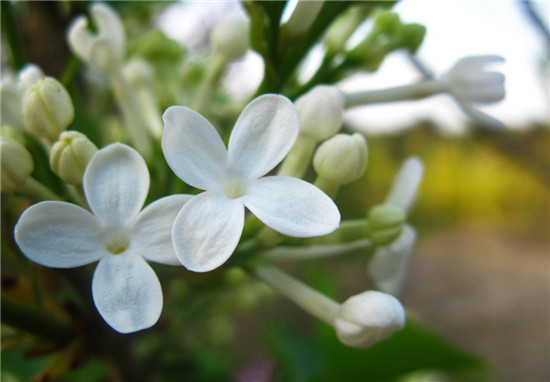
Lilacs have a graceful posture, abundant purple flowers, and a pleasant fragrance. Using the root stump of small-leaf privet as rootstock to graft lilac and make a bonsai creates an effect of ancient trunks and flowering branches that bring out the best in each other, and it is extremely ornamental. Plants of the genus Syringa are sun-loving trees that prefer to grow in places with ample sunlight; in shady or semi-shady places they grow weak and spindly, and bloom sparsely. They are not strict about soil and can tolerate poor, thin soil. Except for strongly acidic soil, they can grow normally in all types of soil, with loose neutral soil being best.
Placement: Lilacs like light, so they should usually be placed in a sunny, well-ventilated spot. But in summer they need a little shading; high temperatures and sunscald are unfavorable to the growth of potted lilacs. In winter, bury the pot outdoors in a sunny spot or move it indoors in front of a windowsill.
Watering: Usually keep the potting soil moist but on the dry side, and never let it become too wet. In summer during high temperatures, water once in the morning and once in the evening. After autumn, water less to help it enter dormancy and overwinter.
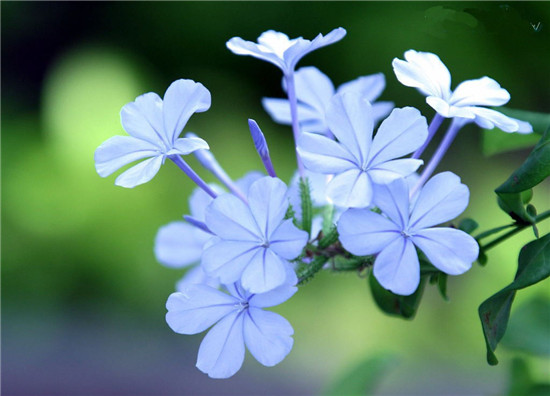
Fertilizing: In winter, apply decomposed cake fertilizer as a base fertilizer. After spring growth begins, apply cake fertilizer water once every half month to promote flowering. In summer, fertilizer should also be applied appropriately to help flower bud differentiation and keep the plant flowering abundantly the following year. After autumn, reduce fertilizer and water; too much fertilizer is harmful to development.
Pruning: During the growing season, when branches and leaves are too dense, prune promptly, so as not to disrupt the tree shape and to help ventilation and light penetration. After autumn, when it enters dormancy, carry out appropriate shaping and pruning, cutting off leggy branches, overlapping branches, and crossing branches, so that nutrients are concentrated and more flower buds are produced.
Repotting: Repot once every 2-3 years. Along with repotting, prune the root system, remove some old roots and overly long roots, pick out 1B2 of the old soil, and replace it with new potting soil, to promote root development and abundant leaves and flowers.
Pest and disease control: Under overly wet conditions, lilacs are prone to root rot; in mild cases growth stops, and in severe cases they wither and die. Common pests of lilac include the house longhorn beetle, which damages branches and trunks; there are also bagworms, stinging moths, aphids, and others that damage young shoots and leaves. They can be killed by spraying with a 1500-fold dilution of 40% dimethoate.
The effects and uses of red lilac
1. The ornamental value of red lilac
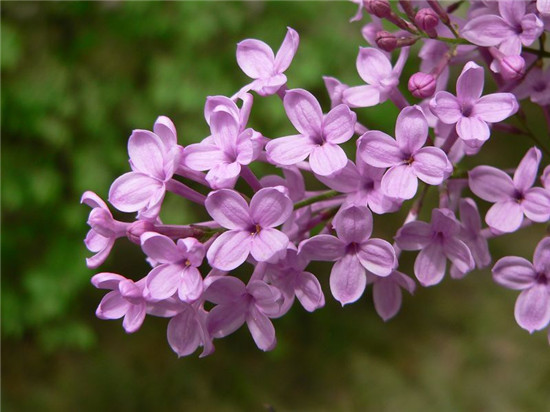
The inflorescences of red lilac are neatly arranged and look orderly. Moreover, its flower color is relatively elegant, and its overall posture and shape are also very beautiful, so it has strong ornamental value. Of course, we also know that red lilac's vitality and adaptability are also very strong, and it is cold-resistant and hardy, so it can be cultivated artificially, and only a very small amount of manpower and material resources is needed to obtain beautiful red lilacs.
2. The garden value of red lilac
Speaking of the ornamental value of red lilac, we cannot fail to mention its garden value. Red lilac is generally planted on lawns or roadsides and used as part of the scenery. Of course, it can also be transplanted and cultivated. The survival rate of red lilac is very high, and there is almost no need to worry that it will die from transplanting, so we often plant red lilac for its garden value.
3. Other values of red lilac
Red lilac itself has relatively outstanding flower shape and color, so in addition to ordinary potted cultivation, it is also a very good cut flower material. It can be used as a preferred cut flower material for vase arrangements, becoming an ornamental artwork full of charm. In the hearts of many people who love cut flowers, red lilac must surely be a rather unique one!
The above is all the content I have summarized for you on how to care for red lilac and the key care points for red lilac. I hope this article can help everyone. Please also continue to follow us.
There is almost no need to worry that it will die from transplanting, so we often plant red lilac for its garden value.3. Other values of red lilac
Red lilac itself has relatively outstanding flower shape and color, so in addition to ordinary potted cultivation, it is also a very good cut flower material. It can be used as a preferred cut flower material for vase arrangements, becoming an ornamental artwork full of charm. In the hearts of many people who love cut flowers, red lilac must surely be a rather unique one!
The above is all the content I have summarized for you on how to care for red lilac and the key care points for red lilac. I hope this article can help everyone. Please also continue to follow us.