What do different colors of hyacinths mean?
Hyacinths are native to the eastern Mediterranean coast and prefer a cool, moist, sunny environment. When hyacinths bloom they are extremely gorgeous and beautiful, giving a sense of vigorous vitality, and are loved by many people. They also carry many floral meanings, and hyacinths of different colors each have different meanings. What do hyacinths represent? What different meanings do hyacinths of different colors have? Here the editor has compiled the relevant knowledge and content for everyone, so that while growing your own favorite hyacinths, you can also master more knowledge about hyacinths.
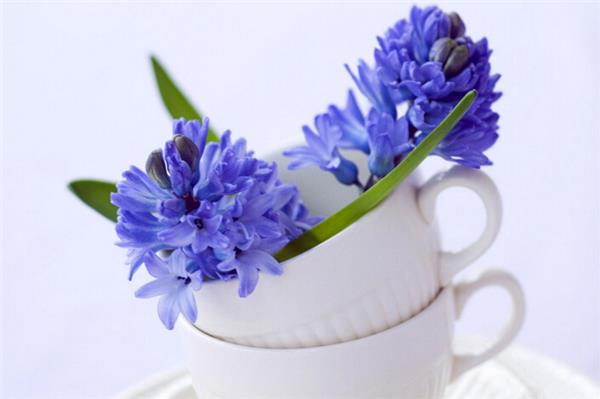
What do hyacinths represent
The floral language and symbolic meaning of hyacinth: as long as you light the fire of life, you can share a rich life
The floral language of the red hyacinth is - touching love
The blue hyacinth is the ancestor of all hyacinths, so its floral language is - life.
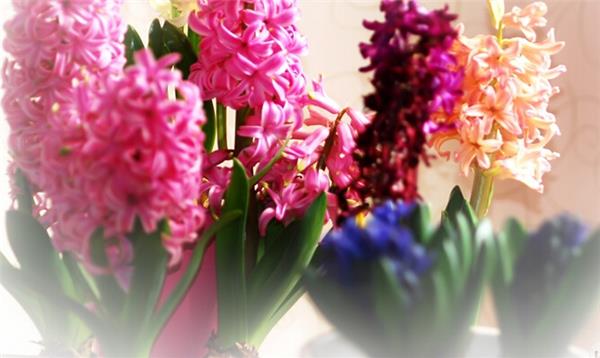
Hyacinth floral language: victory, competition, joy, affection, happiness, deep passion, admiration, stubbornness, life
Purple hyacinth: sorrow, jealousy, melancholy love (having gained my love, you will surely be happy)
White hyacinth: serene, quiet love (love one dares not reveal)
Red hyacinth: love that moves me (your love fills my heart)
Blue hyacinth: constancy, chastity, as happy as seeing you.
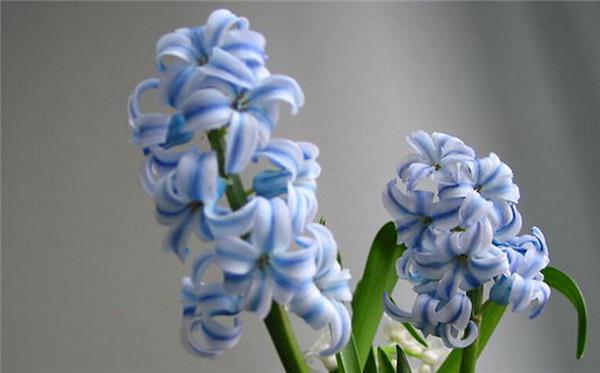
Yellow hyacinth: happiness, bliss, very happy to be with you
Pink hyacinth: admiration, romance
There is also a beautiful legend about the hyacinth:
Legend has it that the handsome young man Hyacinthus and the sun god Apollo were good friends, and the west wind god Zephyrus also liked Hyacinthus very much and was often jealous because of this, but Hyacinthus always preferred Apollo and often played with him. One day, when they were happily throwing the discus on the grassland, Zephyrus, who happened to be hiding in the bushes, discovered them, felt very unhappy, and wanted to play a trick on them.
When Apollo threw the discus toward Hyacinthus, the jealous west wind god secretly blew hard from the side, and unexpectedly struck the heavy discus against Hyacinthus' forehead. In an instant the blood flowed like a column, and this handsome young man thus breathed his last. In his alarm, Apollo, heartbroken, picked up his lifeless friend and sighed "Ai! Ai!", and saw blood continuously gushing from Hyacinthus' wound, falling to the ground and flowing into the grass.
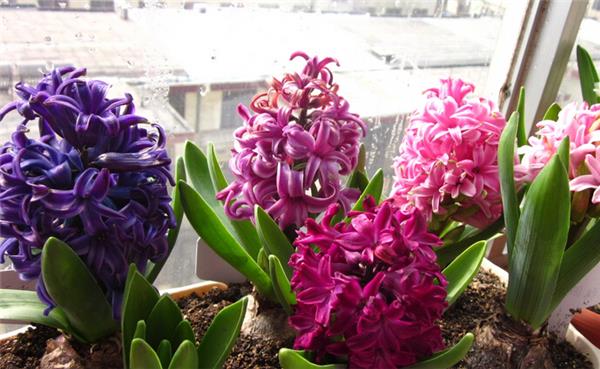
Not long after, strings of purple flowers unexpectedly bloomed among the grass. To express his apology, Apollo used the name of the beautiful young man as the flower's name, which we translate directly as "hyacinth". The purple hyacinth has since been regarded by later generations as the spokesperson of "jealousy"; in Greek, Ai and Aei (meaning "forever") are synonymous, so the hyacinth also symbolizes "forever remembrance", and no wonder Europeans and Americans often carve the hyacinth pattern on the tombstones of relatives, to show "everlasting remembrance".
Europeans have a special feeling for hyacinths. Venus, the goddess of beauty and love, most liked to gather the dew attached to hyacinth petals, making her skin more beautiful and smooth. In the UK, the blue hyacinth has always been an indispensable representative in bridal bouquets or floral decorations at weddings, symbolizing the purity of the newlyweds and the hope of bringing happiness.
The general method for growing potted hyacinths is to plant the bulbs in nutrient pots in September, place them in the sun for care, move them into a greenhouse in November, and they can bloom by the Spring Festival of the following year. Below is a detailed explanation of the knowledge and requirements for growing hyacinths.
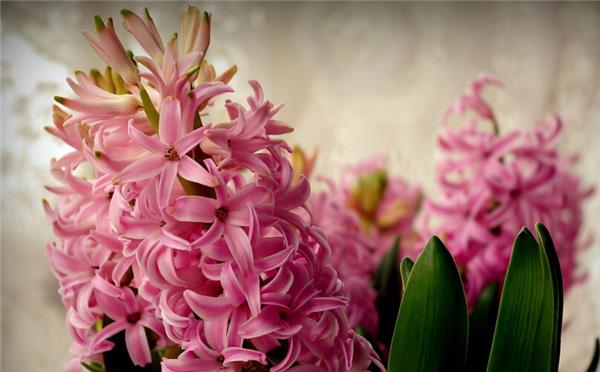
How to grow hyacinths
❉——1. Bulb selection: since the nutrients needed for hyacinth blooming mainly rely on the nutrients stored in the scaly leaves of the bulb, only by choosing bulbs with undamaged skin, flesh scales that are not excessively shriveled, relatively hard and heavy, and plump, can abundant and beautiful flowers be produced.
❉——2. Soil requirements: growing hyacinths requires fertile soil with high organic matter content, preferably well-drained sandy soil. Before planting, the soil should be moistened and left to stand for a day before planting. Frequent topdressing is required during the growth period. For ground planting, the soil should be loosened in time after the seedlings emerge. One topdressing can be applied in winter, and one more each before blooming in spring and after the flowers fade.
❉——3. Light: growing hyacinths requires maintaining sufficient sunlight to ensure normal growth. If the light is too weak, it will cause the hyacinth plants to be thin and weak, the buds to be small, the flowers to fade early, and the leaves to turn yellow. At this time, an incandescent lamp can be used about 1 m away to supplement light; but too strong light can also cause burns to the leaves and petals or shorten the flowering period. Before the bulb sprouts, it should not be placed under direct sunlight.
❉——4. Temperature and humidity regulation: too high a temperature will cause deformed growth of hyacinths and a high rate of blind flowers, so it is best to keep it below 15°C. Humidity can be increased by spraying and sprinkling water on the ground, and methods such as ventilation can also be used to reduce humidity; while too low a temperature will cause frost damage to the flower buds. During the growth of hyacinths, the root system grows best when the bulb is at a low temperature of 2-6°C. Soil humidity should be maintained between 60-70%. If too high, root respiration is inhibited and rot easily occurs; if too low, the aboveground parts wilt and may even die.
❉——5. Water culture of hyacinths: there should be a 1-2 cm space between the water surface and the bulb. Never submerge the bottom of the bulb in water. Instead, place the bulb on the mouth of the bottle. After roots develop, the water level can be lowered to just touch the roots, so that the roots can fully absorb oxygen and promote the growth of rootlets. After the roots develop, black cloth can be used to cover the container so the bulb can develop further.
At the same time, keep the water in the bottle clean and change the water once a week. If nutrient solution has been added, decide the number of water changes according to the degree of cloudiness of the water. When the bulb's sprout grows to 5 cm, place the whole bottle in a dark place. After the root system has fully grown, move it to a warm south-facing windowsill with sufficient scattered light, and often add water so that the water reaches the bulb.
 The above is the explanation of hyacinth floral language and how to grow hyacinths summarized by the editor, hoping to help people who like hyacinths better understand and care for them.
❉——4. Temperature and humidity regulation: too high a temperature will cause deformed growth of hyacinths and a high rate of blind flowers, so it is best to keep it below 15°C. Humidity can be increased by spraying and sprinkling water on the ground, and methods such as ventilation can also be used to reduce humidity; while too low a temperature will cause frost damage to the flower buds. During the growth of hyacinths, the root system grows best when the bulb is at a low temperature of 2-6°C. Soil humidity should be maintained between 60-70%. If too high, root respiration is inhibited and rot easily occurs; if too low, the aboveground parts wilt and may even die.
❉——5. Water culture of hyacinths: there should be a 1-2 cm space between the water surface and the bulb. Never submerge the bottom of the bulb in water. Instead, place the bulb on the mouth of the bottle. After roots develop, the water level can be lowered to just touch the roots, so that the roots can fully absorb oxygen and promote the growth of rootlets. After the roots develop, black cloth can be used to cover the container so the bulb can develop further.
At the same time, keep the water in the bottle clean and change the water once a week. If nutrient solution has been added, decide the number of water changes according to the degree of cloudiness of the water. When the bulb's sprout grows to 5 cm, place the whole bottle in a dark place. After the root system has fully grown, move it to a warm south-facing windowsill with sufficient scattered light, and often add water so that the water reaches the bulb.
The above is the explanation of hyacinth floral language and how to grow hyacinths summarized by the editor, hoping to help people who like hyacinths better understand and care for them.