What is the flower language and meaning of lily of the valley?
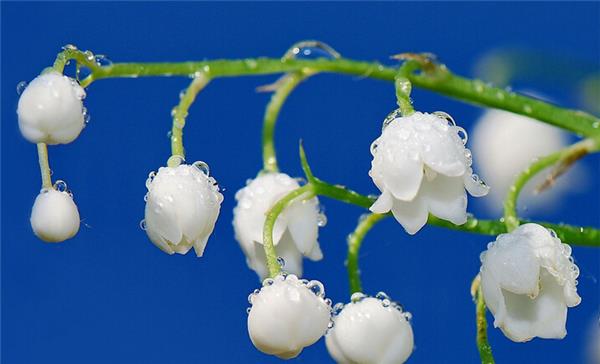
Lily of the valley is also known as Junying orchid. It belongs to the Liliaceae family. Its milky-white flowers hang like strings of bells, blooming only in early summer. Pure and noble, exquisitely elegant, with a rich fragrance that drifts and floats, penetrating deep into the heart. It grows at altitudes of 800 to 2500 m at relatively high latitudes. In autumn it forms deep ruby-red berries that taste bitter and are poisonous. It is cold-hardy and loves moisture, and must absolutely avoid heat and dryness. So what is the flower language of such a distinctive lily of the valley?
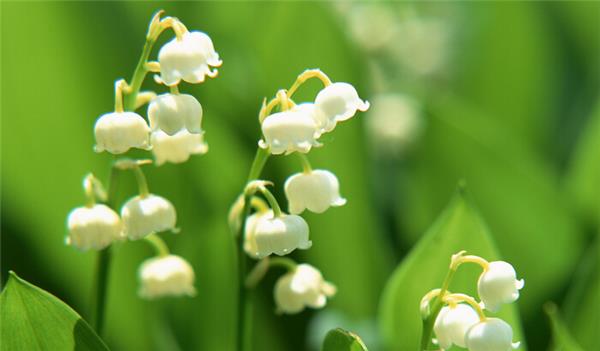
Lily of the valley flower language: the return of happiness.
The lily of the valley has a small, delicate form, a pleasant floral scent, and small bell-shaped flowers. In France, lily of the valley is a symbol of purity and happiness. Every year on May 1, French people give each other lily of the valley to wish one another a year of happiness. The recipient usually hangs the flowers in a room and keeps them for the whole year, symbolizing that happiness will stay forever.
Just like the sorrowful legend of the lily of the valley's origin, the happiness of the lily of the valley comes with unusual difficulty, accompanied by a faint sorrow of fate. The lily of the valley's waiting is like the barely perceptible sigh of stars in the wind, vast and serene, sensed only by those who care; the lily of the valley's temperament is as pure and translucent as the steadfast, gentle faith in love of a woman in the wind, which can be tasted only with focused attention.
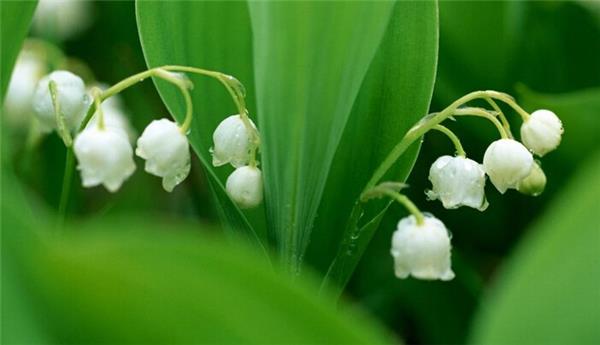
In the West, lily of the valley is believed to have been formed from the tears of the Virgin Mary mourning Christ. Lily of the valley is called "Our Lady's Tears," that is, the tears of the Virgin, and many also translate it as a woman's tears. In France it symbolizes love. A woman can send this flower to convey her love to her beloved, and it can also be given to the bride at a wedding, foretelling that the newlyweds will have "happiness arrive."
Lily of the valley, lily of the valley, sounds like a very beautiful name. It is a plant, a plant with white flowers and a rich fragrance, and it is the only species in the genus Convallaria. Besides the alternative names Junying grass and windbell grass, its English names are even more poetic: lily of the valley, Our Lady's Tears, and ladder to heaven. So what characteristics does the lily of the valley itself possess?
♣1. It is a small flowering plant.
The flowers of lily of the valley are bell-shaped, growing at the top of the flower stem, and form a raceme that leans to one side, with a very elegant shape. It has many branched rhizomes creeping on the ground, and the plant is short. In spring, the lily of the valley grows leaves from the terminal bud at the front of the rhizome. The leaf stalk is about 16 cm long, sheath-like and clasping each other, with several sheath-like membranous scales at the base. It blooms in May and June, usually with 4 to 6 flowers on one stem, milky white, carrying a rich fragrance. When the wind blows, the fragrance drifts around, intoxicating people.
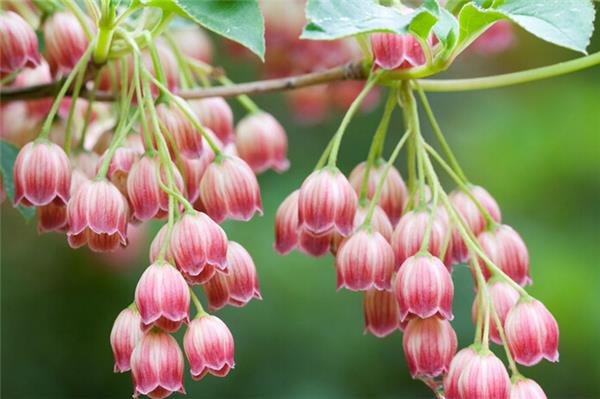
♣2. It has many medicinal values.
Lily of the valley can be used as medicine from the whole plant. After the fruit ripens in summer, the lily of the valley can be dried in the sun and used as medicinal material. Infusions of lily of the valley leaves, stems, or the whole plant, as well as alcoholic extracts of the whole plant, all have digitalis-like effects, can strengthen myocardial contractility, and have a more pronounced effect on the failing heart; it slows the heart rate, inhibits conduction, and has cardiac glycoside effects. In addition, lily of the valley has a clear diuretic effect. Clinically, it can also calm patients, improve sleep, and reduce restlessness. It can improve pulmonary circulation, increase oxygen uptake by brain tissue, and increase the oxygen tension of skeletal muscle.
♣3. Its living environment.
Lily of the valley likes a moist, cool, or semi-shaded environment, has very outstanding cold resistance, and is relatively averse to heat and dryness. It is best cultivated in well-drained sandy soil that is also fertile. If the temperature is above 30 degrees C, the leaves will turn yellow and withered, so attention must be paid to temperature regulation. Therefore, lily of the valley is small and exquisite, and is mostly used for cut flowers and potted plants, winning the affection of many people.
Among green flowering plants, many have the ability to eliminate toxic chemical substances. Sometimes plant leaves and roots and stems can absorb harmful gases, and their contribution is indispensable. Lily of the valley of course also has its effects. So what are the effects of lily of the valley on the home environment?
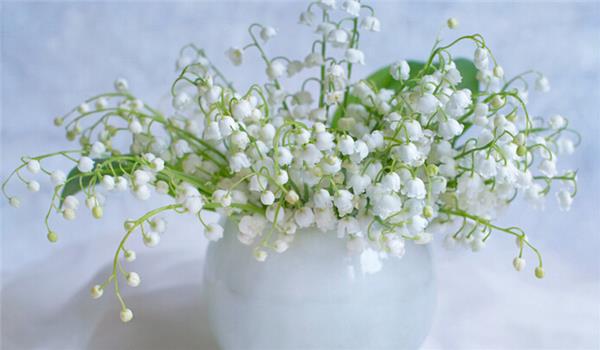
The effects of lily of the valley on the home environment.
♣1. Lily of the valley can kill germs in the home.
Like roses, dianthus, lemons, and other plants, lily of the valley is also a fragrant flower with a rich scent, and the volatile oils it produces have a clear sterilizing effect. Placed at home, the fragrance it releases has an inhibitory effect on the growth and reproduction of Mycobacterium tuberculosis, pneumococcus, and Staphylococcus, and has a protective effect on both adults and children at home.
♣2. It acts as an air purifier.
We place some flowers and plants in the home. Besides beautifying the home, there are many benefits. Many plants have the function of an air purifier, and lily of the valley is one of them. Although it does not have as strong a toxin-absorbing ability as spider plants or aloe, it can also absorb carbon dioxide, release oxygen, and increase negative ions in indoor air. Its fragrance in particular can make the air fresh and healthy. With a pot of lily of the valley nearby, you will have better spirits whether at work or in daily life. Moreover, many flowering plants have a dust-removal effect, and lily of the valley flowers can also intercept and absorb floating particles and smoke dust in the air, reducing the impact of dust on household cleanliness.
♣3. Lily of the valley can help people relax.
Fresh flowers are not only beautiful, but can also improve people's physical condition. Take lily of the valley: during a meeting it gives off fragrance, and when a breeze blows, waves of intoxicating scent fill the room, allowing people to relax, and their spirits also become pleasant. Living in such an environment often can also give good sleep and improve one's work efficiency.
 The flower language of lily of the valley foretells happiness. Not only does the flower language of lily of the valley symbolize goodness, but lily of the valley also has good characteristics in other aspects. Lily of the valley can not only decorate the home, but also has an obvious regulating effect on the environment, can meet people's health requirements, and also lets people feel the beauty of nature.
♣3. Lily of the valley can help people relax.
Fresh flowers are not only beautiful, but can also improve people's physical condition. Take lily of the valley: during a meeting it gives off fragrance, and when a breeze blows, waves of intoxicating scent fill the room, allowing people to relax, and their spirits also become pleasant. Living in such an environment often can also give good sleep and improve one's work efficiency.
The flower language of lily of the valley foretells happiness. Not only does the flower language of lily of the valley symbolize goodness, but lily of the valley also has good characteristics in other aspects. Lily of the valley can not only decorate the home, but also has an obvious regulating effect on the environment, can meet people's health requirements, and also lets people feel the beauty of nature.