How to Grow Clivia: A Guide to Cultivating Excellent Clivia
Clivia is a herbaceous plant of the genus Clivia in the Amaryllidaceae family. Its leaves grow opposite each other, and it can absorb dust and pollutants from the air. Its growth period is long, up to 4-5 years, but its flowering period is also long, lasting 1-2 months, usually blooming from December each year to March of the following year. The planting process and growing methods of Clivia are very simple. Clivia is divided into two types: soil culture and water culture. What are these two growing methods like?
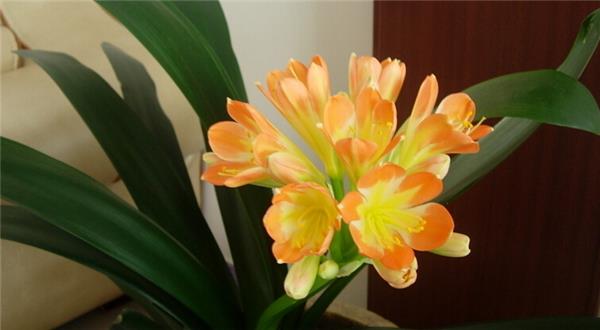
Soil Culture Growing Methods for Clivia
Clivia is relatively easy to cultivate. First, choose good potting soil and place it near a window indoors, adjusting fertilizer and water according to local temperature characteristics. During the growing period, keep the potting soil moist; during the high-temperature semi-dormant period, the potting soil should be on the drier side, and spray water on the leaves frequently to achieve cooling. Clivia likes fertilizer. Every 2 to 3 years in spring or autumn, repot once and add decomposed cake fertilizer to the potting soil. Each year before the growing period, apply 5 to 40 grams of decomposed cake fertilizer beneath the surface of the potting soil, and apply liquid fertilizer once during growth. During management, turn the pot frequently to prevent leaves from leaning to one side; if they lean, correct them promptly. When the temperature is 25 to 30 degrees, leaves tend to grow excessively, making them narrow and long and affecting the ornamental effect, so when cultivating Clivia, be sure to regulate room temperature.
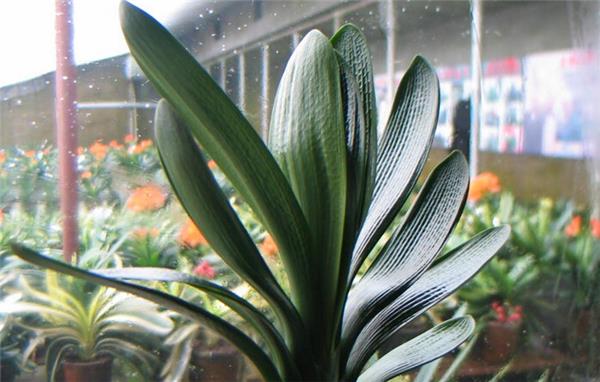
♣--① Suitable Soil
Clivia is suitable for soil rich in humus. This kind of soil has good air permeability, good water permeability, and is fertile with slight acidity (pH 6.5). The general soil mix for Clivia is 6 parts leaf mold, 2 parts pine needles, 1 part river sand or furnace ash residue, and 1 part base fertilizer (hemp seed, etc.). Leaf mold mainly refers to oak leaves, also called oak. This kind of leaf is thick in texture and is very good humus. It is nutritious and has good water permeability. Other leaves are too thin and disappear after decomposition, so they cannot be mixed with other media to make soil. When cultivating, use pots that gradually increase in size as the plant grows. For one-year-old seedlings, use a 3-inch pot. In the second year, switch to a 5-inch pot, and afterward repot into a pot one size larger every 1-2 years. Repotting can be done in spring and autumn.
♣--② Proper Watering
Clivia has relatively well-developed fleshy roots, and the roots store a certain amount of water, so this flower is relatively drought-tolerant. However, even drought-tolerant flowers cannot be severely short of water, especially in summer when high temperatures combine with dry air, when you must not forget to water promptly; otherwise, the roots and leaves of the flower will be damaged, causing new leaves to fail to sprout and the original leaves to scorch, which not only affects flowering but may even cause the plant to die. However, too much watering will cause root rot. So you must master it well and always pay attention to the dryness and moisture of the potting soil. When it becomes half-dry, water once, but the amount should not be too much. Keeping the potting soil moist but not soggy is just right.
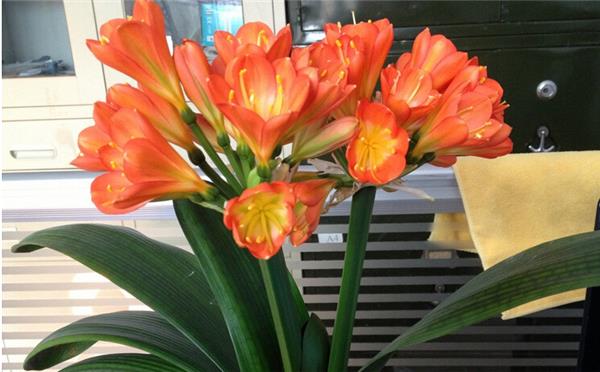
If conditions permit, magnetized water is of course best; next is rainwater, snow water, or living water from rivers; next is pond water; and the worst is tap water. Flower growers living in large cities only have tap water available, so you can use a small water jar or basin or bucket, put the tap water in it, and water after 2-3 days. This allows some harmful impurities in the water to settle. In addition, it allows the substances contained in the water to be oxidized and purified, and can bring the water temperature close to the potting soil temperature, so it will not be too cold or too hot and harm the plant.
♣--③ Reasonable Fertilization
Many flowers like fertilizer, but fertilizing fertilizer-loving flowers also has a limit. Too much fertilizer is not good for growth and may even cause root rot or scorching of the plant. Clivia also belongs to this type of plant, and fertilization must be done in appropriate amounts. Flowers have different nutrient requirements at different stages of growth and development. Therefore, different fertilization methods suitable for the plant's needs should be adopted at each stage. Examples include base fertilizer, top dressing, and foliar fertilization.
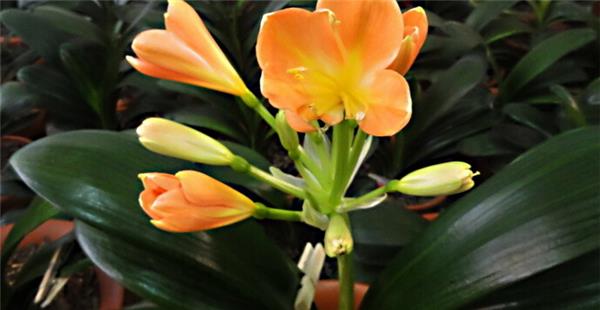
(1) Apply base fertilizer (also called basal fertilizer). The purpose is to create conditions for plant growth and development and meet its nutrient needs. Base fertilizer for Clivia should be applied when repotting every 2 years. Commonly used fertilizers applied into the soil include barnyard manure (that is, poultry and livestock manure), compost, green manure, bean cake fertilizer, etc.
(2) Top dressing. It is mainly to promote plant growth. Clivia can be given fertilizers such as cake fertilizer, fish meal, and bone meal. Apply less at the initial planting stage, and later, as the plant grows and the number of leaves increases, the amount of fertilizer should gradually increase. When fertilizing, scrape aside the potting soil and apply it into the soil at a depth of 2-3 cm, but note that the fertilizer applied should not be too close to the root system to avoid burning the roots. Applying this kind of solid fertilizer once a month is generally enough; it should not be more frequent.
(3) Apply liquid fertilizer as top dressing. Applying liquid fertilizer as top dressing means diluting the decomposed supernatant of soaked and fermented animal and plant materials with 30-40 parts clear water and pouring it onto the potting soil. For small seedlings, dilute with 40 times water; for medium seedlings, dilute with 30 times water; for large seedlings, only 20 times water is needed. After applying the fertilizer solution, water once with clear water 1-2 days later (the amount of water should not be too much), so that the fertilizer penetrates to the roots in the potting soil and fully exerts its fertilizing effect. Do not water 1-2 days before applying liquid fertilizer; let the potting soil be somewhat dry before applying the fertilizer solution, which is more effective. The best time to fertilize is early morning; when pouring, let the fertilizer solution flow in along the edge of the pot, and be careful to avoid applying it on the plant and leaves.
(4) Foliar top dressing. Fertilizing by this method is mainly to make up for the lack of nutrients in the soil, to solve the problem of nutrient deficiency in the plant, so that seedlings grow quickly and flowers and fruits grow large and plump. Foliar fertilization is spraying the diluted fertilizer solution directly onto the leaf surface of the plant with a sprayer, allowing nutrient elements to penetrate through the leaf epidermal cells and stomata into the leaf tissues and then be transported throughout the plant. Commonly used fertilizer varieties include urea, monopotassium phosphate, superphosphate, etc. When spraying, spray evenly on both the front and back sides of the leaves. Spray once every 4-6 days during the growing season, and once every 2 weeks during semi-dormancy. Generally, spray after sunrise, and stop spraying after the plant blooms. It must be noted that this method can only be used when the plant is found to be deficient in fertilizer. If the plant has sufficient nutrients and is growing vigorously, it should not be used.
♣--④ Cooling in Summer
In midsummer, the temperature is often above 30°C, which is extremely unfavorable for the growth of Clivia. For this reason, people generally build shade frames to cool it down. You can also bury the Clivia together with its pot in sand (bury the pot completely), and then sprinkle water on the sand once each morning and evening. This not only keeps the potting soil moist, but more importantly, it can achieve the cooling purpose by using the heat absorption effect of water evaporation from the sand.
♣--⑤ Later Stage Management
The flowering period of Clivia is generally from February to April. After flowering, the flowering period can be extended by appropriately lowering the temperature, improving ventilation, and reducing light. The length of the Clivia flowering period can be controlled through people's cultivation techniques.
Water Culture Growing Methods for Clivia
※--Container Selection--※
To grow Clivia hydroponically, you must first choose a good container. Generally, a transparent glass container is better. If growing one seedling, only a glass canning jar is needed. If growing a large number hydroponically, you can use thin iron wire to weave a metal mesh with a hole diameter of one centimeter, then make a glass hydroponic box slightly smaller than the metal mesh; or you can use a goldfish tank instead. Then cover the hydroponic box with the metal mesh, insert the Clivia seedlings through the mesh holes into the nutrient solution separately, with the depth of the flower roots in the culture solution limited to not exceeding the pseudobulb at the base of the roots.
※--Nutrient Solution Preparation--※
Nutrient solutions are divided into inorganic and organic types. The inorganic nutrient solution can be prepared in the following proportions: calcium 1.5 grams, ferrous sulfate 0.01 grams, urea grams, monopotassium phosphate 1 gram, magnesium sulfate 0.5 grams. After these 5 inorganic salts are all prepared, dissolve them in 1000 grams of water and it is ready to use. The organic nutrient solution is prepared as follows: 100 grams of roasted hemp seed powder, 100 grams of bone meal (made from unsalted fresh bones), 150 grams of bean cake powder, 50 grams of roasted sesame powder, then dissolve in 1000 grams of water. Comparing the above two nutrient solutions, the organic fertilizer has rich components but low nutrient content, while the inorganic fertilizer has relatively single components but strong fertilizing effect and quick results. To make up for each other's shortcomings, the two can be used in combination. If used alone, apply the inorganic fertilizer once a week and the organic fertilizer once every 5 days.
※--Water Use--※
For hydroponic Clivia, do not use tap water directly; you must use water that has been "aged." So-called "aged" water means putting tap water in a container and exposing it to sunlight for 3-5 days, so that chlorides such as bleaching powder that are harmful to Clivia roots settle out. From the appearance of "aged" water, the sediment changes from strip-like to clump-like, and the water color is best when green. After the water is "aged," the position where the roots are submerged must not submerge the pseudobulb. If the water level is too shallow, Clivia cannot get a sufficient water supply; if the water level is too deep (submerging the pseudobulb), it will cause root rot. During cultivation, pay attention to observing changes in water quality. If the roots are found to be somewhat yellow or black, it means the water is both short of oxygen and low in fertilizer, and the water must be changed immediately.
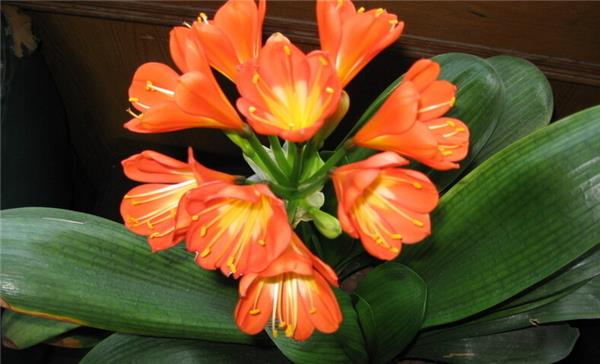
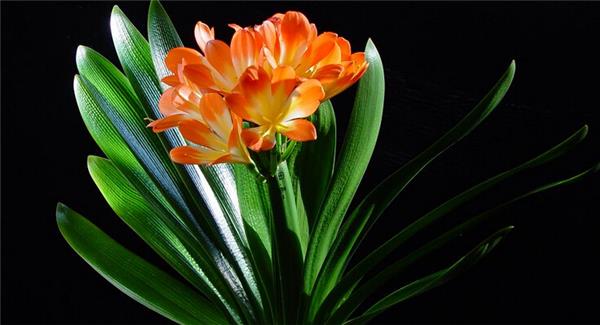
The flowers of Clivia do not have the magnificence of peonies, nor the rich fragrance of jasmine, and still less the colorful beauty of Chinese roses, but it has sword-like green leaves, broad, thick, and glossy; fire-like red flowers, standing gracefully in bloom, with red and green setting each other off, making it an ideal potted flower for beautifying the environment. It is hoped that through the growing methods introduced above, you can cultivate very healthy and excellent Clivia.
to avoid burning the root system. Applying this kind of solid fertilizer once a month is generally enough; it should not be more frequent.(3) Apply liquid fertilizer as top dressing. Applying liquid fertilizer as top dressing means diluting the decomposed supernatant of soaked and fermented animal and plant materials with 30-40 parts clear water and pouring it onto the potting soil. For small seedlings, dilute with 40 times water; for medium seedlings, dilute with 30 times water; for large seedlings, only 20 times water is needed. After applying the fertilizer solution, water once with clear water 1-2 days later (the amount of water should not be too much), so that the fertilizer penetrates to the roots in the potting soil and fully exerts its fertilizing effect. Do not water 1-2 days before applying liquid fertilizer; let the potting soil be somewhat dry before applying the fertilizer solution, which is more effective. The best time to fertilize is early morning; when pouring, let the fertilizer solution flow in along the edge of the pot, and be careful to avoid applying it on the plant and leaves.
(4) Foliar top dressing. Fertilizing by this method is mainly to make up for the lack of nutrients in the soil, to solve the problem of nutrient deficiency in the plant, so that seedlings grow quickly and flowers and fruits grow large and plump. Foliar fertilization is spraying the diluted fertilizer solution directly onto the leaf surface of the plant with a sprayer, allowing nutrient elements to penetrate through the leaf epidermal cells and stomata into the leaf tissues and then be transported throughout the plant. Commonly used fertilizer varieties include urea, monopotassium phosphate, superphosphate, etc. When spraying, spray evenly on both the front and back sides of the leaves. Spray once every 4-6 days during the growing season, and once every 2 weeks during semi-dormancy. Generally, spray after sunrise, and stop spraying after the plant blooms. It must be noted that this method can only be used when the plant is found to be deficient in fertilizer. If the plant has sufficient nutrients and is growing vigorously, it should not be used.
♣--④ Cooling in Summer
In midsummer, the temperature is often above 30°C, which is extremely unfavorable for the growth of Clivia. For this reason, people generally build shade frames to cool it down. You can also bury the Clivia together with its pot in sand (bury the pot completely), and then sprinkle water on the sand once each morning and evening. This not only keeps the potting soil moist, but more importantly, it can achieve the cooling purpose by using the heat absorption effect of water evaporation from the sand.
♣--⑤ Later Stage Management
The flowering period of Clivia is generally from February to April. After flowering, the flowering period can be extended by appropriately lowering the temperature, improving ventilation, and reducing light. The length of the Clivia flowering period can be controlled through people's cultivation techniques.
Water Culture Growing Methods for Clivia
※--Container Selection--※
To grow Clivia hydroponically, you must first choose a good container. Generally, a transparent glass container is better. If growing one seedling, only a glass canning jar is needed. If growing a large number hydroponically, you can use thin iron wire to weave a metal mesh with a hole diameter of one centimeter, then make a glass hydroponic box slightly smaller than the metal mesh; or you can use a goldfish tank instead. Then cover the hydroponic box with the metal mesh, insert the Clivia seedlings through the mesh holes into the nutrient solution separately, with the depth of the flower roots in the culture solution limited to not exceeding the pseudobulb at the base of the roots.
※--Nutrient Solution Preparation--※
Nutrient solutions are divided into inorganic and organic types. The inorganic nutrient solution can be prepared in the following proportions: calcium 1.5 grams, ferrous sulfate 0.01 grams, urea grams, monopotassium phosphate 1 gram, magnesium sulfate 0.5 grams. After these 5 inorganic salts are all prepared, dissolve them in 1000 grams of water and it is ready to use. The organic nutrient solution is prepared as follows: 100 grams of roasted hemp seed powder, 100 grams of bone meal (made from unsalted fresh bones), 150 grams of bean cake powder, 50 grams of roasted sesame powder, then dissolve in 1000 grams of water. Comparing the above two nutrient solutions, the organic fertilizer has rich components but low nutrient content, while the inorganic fertilizer has relatively single components but strong fertilizing effect and quick results. To make up for each other's shortcomings, the two can be used in combination. If used alone, apply the inorganic fertilizer once a week and the organic fertilizer once every 5 days.
※--Water Use--※
For hydroponic Clivia, do not use tap water directly; you must use water that has been "aged." So-called "aged" water means putting tap water in a container and exposing it to sunlight for 3-5 days, so that chlorides such as bleaching powder that are harmful to Clivia roots settle out. From the appearance of "aged" water, the sediment changes from strip-like to clump-like, and the water color is best when green. After the water is "aged," the position where the roots are submerged must not submerge the pseudobulb. If the water level is too shallow, Clivia cannot get a sufficient water supply; if the water level is too deep (submerging the pseudobulb), it will cause root rot. During cultivation, pay attention to observing changes in water quality. If the roots are found to be somewhat yellow or black, it means the water is both short of oxygen and low in fertilizer, and the water must be changed immediately.
The flowers of Clivia do not have the magnificence of peonies, nor the rich fragrance of jasmine, and still less the colorful beauty of Chinese roses, but it has sword-like green leaves, broad, thick, and glossy; fire-like red flowers, standing gracefully in bloom, with red and green setting each other off, making it an ideal potted flower for beautifying the environment. It is hoped that through the growing methods introduced above, you can cultivate very healthy and excellent Clivia.