How to Grow Cacti: A Guide to Raising Healthy Cacti
Cacti belong to a family of desert plants in the order Caryophyllales. To adapt to the arid desert climate, cacti have evolved their leaves into short, small spines. Because of their strong character and hardy, easy-to-keep qualities, cacti have been increasingly recognized and accepted by more and more people, but cacti are difficult to keep alive. So what are the methods for growing cacti?
How to grow cacti, methods for growing cacti:
*1. In the three seasons of spring, autumn and winter, the sunlight is not strong and the temperature is not high, so the leaves of cacti lose less water through evaporation, and therefore they should not be watered too much. An appropriate amount is sufficient. When summer comes, the temperature rises, so increase watering a little, but it must not be too frequent. Spraying a moderate amount of water on the cacti is enough. Always keep the place where the cacti are kept humid in the air, not dry, and you can use a spray bottle to spray a small amount of water at any time.
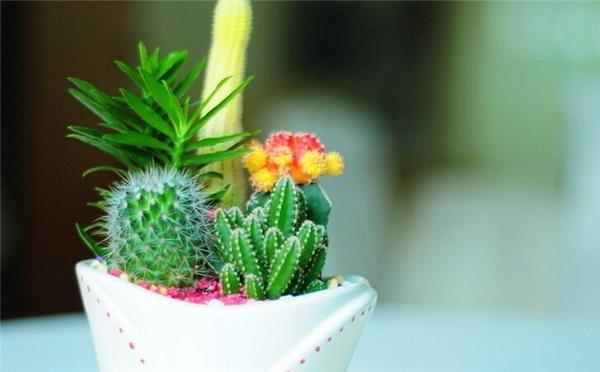
*2. Cacti like to grow in soil that is rich in nutrients and loose and breathable. Usually, specially prepared soil is best: vermiculite : fine sand : decomposed humus = 2:2:1, then mix thoroughly and evenly. The prepared growing soil should be such that when held in the hand it barely forms a ball, and when the hand is released it immediately crumbles into sand. This kind of soil is more suitable for cacti to grow in.
*3. As for watering, no matter what the season, water thoroughly when watering. "If it is not dry, do not water; when you water, water thoroughly" - that is, you do not need to water frequently, but when you do water once, every part of the soil must be soaked through. Do not water only down to the middle part. That will easily cause rot.
*4. Spring, summer and autumn are the growing seasons for cacti. In winter the plants enter a dormant state and stop growing. At this stage, watering should not be excessive; just keep the potting soil moist. In winter the plants absorb little water, and excessive watering easily causes root rot. Cacti are relatively fond of light, so take them out to sunbathe more. They cannot be kept in a hidden place for a long time, but they should also not be exposed to the scorching sun for a long time. Morning sunlight is best.
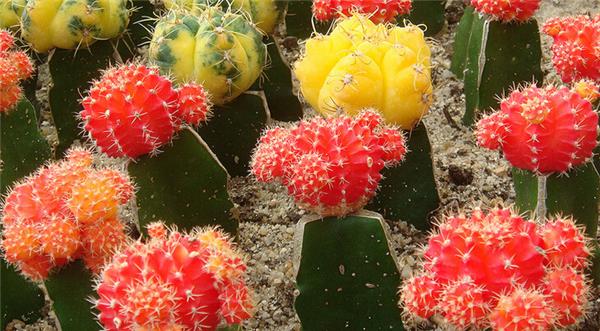
In the process of caring for cacti and other flowering plants of the cactus family, many people often fall into cultivation misconceptions: that as long as the plants are given sunlight all year round, given high-temperature and arid conditions, and planted in coarse sand, this type of flower can be grown well. In fact, this is not the case. To cultivate and manage cacti and other flowering plants of the cactus family well, they must be cared for according to the place of origin, morphology and habits of different species and varieties. So, how exactly should cacti be cared for in the four seasons?
First, the soil: Cacti like soil that contains sufficient nutrients and is loose and permeable. Therefore, a special growing soil must be prepared. You can use 4 parts vermiculite, 4 parts fine sand, and 2 parts fully decomposed humus, mix and blend thoroughly, and set aside for use. The prepared growing soil should be such that when held in the hand it barely forms a ball, and when the hand is released it crumbles - this is best.
△Although cacti are drought-tolerant plants in the plant kingdom, like all plants they cannot do without water. The amount of watering should vary with the season. In spring, grasp the word "moderate." In spring the outside temperature is not high, so only a small amount of watering is needed.
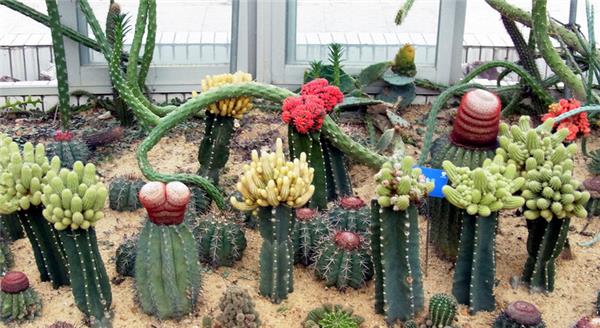
△In summer, grasp the word "moist." In summer the sunlight is strong and the temperature is high. If watered too much, it may cause root rot, but if water is lacking, some plants may develop scorched spots and shriveling, reducing their ornamental value. Frequently spraying the cultivation area can increase air humidity, lower the ambient temperature, and also allow the stems to absorb water.
△In autumn, grasp the word "more." In autumn, cacti and related plants enter a stage of vigorous growth. At the same time, some cacti that bloom in winter, such as Christmas cactus and Schlumbergera, carry out flower bud differentiation in autumn, requiring sufficient water and fertilizer. In nature, autumn is also bright and crisp with less rain, so they should be watered more.
△In winter, grasp the word "control." In winter, most plants enter a dormant state, and merely keeping the potting soil moist is enough. At this time, excessive watering may cause the base of the stem to rot.
No matter what the season, the principle of "if not dry, do not water; when you water, water thoroughly" should be grasped. Each time you water, a small amount of water should flow out from the drainage holes. Never give "half-way water."
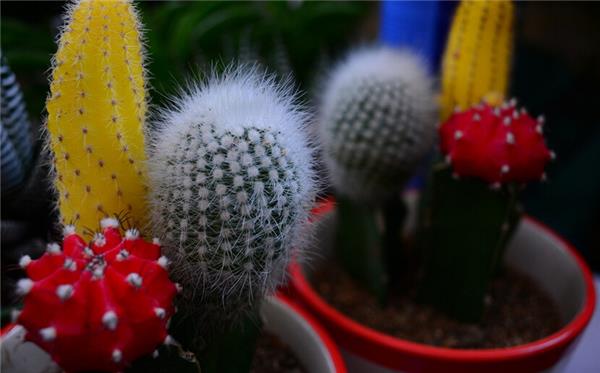
The ball cactus likes moist soil, is drought-tolerant, and slightly tolerant of wet conditions. The ball cactus originated in the subtropical grasslands, where rain is abundant and the air is humid, so it is more tolerant of moisture than other cacti. Spring, summer and autumn are its peak growing seasons, and watering should be replenished in time to keep the soil moist. So, what should we pay attention to during the growing process?
Precautions for growing cacti
(1) If a ball cactus grafted onto a three-ribbed Hylocereus undatus rootstock is not cared for properly, the base of the rootstock easily rots. At this time, it should immediately be removed from the pot, and the rotten part together with a section of good stem flesh should be cut off. Leave it in a shaded indoor spot to air for 4-6 days. After the cut at the base of the rootstock has dried, insert it shallowly into slightly moist coarse river sand, and at the same time insert reed stalks and tie them to provide support, to prevent it from falling over. In a high-temperature environment, the pith in the center of the cut will soon grow new roots, allowing the ball cactus to be saved.
(2) The ball cactus should be repotted once every other year in early spring. Watering should be stopped 2-3 days before repotting. When repotting, cut away some of the old roots; after airing for 2-3 days, repot again; remove some of the old soil and add new growing soil.
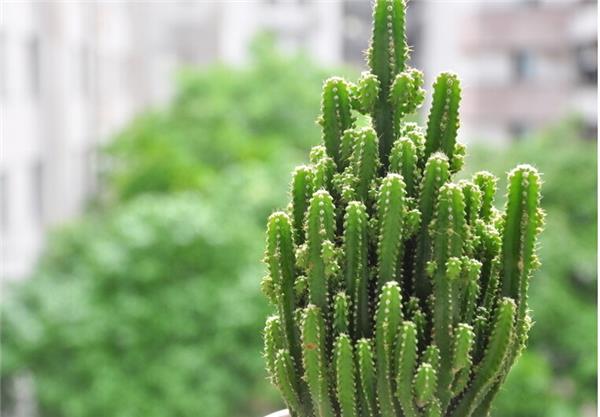
(3) Because the spherical stem segments of the ball cactus are covered with tiny spines, they easily prick people. Therefore, families with children should take care not to let children get close to the ball cactus, to avoid being pricked.
(4) Ball cacti that bloom at night usually bloom about half an hour after nightfall. If the plant is placed in a dark cabinet for one or two hours before dark, the flower will open before nightfall. In summer, besides shading, also pay attention to good ventilation. During cultivation, insufficient placement space, excessive shading, or too much water can all cause failure to bloom.
 Cacti come in a great variety of types and forms, with colorful stems and leaves and brilliant flowers, and are indoor ornamental flowers suitable for pot cultivation. It is hoped that this article can better help everyone grow healthy cacti.
(2) The ball cactus should be repotted once every other year in early spring. Watering should be stopped 2-3 days before repotting. When repotting, cut away some of the old roots; after airing for 2-3 days, repot again; remove some of the old soil and add new growing soil.
(3) Because the spherical stem segments of the ball cactus are covered with tiny spines, they easily prick people. Therefore, families with children should take care not to let children get close to the ball cactus, to avoid being pricked.
(4) Ball cacti that bloom at night usually bloom about half an hour after nightfall. If the plant is placed in a dark cabinet for one or two hours before dark, the flower will open before nightfall. In summer, besides shading, also pay attention to good ventilation. During cultivation, insufficient placement space, excessive shading, or too much water can all cause failure to bloom.
Cacti come in a great variety of types and forms, with colorful stems and leaves and brilliant flowers, and are indoor ornamental flowers suitable for pot cultivation. It is hoped that this article can better help everyone grow healthy cacti.