A Detailed Guide to the Growth Habits and Cultivation Methods of Calendula
Calendula, also known as pot marigold, is an annual or overwintering herbaceous plant whose leaves and petals are edible, native to southern Europe. Next, let us take a look at the growth habits and cultivation of calendula.
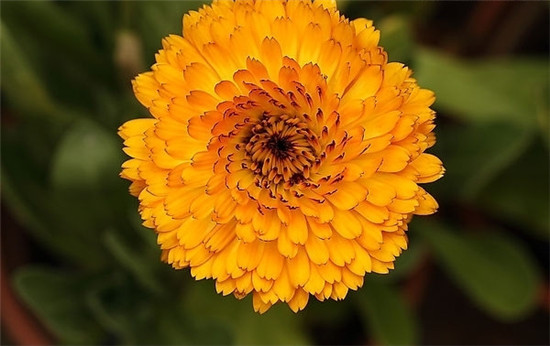
In the ancient West, calendula was used as medicine or dye, and also in cosmetics or as food; its leaves and petals are edible and used to garnish dishes. It is native to southern Europe. It has medicinal value: anti-inflammatory and antibacterial, clearing heat and reducing internal heat, and treating acne and pimples. It is a plant of the genus Calendula in the Asteraceae family. An annual or overwintering herbaceous plant, it loves light and is not demanding about soil; it can grow well in dry, loose, fertile alkaline soil and tolerates poor soil. It is often used for flowerbed bedding displays. Calendula is rich in multiple vitamins, especially vitamin A and vitamin C; almost all parts can be eaten; its petals have a cosmetic function. The flower contains carotenoids, lycopene, violaxanthin, rubixanthin, volatile oil, resin, mucilage, malic acid, and more.
The calendula plant is 30-60cm tall, a biennial herbaceous plant, with the whole plant covered in white downy hairs. The leaves are simple and alternate, elliptical or elliptically obovate, with entire margins; the basal leaves have petioles, while the upper leaves clasp the stem at their base.
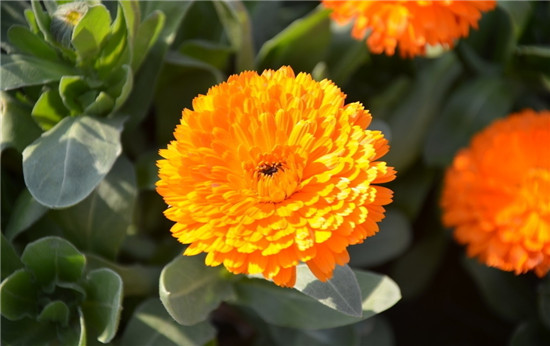
The capitulum is solitary at the top of the stem, large, 4-6cm, with one whorl of ligulate florets, or multiple whorls spreading flat, golden yellow or orange-yellow, and tubular florets yellow or brown. There are also cultivars with double flowers (actually multiple layers of ligulate florets), curled petals, green centers, and deep purple flower centers. The flowering period is December to June, with the peak bloom from March to June. The achene is boat-shaped or claw-shaped, and the fruit ripens from May to July.
It likes a sunny, fully lit environment and has strong adaptability; it can withstand low temperatures of -9°C but fears hot weather. It is not choosy about soil, with loose, fertile, slightly acidic soil being best. It can self-seed, grows quickly, is relatively cold-tolerant, and is not choosy about soil. It tolerates poor, dry soil and shady environments, and grows well in sunny and fertile areas.
Calendula is native to western Europe, the Mediterranean coast, North Africa, and West Asia, and is now cultivated all over the world. Thompson & Morgan of the UK and Danziger Flower Farm of Israel are famous in Europe for their breeding and production of calendula.
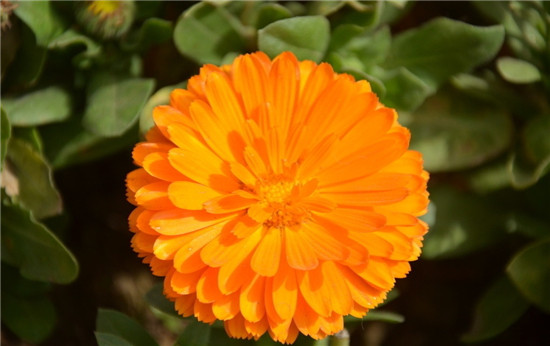
For calendula seeds that are relatively large and can be picked up by hand or with other tools, place the seeds directly into the substrate and sow them in spots at a spacing of 3×3 cm. After sowing, cover with substrate to a depth 2-3 times the size of the seeds.
After sowing, use a sprayer or a fine-holed watering can to moisten the sowing substrate, and later water again when the potting soil is slightly dry; still be careful not to water too forcefully, so as not to wash the seeds away. After normal flowering in early spring, sow in pots in late August, move to a temperature of 8-10°C after frost, place outdoors in a wind-sheltered, sunny spot during the day, and place on a sunny windowsill indoors during severe cold.
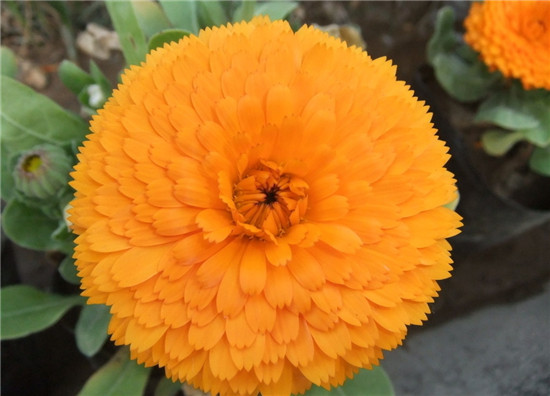
Water about once a week to keep the potting soil moist, and apply a compound liquid fertilizer once a month, so that it can keep blooming into the winter season. Sow outdoors in late August. Calendula likes ample sunlight, dislikes extreme heat, and is relatively cold-tolerant; large seedlings can withstand low temperatures of -9°C, while small seedlings are prone to frost damage. It likes loose, fertile soil with a pH of 6.5-7.5. The suitable temperature for seed germination is 20-221, and the growing temperature for small seedlings is about 15°C.
The above is the complete content I have summarized for you on the growth habits and cultivation of calendula. I hope this article can help everyone. Please also continue to follow us.