What are the benefits of Alocasia macrorrhizos? Learn to make the most of its advantages
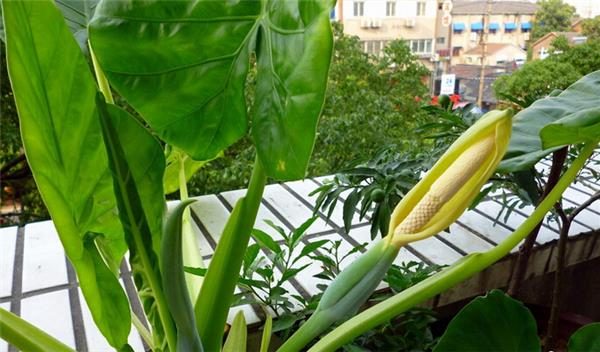
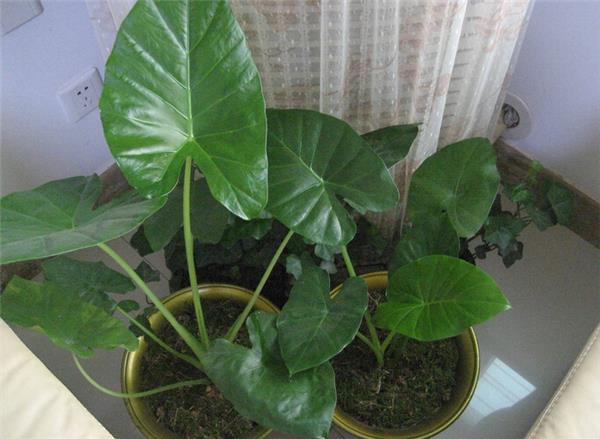
Alocasia macrorrhizos represents like-mindedness, sincerity, interest and inner elegance, and is one of the most common houseplants. In warm, humid conditions with plenty of soil moisture, water drips down from the leaf tips or leaf edges; its flowers also resemble Guanyin, which is why it is called "dripping-water Guanyin". Alocasia macrorrhizos is much loved for its graceful plant shape and also helps purify the air. So what exactly are the benefits of Alocasia macrorrhizos?
The benefits of Alocasia macrorrhizos
◇——1. The benefits of Alocasia macrorrhizos: ornamental value——◇
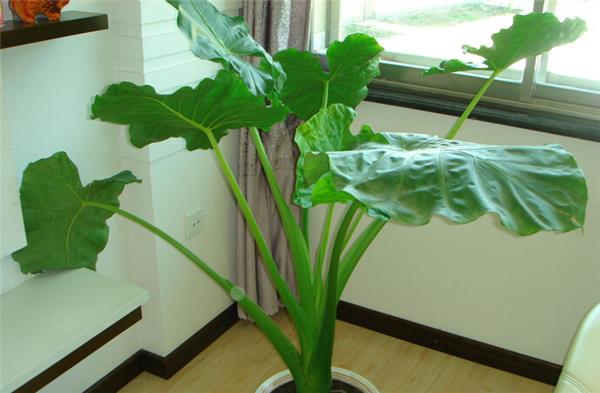
Alocasia macrorrhizos is unanimously recommended by designers as the "king of the large living room", and is also the best partner for the culturally rich East Asian style and the luxurious, expansive American resort style. So placing some green plants in a room not only symbolizes the vitality of marriage, but also produces fresh oxygen, which is greatly beneficial to health.
◇——2. The benefits of Alocasia macrorrhizos: air purification——◇
The green leaves of Alocasia macrorrhizos can absorb carbon dioxide from the air; under the combined action of sunlight and chlorophyll, it can react with the water absorbed by the plant to form glucose while releasing oxygen, and the glucose molecules then form starch.
Alocasia macrorrhizos is effective at removing dust from the air. But note that the white sap in its stems is toxic, and the water it drips is also toxic; accidental contact with or ingestion of the sap will cause discomfort in the throat and mouth, with a burning pain in the stomach. Special care should be taken to prevent young children from accidentally eating it. However, Alocasia macrorrhizos is not a carcinogenic plant.
◇——3. The benefits of Alocasia macrorrhizos: medicinal value——◇
Properties and flavour: pungent; cold in nature; toxic.
Meridian entry: heart meridian; liver meridian; gallbladder meridian; large intestine meridian.
Functions: clearing heat and detoxifying; promoting the flow of qi and relieving pain; dissipating nodules and reducing swelling.
Alocasia macrorrhizos can also treat malarial fevers, severe vomiting and diarrhoea, typhoid fever, rheumatic pain, hernia, leukorrhoea, carbuncles and swellings, atrophic rhinitis, scrofula, boils, scabies, and snake and dog bites.
◇——4. The benefits of Alocasia macrorrhizos: feng shui effect——◇
The main feng shui effect of Alocasia macrorrhizos is that it can boost wealth; placing it in a suitable position can attract good fortune, but you also need to be aware of its own toxicity.
In home feng shui, placing green plants requires great care: you should not place plants with pointed leaves, because from a feng shui perspective that easily leads to loss of wealth. According to feng shui masters, if you want to place such plants, you need to tie them with a red ribbon, which can make up for the wealth-losing feng shui effect. But this is only a small minority; for most people, it is better to place plants with round leaves at home, and the larger and thicker the leaves, the better. So Alocasia macrorrhizos is quite suitable for home placement. In the auspicious direction of the home, placing some thick-leaved or large-leaved evergreen plants can achieve the effect of "generating prosperity", because Alocasia macrorrhizos belongs to the type of plant that does not leak wealth, so placing it in the wealth position will have a very good wealth-attracting effect.
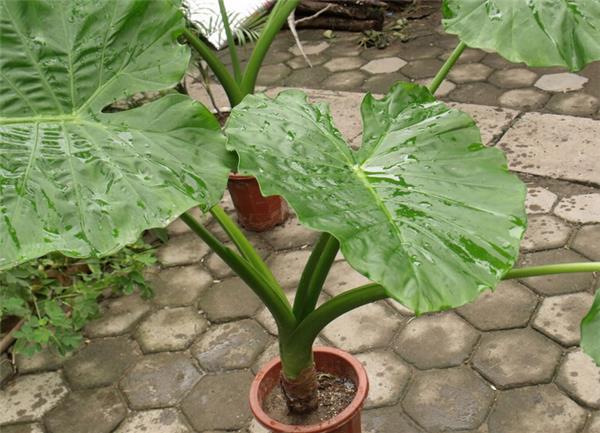
Alocasia macrorrhizos belongs to the Araceae family and the genus Alocasia, also known as dripping-water lotus and Buddha's-hand lotus, and is one of the most common houseplants; it gets its name because its flowers resemble Guanyin. Placing Alocasia macrorrhizos indoors to purify the air is indeed a good choice. Alocasia macrorrhizos is a very common home-grown green potted plant, but because it is a tropical plant, it generally will not bloom in the north. So what are the cultivation methods for Alocasia macrorrhizos? How do you grow Alocasia macrorrhizos?
Cultivation methods for Alocasia macrorrhizos
◇——1. Temperature. First of all, to grow Alocasia macrorrhizos well, you must know that it can only grow well at a temperature no lower than 18 degrees; if the temperature is below 18 degrees, it will cause Alocasia macrorrhizos to enter a dormant state and also stop growing. The choice of temperature is also a necessary prerequisite for growing Alocasia macrorrhizos well, and this point is very important too;
◇——2. Light. We all know that Alocasia macrorrhizos is a plant that prefers shade and coolness, but it also needs a moderate amount of light; the light should not be too strong, because if the light is too strong it will cause Alocasia macrorrhizos to become "wilted". You should know that Alocasia macrorrhizos likes a warm, humid and shaded environment, but during the flowering period it needs plenty of sunlight, otherwise the spathe will carry green, affecting its quality. So Alocasia macrorrhizos still needs a moderate amount of light time; ensuring about three hours of light per day should be about right, and this point should also be kept firmly in mind;
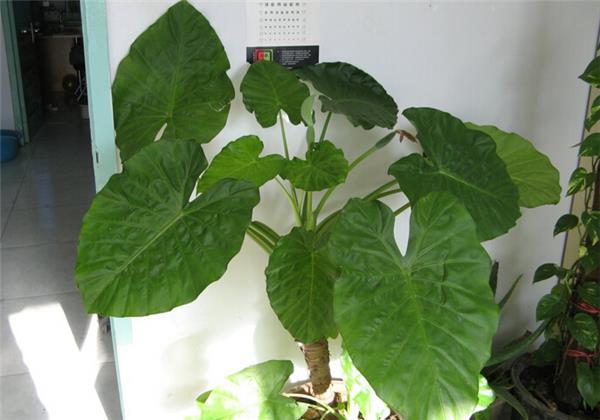
◇——3. Water. No matter what plant it is, water is also very important. For a plant like Alocasia macrorrhizos, the water requirement in summer is relatively high; in midsummer, spray water on the leaves every day at noon to increase air humidity, so that the leaves of Alocasia macrorrhizos can be both large and thick. If it is too shady, the leaves will grow larger but become thinner, which still greatly affects the ornamental quality of Alocasia macrorrhizos. So the water requirement is also indispensable;
◇——4. Fertiliser. Alocasia macrorrhizos is also a plant that likes fertiliser; it should be given some nitrogen, phosphorus and potassium fertiliser every month so that it can grow quickly. Fertilising Alocasia macrorrhizos about every twenty days can make its leaves larger, thicker and greener. If Alocasia macrorrhizos is not fertilised for a long time, the lower part of the stem will become bare and empty, with yellow leaves or smaller leaves appearing, so a moderate amount of fertiliser is also very crucial;
◇——5. Soil. Because of the influence of its growth habits, Alocasia macrorrhizos needs more watering in summer, but not excessively; it is enough to roughly ensure the soil's moisture, and there must be no standing water in the soil, otherwise the tubers of Alocasia macrorrhizos will rot. In winter it goes dormant and should be watered less; always follow the growth habits of Alocasia macrorrhizos when planting.
◇——6. Pest and disease control. Diseases of Alocasia macrorrhizos show on the leaves, and there are generally two kinds: one is leaf spot disease, and the other is anthracnose. For leaf spot disease, you can spray the leaf surface with an 800-fold dilution of chlorothalonil or carbendazim, 2-3 times in a row, with 7 days between each application. For anthracnose, you must spray the leaf surface with a 500-fold dilution of 75% thiophanate-methyl, once every 7 days, 2-3 times in a row, which can basically bring it under control. Because Alocasia macrorrhizos is a foliage plant, once the leaves become diseased it will inevitably affect its ornamental effect, so prevention should be the priority.
 Above, the editor has introduced the benefits of Alocasia macrorrhizos. From the editor's introduction you can see that Alocasia macrorrhizos has very many benefits, and because of its many uses it is loved by people, so the editor has also introduced the cultivation methods for Alocasia macrorrhizos, hoping to help people who love Alocasia macrorrhizos.
◇——3. Water. No matter what plant it is, water is also very important. For a plant like Alocasia macrorrhizos, the water requirement in summer is relatively high; in midsummer, spray water on the leaves every day at noon to increase air humidity, so that the leaves of Alocasia macrorrhizos can be both large and thick. If it is too shady, the leaves will grow larger but become thinner, which still greatly affects the ornamental quality of Alocasia macrorrhizos. So the water requirement is also indispensable;
◇——4. Fertiliser. Alocasia macrorrhizos is also a plant that likes fertiliser; it should be given some nitrogen, phosphorus and potassium fertiliser every month so that it can grow quickly. Fertilising Alocasia macrorrhizos about every twenty days can make its leaves larger, thicker and greener. If Alocasia macrorrhizos is not fertilised for a long time, the lower part of the stem will become bare and empty, with yellow leaves or smaller leaves appearing, so a moderate amount of fertiliser is also very crucial;
◇——5. Soil. Because of the influence of its growth habits, Alocasia macrorrhizos needs more watering in summer, but not excessively; it is enough to roughly ensure the soil's moisture, and there must be no standing water in the soil, otherwise the tubers of Alocasia macrorrhizos will rot. In winter it goes dormant and should be watered less; always follow the growth habits of Alocasia macrorrhizos when planting.
◇——6. Pest and disease control. Diseases of Alocasia macrorrhizos show on the leaves, and there are generally two kinds: one is leaf spot disease, and the other is anthracnose. For leaf spot disease, you can spray the leaf surface with an 800-fold dilution of chlorothalonil or carbendazim, 2-3 times in a row, with 7 days between each application. For anthracnose, you must spray the leaf surface with a 500-fold dilution of 75% thiophanate-methyl, once every 7 days, 2-3 times in a row, which can basically bring it under control. Because Alocasia macrorrhizos is a foliage plant, once the leaves become diseased it will inevitably affect its ornamental effect, so prevention should be the priority.
Above, the editor has introduced the benefits of Alocasia macrorrhizos. From the editor's introduction you can see that Alocasia macrorrhizos has very many benefits, and because of its many uses it is loved by people, so the editor has also introduced the cultivation methods for Alocasia macrorrhizos, hoping to help people who love Alocasia macrorrhizos.