How to Grow Alocasia macrorrhizos in Water: Simple Steps to Cultivate a Quality Plant
Growing a water-cultured plant at home has become a modern trend, and Alocasia macrorrhizos (also known as giant taro) seems to be the choice of many people. Alocasia macrorrhizos, also called dripping lotus and Buddha's hand lotus, has broad, glossy green leaves that make it a favorite in many households. So how do you grow Alocasia macrorrhizos? Let's take a look together at the methods for growing Alocasia macrorrhizos in water.
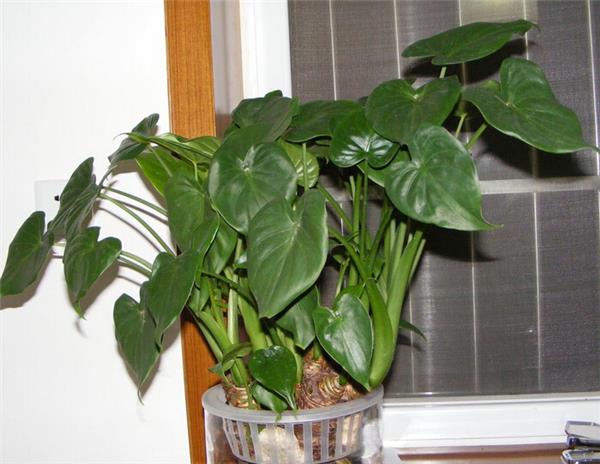
Steps for Growing Alocasia macrorrhizos in Water
 The first step in growing Alocasia macrorrhizos in water is to convert a soil-grown plant into a water-cultured plant using the root-washing method. When washing the roots, do so carefully and try not to damage the tuber and root system, while also cutting away rotten roots and aged roots. If the tuber has no roots, place it in a shaded spot to air-dry for 2~3 days, then immerse it in water once the wound has dried; after 2~3 days, new roots will begin to appear.
 When growing Alocasia macrorrhizos in water, note that during the early stage you should change the water every 2~3 days, with the water depth ideally covering 2/3 of the root system. After a week, new roots will grow; after 3 weeks, once the water-cultured plant has adapted to the water environment, switch to nutrient solution culture. After that, change the nutrient solution about once a month.
 Because the stem tissue of Alocasia macrorrhizos is fairly loose, poor water quality can easily lead to contamination, causing root rot and stem rot. Therefore, keep the water in the container clean, and when changing the water or nutrient solution, also wash away the mucus on the tuber and roots, and cut off any rotten roots.
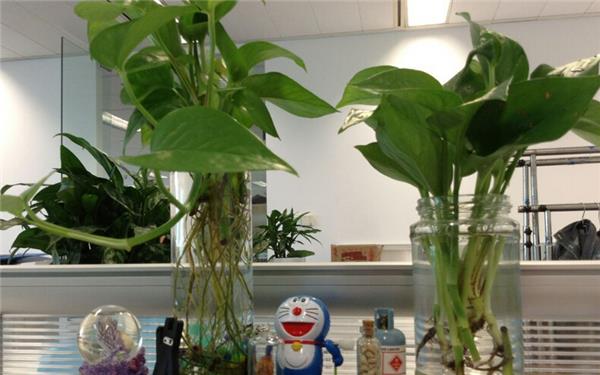
Alocasia macrorrhizos is an indoor foliage plant. Foliage plants have relatively large leaves, so transpiration is stronger; with greater transpiration, more moisture is released into the air. Dry weather leaves everything in a state of water shortage, so keeping a pot of Alocasia macrorrhizos at home in this season means you can breathe moist air when you get home. So, while growing Alocasia macrorrhizos, how should we care for it?
Points to Note When Caring for Alocasia macrorrhizos
※--1. Temperature
It likes warmth and grows rapidly above 25°C; the most suitable temperature for growth is 25~30°C. It has some cold resistance, and the overwintering temperature only needs to be maintained above 2°C.
※--2. Light
It likes partial shade and cannot tolerate intense direct sunlight. From May to September, shade should be provided, blocking about 50% of sunlight. At other times, give it plenty of sunlight. It cannot tolerate excessive shade, otherwise the leaf stalks become thin and long, making the plant not only unattractive in shape but also prone to breaking.
※--3. Watering
Because the leaves are large and consume more water, it is afraid of drought. It likes a slightly moist soil environment. During the growing period, watering should follow the principle of "alternating dry and wet, leaning toward moist," and watering should be thorough; even watering a bit more is fine. Especially on hot, sunny summer days, pay even more attention to supplying water to meet the plant's water needs. Because the leaf surface is large, water droplets often appear at the leaf tips in the morning, which is quite strange, hence the name "dripping Guanyin." However, the potting soil must normally be kept moist to ensure the plant absorbs enough water and relies on root pressure to transport water to the leaf tips and release it; when the potting soil is dry, there will be no water to drip. In winter, water should be controlled, keeping the potting soil slightly moist, as long as the leaves do not droop softly; overly wet potting soil can easily cause root rot.
※--4. Environmental Humidity
It likes a humid environment and dislikes dry air. During the growing season, on sunny and dry days, water should often be sprayed on the branches, leaves and surroundings to maintain a relatively high air humidity.
※--5. Fertilizing
It likes fertilizer. Because it grows a lot, nutrients need to be replenished in time so that the stems grow thick and strong and the leaves become large, deep green and glossy; when fertilizer is lacking, the leaves are small and yellow. During the growing period, apply a nitrogen-based fertilizer once about every 10 days. After the start of autumn, stop applying nitrogen fertilizer and apply 2~30 phosphorus and potassium fertilizer. Stop fertilizing in winter.
※--6. Pruning
Yellow leaves should be cut off at any time. Because the leaf stalks are long, when moving, placing and caring for the plant, avoid breaking the leaf stalks. If they are broken, cut them off promptly.
※--7. Repotting
Repot once every 1~2 years. It is not demanding about soil, but likes fertile, loose, well-drained sandy loam. The growing medium can be made from materials such as leaf mold, garden soil, peat soil and river sand. If sufficient base fertilizer is applied, the leaves can grow large and thick. Because the leaves are large but few in number and the leaf stalks are long, when moving the plant and caring for it, avoid damaging the leaves, otherwise its ornamental value will be reduced.
※--8. Propagation
(1) Sowing: Wild plants often produce seeds. Sow in spring; the suitable germination temperature is 25~28°C, and germination occurs 20~25 days after sowing.
(2) Cuttage: Carry out in April. Cut thick stems into stem segments about 10 cm long with several buds to serve as cuttings. After drying slightly, insert them obliquely or lay them flat in the seedbed; when laying flat, the depth should be just enough to bury the stem segment. The cuttings can also be inserted directly into pots. After insertion, keep the medium moist and the ambient temperature at 25~2TC; roots will form and the plants will survive after 4~5 weeks.
(3) Division: Potted plants easily produce many small plantlets at the base. In April, combine this with repotting to divide them, separating the small plantlets from the mother plant and planting them separately. Division is best done when the temperature reaches 20°C or higher. While keeping the medium moist, new shoots will emerge in about 20 days.
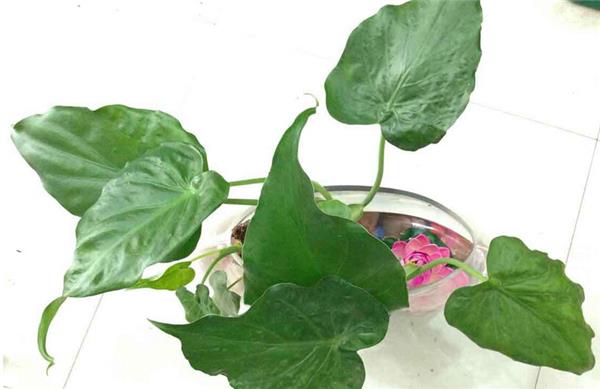
The above are the specific methods and steps for growing Alocasia macrorrhizos in water and how to care for it, as introduced by the editor, hoping to help everyone grow Alocasia macrorrhizos better. Alocasia macrorrhizos easily immerses people in a tender dream; many people like its thick, jade-green leaves and enjoy watching water droplets roll on the leaves. Therefore, after being grown in water in a large container, it is suitable for placement in a hall, living room or a corner of a leisure bar. Small or mini water-cultured Alocasia macrorrhizos can accent a desk, computer desk or washbasin counter.