What Plant Is Paederia scandens? A Comprehensive Guide
Paederia scandens is a herbaceous plant with medicinal value, and the whole plant can be used as medicine. Let's take a look at this plant together!
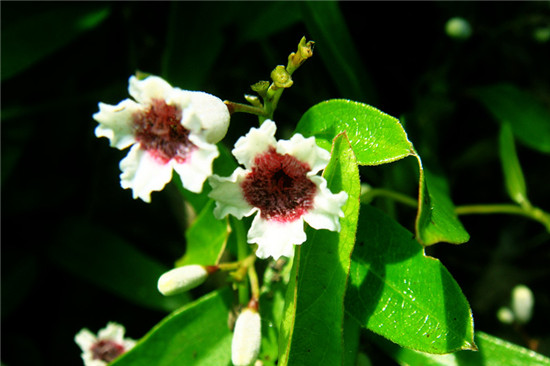
Paederia scandens is a perennial herbaceous vine in the family Rubiaceae. It is hairless or nearly hairless. The base is woody and much branched. When crushed, it gives off a foul odor. It grows by streams, rivers, roadsides, forest edges and in shrublands, often climbing on other plants or rocks, and prefers a warm, humid environment. It is distributed both in China and abroad. The whole plant, roots and fruits can all be used medicinally, and their traditional Chinese medicine names are: Paederia scandens and Paederia scandens fruit.
Indications: dispelling wind and dampness; promoting digestion and resolving food stagnation; detoxifying and reducing swelling; activating blood and relieving pain. Indications include rheumatic arthralgia; food stagnation with abdominal distension; infantile malnutrition; diarrhea; dysentery; heatstroke; jaundice; hepatitis; hepatosplenomegaly; cough; scrofula; intestinal abscess; unnamed swelling and toxicosis; damp foot swelling and ulceration; scalds and burns; eczema; dermatitis; traumatic injuries; snake bites and scorpion stings.
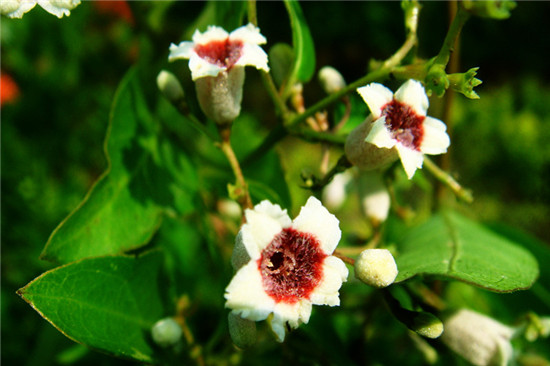
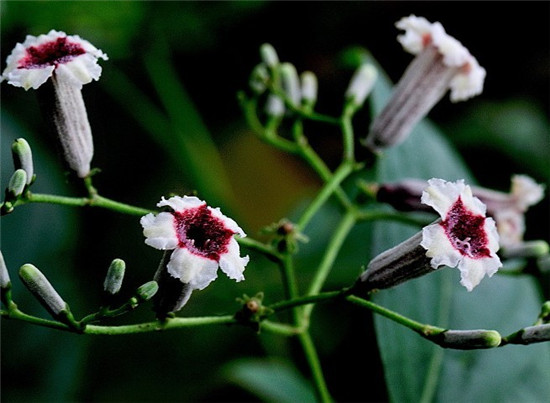
Climbing herb, woody at the base, 2-3 m tall, glabrous or slightly pubescent. Leaves opposite, petiolate; leaf blades nearly membranous, ovate, elliptic, oblong to lanceolate, apex shortly acute or gradually acuminate, base rounded or cuneate, both surfaces glabrous or nearly glabrous; stipules between the leaves triangular, 2-5 mm long, deciduous. Panicles axillary and terminal, spreading, branches forming scorpioid cymes; flowers white-purple, sessile; calyx narrowly campanulate, about 3 mm long; corolla campanulate, tube 7-10 mm long, upper part 5-lobed, valvate, inner surface red-purple, covered with powdery pubescence; stamens 5, filaments very short, inserted in the corolla tube; ovary inferior, 2-locular, styles filiform, 2, united at the base. Berry spherical, 5-7 mm in diameter, shiny when mature, straw-yellow. Flowering in autumn.
Seed propagation: Collect ripe fruits of Paederia scandens from October to November, pile them up to rot, rub off the fruit skin, and store them in wet sand for later use. Sow from March to April; prepare the land and make beds 1.3 m wide, dig holes at a row and hole spacing of about 33 cm each, about 7 cm deep, sow about 10 seeds per hole, water with human or livestock manure water, then cover with about 1 cm of plant ash or fine soil. From March to April, dig holes at a row and plant spacing of about 33 cm each, about 7 cm deep, sow about 10 seeds per hole, water with human or livestock manure water, then cover with about 1 cm of plant ash or fine soil.
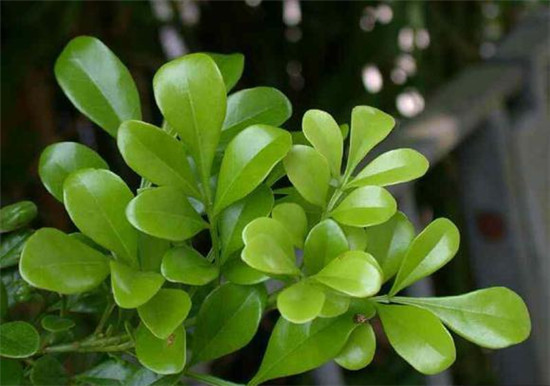
Cutting propagation: From February to March, select 2-year-old old stems and vines of Paederia scandens, cut them into 25-30 cm long cuttings with more than 3 nodes, dig holes on a 1.3 m bed at a row and hole spacing of about 33 cm each, 20-25 cm deep, plant 3 cuttings per hole, with each cutting having 1 bud node exposed above the bed surface, fill with soil and press firmly, pay attention to watering, and keep the soil moist.
Pharmacological Effects of Paederia scandens
1. Sedative, analgesic and anticonvulsant effects: Intraperitoneal injection of total alkaloids from Paederia scandens can inhibit spontaneous activity in mice and prolong sodium pentobarbital sleep time, showing a certain sedative effect.
2. Antibacterial effect: A 0.5 g/ml decoction of Paederia scandens has an inhibitory effect on Staphylococcus aureus and Shigella flexneri in vitro, and the extract also has an antibacterial effect on Staphylococcus aureus and Streptococcus pneumoniae.
3. Effect on smooth muscle: Total alkaloids from Paederia scandens can inhibit intestinal muscle contraction and antagonize acetylcholine-induced intestinal muscle spasm.
4. Other effects: Paederia scandens injection and ether extract both have a local anesthetic effect of conduction block on toad sciatic nerve gastrocnemius preparations.
The above is the full content of the introduction to Paederia scandens that I have summarized for everyone. I hope this article can help you. Please also continue to follow us.