How to Grow Ivy? Easily Master the Cultivation Techniques
Ivy is also called evergreen ivy. Ivy is a plant suitable for beautifying the home, and it is a fairly popular large indoor potted ornamental plant, especially when placed in a relatively spacious living room, study, or sitting room, where it lends an elegant, simple style with a southern charm. It has a graceful, neat form and is a world-famous new generation of indoor foliage plants. Although ivy's living requirements are not very high, if we can care for it a little more, its benefits will certainly increase greatly. So, how should we grow ivy?
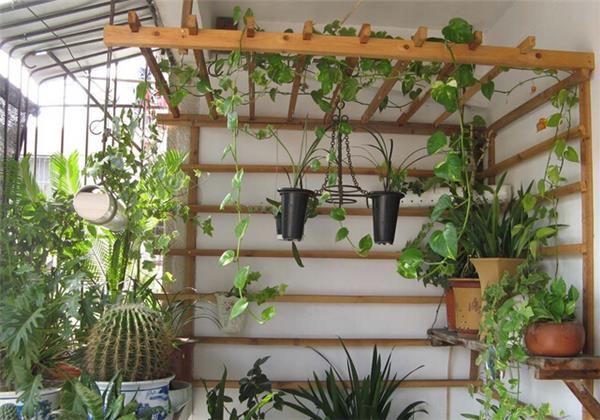
Methods for Growing Ivy
♣--1. The temperature must be suitable. Ivy prefers warmth, and the suitable growing temperature is 20°C-25°C. It fears heat and is not cold-tolerant. Therefore, when keeping it indoors, pay attention to ventilation and cooling in summer, and in winter the room temperature should preferably be kept above IO-C, and at the lowest must not fall below 5°C.
♣--2. Light must be moderate. Ivy likes light and is also fairly shade-tolerant. When grown under semi-light conditions, the internodes are shorter, the leaf shape is consistent, and the leaf color is vivid, so it is best to grow it in a bright indoor spot. If in spring and autumn you can each choose a period to place it outdoors in a shaded spot, so that it sees more sunlight in the morning and evening, it will grow vigorously and have bright green leaves. But be careful to prevent direct strong light, otherwise it easily causes sunscald.
♣--3. Water moderately. During the growing season, watering should follow the principle of watering when dry and stopping when wet; do not let the potting soil become overly moist, otherwise it easily causes root rot and leaf drop. In winter, when room temperature is low, watering must especially be controlled, and keeping the potting soil slightly moist is enough. The northern winter climate is dry, so it is best to spray and wash the Du River once a week with clean water close to room temperature, in order to maintain air humidity, so the plant appears lively and the leaves are tender green and glossy.
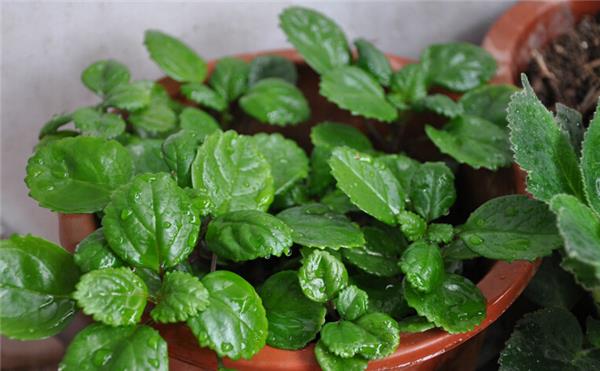
♣--4. Fertilize reasonably. For home cultivation of ivy, the potting soil should preferably be a culture soil made by mixing Sichuan leaf mold or peat soil with 1/4 river sand and a small amount of bone meal. During the growing season, apply a dilute cake fertilizer solution once every 2-3 weeks. Generally, do not fertilize in summer and winter. When fertilizing, never apply too much nitrogen fertilizer, otherwise the patterns and patches on the leaves of variegated varieties will fade to green. The ratio of nitrogen, phosphorus, and potassium is preferably 1;1;l. During the peak growing season, you can also spray the leaves 1-2 times with 0.2% potassium dihydrogen phosphate solution, which will make the leaf color appear even more beautiful. But note that when applying liquid fertilizer, avoid contaminating the leaves, so as not to cause leaf scorch.
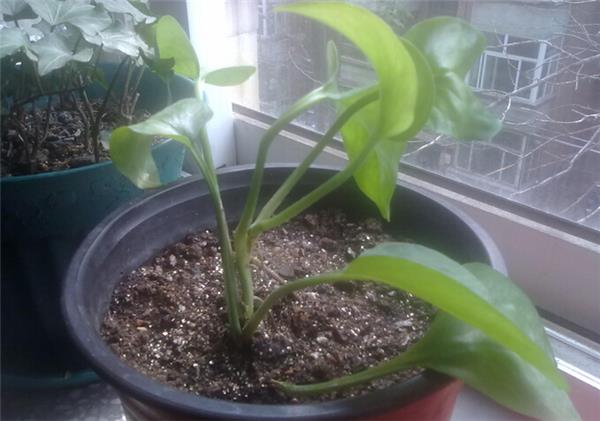
Ivy, like people, becomes beautiful when people put on makeup. Ivy, if placed in a suitable position, can also become beautiful and show its style. So where should our ivy be placed?
Guide to Placing Ivy
♣--1. Place it by the toilet or bathtub. Ivy can purify the air and kill bacteria, and it is a shade-tolerant plant, suitable for placing in the restroom. At the same time, it can also be placed beside the bathtub, because the bathtub always has water, and ivy always needs water, so they are in a mutually beneficial relationship.
♣--2. Place it in front of the door. Evergreen, evergreen, placed at the doorway, it is enough to let everyone see the owner's feeling of yearning for youth and vitality. At the same time, ivy also gives people a feeling of being full of vitality.
♣--3. Place it on the desk in the study. When the owner is working and becomes very tired, suddenly looking up and seeing the ivy, breathing the air it releases, hearing its name, and looking at its color, the person becomes energetic again.
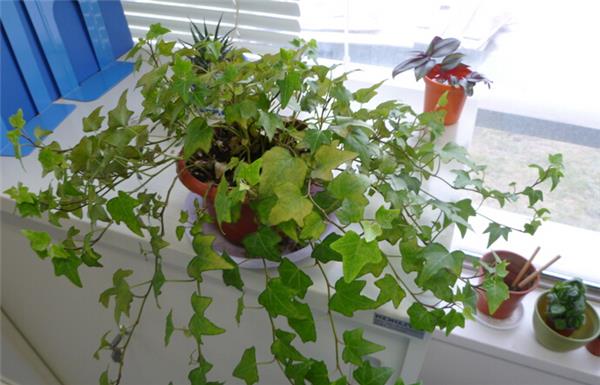
♣--4. Place it beside the TV. Everyone knows the principle that plants help absorb radiation. If an evergreen tree is placed beside the TV, besides absorbing radiation, the owner can also glance at the ivy after watching TV for a long time. The comfortable green enters the eyes, and while resting the eyes, it also makes the mind a little clearer.
Ivy makes an indispensable contribution to beautifying the home. Placed in different places, it has different styles and functions. Before placing it, think it over carefully, and it can bring out its greatest use and show its unique style. Compared with positions like orchids, ivy may not be worth mentioning, but its influence on the home is very much worth mentioning. We might as well look at its influence from the following aspects.
The Functions of Ivy
♣--1. Beautifying the home, an indispensable contribution.
A small plant, placed at home, when you are tired and your eyes do not know where to look, you suddenly see the ivy that is different from the many other colors, and your gaze stops there, not because its color is so bright, but because it looks comfortable to others. Ivy's leaves are deep green, and variegated varieties have many different markings or patches, with bright and clear colors; the stems have many aerial roots and easily attach to rocks, walls, and tree trunks to grow. It can be cultivated as a climber or hanging plant, and is an ideal material for indoor and outdoor vertical greening. As an indoor shade-loving foliage potted plant, it can be grown for a long time in a bright room. In a dark room, as long as supplemental lighting is provided, it can also grow very well. When decorating indoor greenery, use it as a hanging decoration, placed on a tall flower stand or on top of a bookcase, giving a sense of natural and free elegance; it can also be planted in a small pot and placed on a coffee table or desk, appearing delicate and elegant; it can also be planted as a columnar climber, full of three-dimensionality.
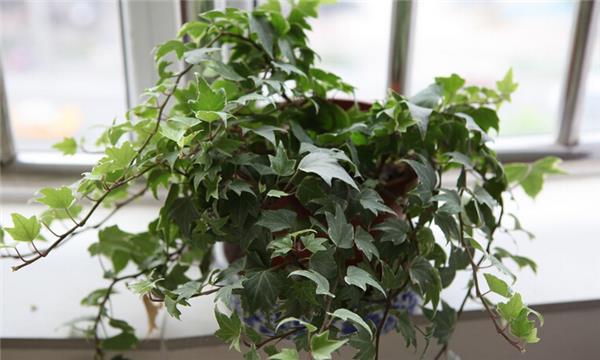
♣--2. Acting as a home air freshener.
An inconspicuous ivy, yet silently absorbing harmful indoor gases all the time, such as nicotine released after people smoke, and formaldehyde after renovation; while absorbing harmful gases, it releases air. Although you cannot see or touch it, in fact ivy is giving all the time, serving the people in the house every moment.
An ivy placed at home has the above two main functions, but in fact, its contribution to the home environment is far more than the above two. In a home where you feel something is always missing, you might as well place an ivy.
 Evergreen ivy is most commonly planted on outdoor walls or in courtyards, or grown indoors in hanging baskets. No matter where they are, they are vigorous, climbing like geckos and extending like spider webs, and every late spring and summer we see a stretch of emerald green. Its leaves are like maple leaves, and at each flowering period it also opens small pale yellow-white flowers, very beautiful and fresh. It has become a popular greening ornamental plant.
♣--2. Acting as a home air freshener.
An inconspicuous ivy, yet silently absorbing harmful indoor gases all the time, such as nicotine released after people smoke, and formaldehyde after renovation; while absorbing harmful gases, it releases air. Although you cannot see or touch it, in fact ivy is giving all the time, serving the people in the house every moment.
An ivy placed at home has the above two main functions, but in fact, its contribution to the home environment is far more than the above two. In a home where you feel something is always missing, you might as well place an ivy.
Evergreen ivy is most commonly planted on outdoor walls or in courtyards, or grown indoors in hanging baskets. No matter where they are, they are vigorous, climbing like geckos and extending like spider webs, and every late spring and summer we see a stretch of emerald green. Its leaves are like maple leaves, and at each flowering period it also opens small pale yellow-white flowers, very beautiful and fresh. It has become a popular greening ornamental plant.