What Are the Differences Between Spider Plant Varieties? A Detailed Comparison of Their Characteristics
The spider plant (Chlorophytum comosum) is a perennial evergreen herbaceous plant with very short rhizomes and thick, short root tips. Its flowers are mainly white, though greenish flowers sometimes appear, and its leaves are linear with green and yellow stripes down the middle. The leaves clustered at the tips of the stems hang down over the edge of the pot and sway with the wind, like cranes spreading their wings to leap. That is why the spider plant also has the lovely name "folded crane." There are many varieties of spider plant, and below we introduce them.
An Introduction to Spider Plant Varieties
There are many kinds of spider plants, differing in form and each with its own characteristics. Five are commonly seen: spider plant, purple spider plant, flowering spider plant, golden-leaf spider plant, and silver-edged spider plant.
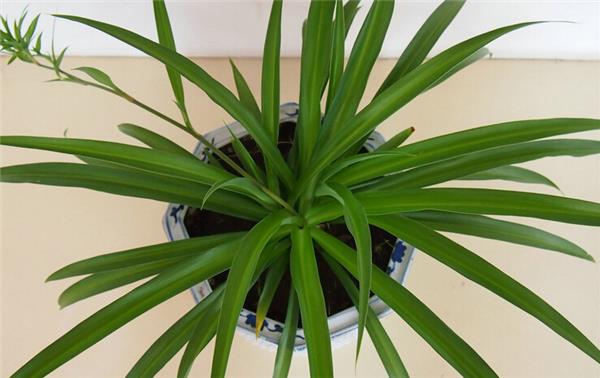
*Spider plant: The stems and leaves are indistinguishable, the leaves droop, and the foliage is dark green. It blooms every year in June and July, with flowers in pale yellow and white.
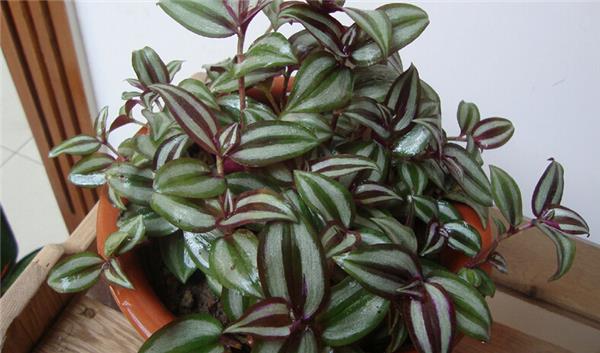
*Purple spider plant: Also called the painted-leaf spider plant, its leaf midribs are purple, its stems are jointed with leaves growing from each joint, and its leaves are thick and glossy, all drooping downward. It blooms from June to October each year, with pink flowers.
*Flowering spider plant: Its stems are trailing, with branches and leaves drooping. The leaves are peach-shaped, with golden markings along the edges that run through the center of the veins, and the undersides of the leaves are purple and gleaming.
*Golden-edged spider plant: The green leaves have yellow lines running around their edges, which look especially beautiful when set off together.
*Silver-edged spider plant: The green leaves are edged in white, making them even more vivid and distinctive to look at.
*Golden-centered spider plant: The center of the leaf has yellow longitudinal stripes.
*Silver-centered spider plant: The area around the midrib of the leaf has silvery-white longitudinal stripes.
*Broad-leaved spider plant: The leaves are broad and linear with entire margins or slightly wavy edges. The flower scape emerges from the leaf cluster, and after flowering it forms creeping stolons that can take root and sprout into new plants. The flowering period is spring and summer. The capsule is three-ribbed, flat-spherical.
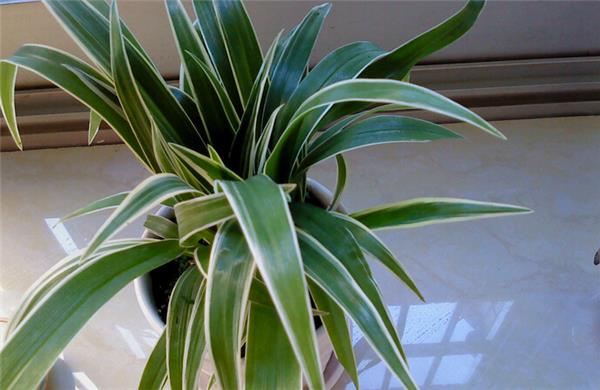
*Center-variegated spider plant: The leaves are narrow and long, lanceolate, creamy white with green stripes and edges.
The roots and leaves of the spider plant resemble those of an orchid, and it grows in a creeping manner. When a breeze blows past, it dances like a green butterfly, just like a "green fairy." As a potted flower, the spider plant has great ornamental value. There are many kinds of spider plants, and the commonly seen ones include the golden-edged spider plant, silver-edged spider plant, golden-centered spider plant, and so on. Today we will introduce in detail some common spider plant varieties.
A Detailed Introduction to Common Spider Plant Varieties
*Golden-leaf spider plant*
The golden-leaf spider plant is generally divided into the golden-edged spider plant and the golden-centered spider plant. The former has yellow lines running around the edges of its green leaves, somewhat like a frame, with a unique shape that looks very attractive when paired together; the latter, as its name suggests, has yellow longitudinal stripes in the center of its leaves, looking refined and elegant, and it is the variety most commonly found on the market today, a great choice for hanging on a wall.
*Silver-leaf spider plant*
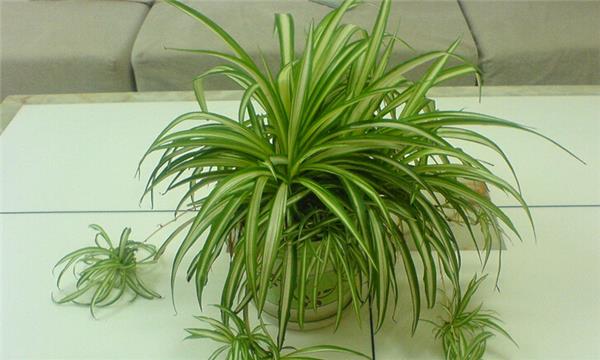
The silver-leaf spider plant comes in the same types as the golden-leaf spider plant, namely the silver-edged spider plant and the silver-centered spider plant. The silver-edged spider plant has silver stripes around its edges that look plain and serene and can purify one's spirit; the silver-centered spider plant has silver in the middle of its leaves, its stems and leaves are indistinguishable, its leaves droop, and its foliage is dark green. It blooms every year in June and July, with flowers in pale yellow and white. The white central stripes make the leaf color look even more vivid and full of character.
*Broad-leaved spider plant*
Its leaves are a bit broader than those of other spider plants, broadly linear, with edges that are sometimes slightly wavy; the flower scape emerges from the leaf cluster, and after flowering it forms creeping stolons that can also be divided to form new spider plants. It usually blooms in spring or summer. In the scorching summer, such fresh little flowers would surely make things feel much cooler. The fruit of the spider plant is a round-ribbed flat-spherical shape, looking cute and interesting.
*Purple spider plant*
"Enduring the ice and frost that braves the bamboo and cypress, willing to share the snow and moon with the spider plant" is a related line from an ancient scholar about the spider plant. The purple spider plant is a relatively rare and precious variety among spider plants. Its branches are jointed, with leaves growing from every joint, its leaf stalks are entirely purplish-red, and its leaves are relatively thick with a good gloss, all drooping downward. It blooms from June to October each year, usually with pink flowers. Isn't that rather dreamy?
When it comes to the benefits of the spider plant, they are truly great. The spider plant can absorb more than 80% of harmful gases indoors, absorb 86% of formaldehyde, and can also absorb almost all the carbon monoxide and nitrogen oxides given off by stoves, electrical appliances, and plastic products. For those of us in modern urban life, who constantly face the radiation emitted by all kinds of digital products, placing 1-2 pots of spider plants nearby means the toxic gases in the air are almost entirely absorbed. It is equivalent to an air purifier, which is why the spider plant also enjoys the reputation of "green purifier." So what should be noted when growing spider plants?
Points to Note When Growing Spider Plants
*How to grow spider plants - substrate: The spider plant adapts strongly to various soils and is easy to cultivate. A small amount of base fertilizer can be added to prepare fertile sandy loam, humus soil, peat soil, or fine sandy soil.
*How to grow spider plants - propagation: The spider plant has strong adaptability and a high survival rate, and is often propagated by division, cuttings, sowing, and other methods. Cutting and division propagation can be done at any time from spring to autumn.
*How to grow spider plants - watering: The spider plant likes a moist environment, and the potting soil should be kept constantly moist. Because its fleshy roots can store a large amount of water, it has strong drought resistance and does not need frequent watering. In winter, when temperatures are below 5 degrees, watering should be reduced, and the potting soil should not be too wet, otherwise the leaves easily turn yellow.
*How to grow spider plants - fertilizing: Apply liquid fertilizer once every 2-3 weeks during the growing season. Apply less nitrogen fertilizer, and stop fertilizing when the ambient temperature is below 10 degrees.
*How to grow spider plants - light: The spider plant likes a semi-shaded environment and can be grown indoors in bright conditions year-round. Direct strong sunlight should be avoided; it is best to find a spot with scattered sunlight, or use a gauze curtain to block 50%-70% of the sunlight, so that it grows luxuriantly and its leaves look beautiful.
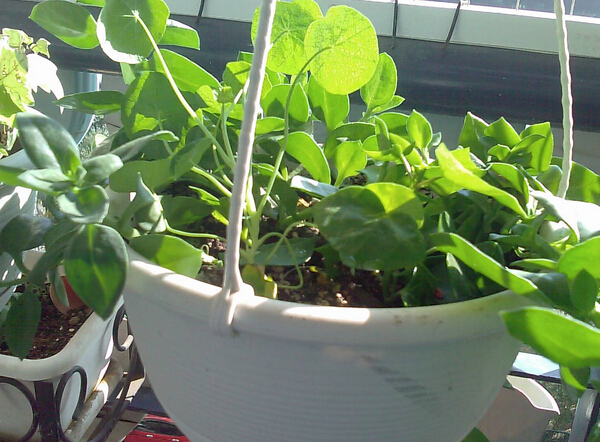
*How to grow spider plants - temperature: The spider plant tolerates high temperatures, with a suitable growing temperature of 15-30°C, and in winter a temperature above 10°C is preferable.
*How to grow spider plants - humidity: The spider plant likes a moist environment. To keep it fresh and green, you can regularly spray water on the leaves to clean them.
*How to grow spider plants - pruning: As the plant grows, to maintain a good plant shape, yellowed leaves at the base and leaf tips should be pruned frequently, and attention should be paid to pruning some old roots and rotten roots.
*How to grow spider plants - pest control: Because the spider plant's clumps are dense and poorly ventilated, it is susceptible to scale insect damage, so prevention should be the priority.
 There are a great many varieties of plants in the spider plant family, and our favorite is the golden-edged spider plant, because it looks even more beautiful shining in the sunlight, and the shape of the plant is like a blooming flower, and it also has the title of "king of formaldehyde removal." How could such a beautiful and practical plant not make people like it?
Points to Note When Growing Spider Plants
*How to grow spider plants - substrate: The spider plant adapts strongly to various soils and is easy to cultivate. A small amount of base fertilizer can be added to prepare fertile sandy loam, humus soil, peat soil, or fine sandy soil.
*How to grow spider plants - propagation: The spider plant has strong adaptability and a high survival rate, and is often propagated by division, cuttings, sowing, and other methods. Cutting and division propagation can be done at any time from spring to autumn.
*How to grow spider plants - watering: The spider plant likes a moist environment, and the potting soil should be kept constantly moist. Because its fleshy roots can store a large amount of water, it has strong drought resistance and does not need frequent watering. In winter, when temperatures are below 5 degrees, watering should be reduced, and the potting soil should not be too wet, otherwise the leaves easily turn yellow.
*How to grow spider plants - fertilizing: Apply liquid fertilizer once every 2-3 weeks during the growing season. Apply less nitrogen fertilizer, and stop fertilizing when the ambient temperature is below 10 degrees.
*How to grow spider plants - light: The spider plant likes a semi-shaded environment and can be grown indoors in bright conditions year-round. Direct strong sunlight should be avoided; it is best to find a spot with scattered sunlight, or use a gauze curtain to block 50%-70% of the sunlight, so that it grows luxuriantly and its leaves look beautiful.
*How to grow spider plants - temperature: The spider plant tolerates high temperatures, with a suitable growing temperature of 15-30°C, and in winter a temperature above 10°C is preferable.
*How to grow spider plants - humidity: The spider plant likes a moist environment. To keep it fresh and green, you can regularly spray water on the leaves to clean them.
*How to grow spider plants - pruning: As the plant grows, to maintain a good plant shape, yellowed leaves at the base and leaf tips should be pruned frequently, and attention should be paid to pruning some old roots and rotten roots.
*How to grow spider plants - pest control: Because the spider plant's clumps are dense and poorly ventilated, it is susceptible to scale insect damage, so prevention should be the priority.
There are a great many varieties of plants in the spider plant family, and our favorite is the golden-edged spider plant, because it looks even more beautiful shining in the sunlight, and the shape of the plant is like a blooming flower, and it also has the title of "king of formaldehyde removal." How could such a beautiful and practical plant not make people like it?