How to Grow String of Pearls: A Few Steps to a Healthy Plant
There are many kinds of spider plants, and String of Pearls is one of them. Many people are not very familiar with String of Pearls. In fact, String of Pearls differs only in appearance; in other respects, such as growth habits, it is very similar to other spider plants. The following focuses on how to grow String of Pearls, so that everyone can better understand this plant.
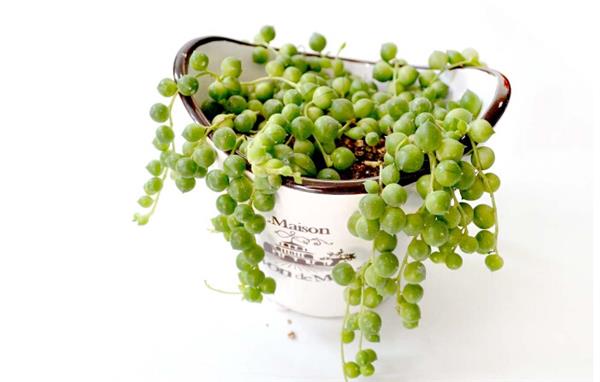
Introduction to String of Pearls
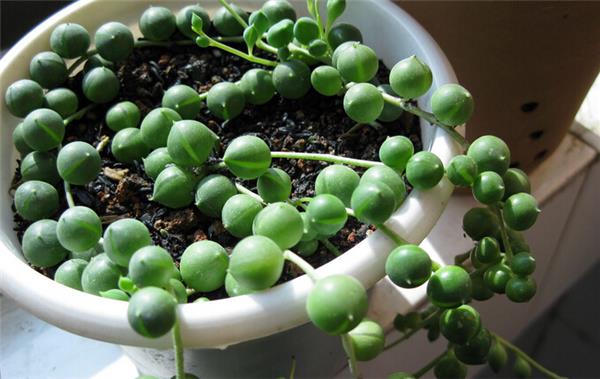
String of Pearls is a type of spider plant. Its scientific name is Senecio rowleyanus, and it also has a very cute name, "lover's tears," because it really looks like beads from a broken necklace, very lovely. Below is a detailed introduction to how to grow String of Pearls, so that more and more people will start paying attention to this plant, fully grasp all kinds of information about it, help it grow healthily, and contribute to greening the home.
Native to southern Africa, String of Pearls has a beautiful appearance and is very suitable as an ornamental plant. Its growth habit is to prefer warm, moist soil. It can tolerate drought, but not shade, and it has extremely strong vitality. It only needs a little water and nutrients to grow vigorously. It has few requirements for light and can grow in strong light as well as in weak light. The most suitable temperature for growth is between 15°C and 25°C. "Better dry than wet" is one key to growing String of Pearls. Too much light will scorch the plant, while too little light will lead to poor growth.
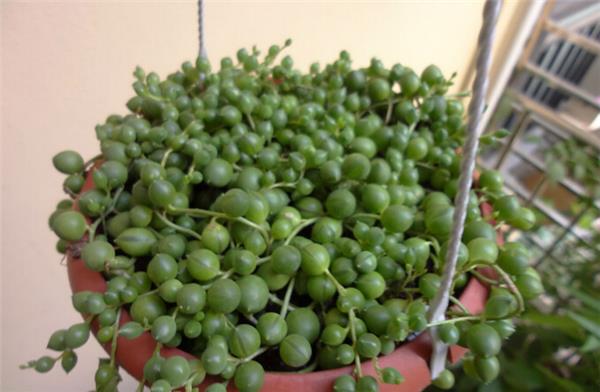
How to Grow String of Pearls
☆Detailed Guide to Growing String of Pearls 1: Propagation Method
String of Pearls is mostly propagated by cuttings. The stems and leaves can be trimmed into sections of 8-10 cm each, then inserted into the potting soil, half-covered, with humidity controlled between 50% and 60%. They root in 10 days to half a month, and with careful tending they can survive. At this time, strictly control the amount of watering and keep the potting soil in a state between dry and wet, which is best for plant growth.
☆Detailed Guide to Growing String of Pearls 2: Cultivation Management
"Better dry than wet" is one focus of growing String of Pearls. In addition, "light fertilizer, frequent application" is also an extremely important point. The saying "better dry than wet" is because String of Pearls, which comes from southern Africa, likes a warm environment and is relatively drought-tolerant but cannot tolerate waterlogging. So it is better to place it in a dry environment than to cause poor development through excessive watering. "Light fertilizer, frequent application" means that fertilizer should be applied often, but each time as a diluted fertilizer. Do not apply too much fertilizer at one time, which would cause problems in its growth.
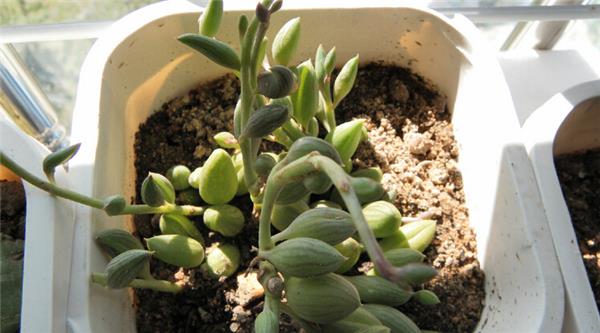
☆Detailed Guide to Growing String of Pearls 3: Pest Prevention
String of Pearls actually rarely suffers from pests, but such cases still occur. Generally speaking, the most common disease of String of Pearls is aphids, which occur in spring. When this happens, use 500 times diluted omethoate to kill them. In summer, mites appear, and 1000 times diluted dicofol can be used to kill them. When pests occur, pay attention to increasing leaf humidity, which can reduce pests, and ventilation facilities should also be in place.
String of Pearls grown in a small pot as a hanging plant is full of charm. Its round, plump leaves, like a string of wind chimes swaying in the wind, make it an ideal flower for hanging cultivation at home. So what are the care methods for String of Pearls in the four seasons?
Four-Season Care for String of Pearls:
☆1. In spring, as the temperature gradually rises, the plant begins to enter a vigorous growth period, and water evaporation is high. Generally, watering once every 2-3 days is appropriate.
☆2. In the high-temperature summer season, place it in a cool, ventilated spot to prevent rot caused by excessively high temperatures. At the same time, water less, because the plant is in a semi-dormant state at this time, water evaporation is reduced, and the roots absorb water slowly; otherwise, the stems are very likely to rot and the plant will die. But it should not be too dry either, because the stems of Senecio rowleyanus are extremely thin. If not watered for a long time, the fleshy leaves are prone to shriveling, nutrient and water transport becomes unbalanced, and branches wither and die, making recovery difficult. Therefore, master timely watering, generally choosing to water once every 4-5 days or so in the evening.
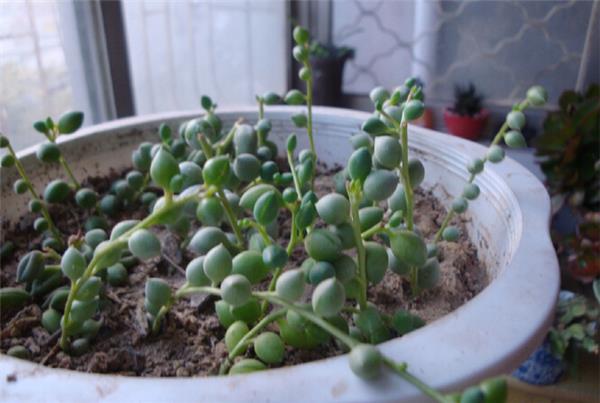
☆3. In autumn, the climate gradually becomes cooler, and the plant enters its second growth stage. At this time, pay attention to watering and moisture retention, and water only when dry. Increase light and apply liquid fertilizer as a top dressing. It likes light, but in summer and autumn high temperatures, avoid direct sunlight and provide 50% shading.
☆4. In winter, place it in a spot with ample sunlight. At this time, growth enters a stagnant state. Room temperature should be above 0°C, as long as it does not freeze. It should not be watered too much, but it should not be too dry either. Water at noon when sunlight is ample. Because the roots are relatively shallow, when potting, place more drainage material at the bottom of the pot.
String of Pearls is what I often call pearl spider plant, named because it is made up of strings of plump, full, emerald-green oval little leaves. This plant, like little green beads, gives people a very cute feeling, so it is very popular. What issues should be noted when growing String of Pearls?
Cultivation Precautions for String of Pearls
☆1. Because the leaves are fleshy and juicy, it is drought-tolerant. During cultivation, watering should be "better dry than wet"; this is one of the keys to success. When the weather is dry, spray more water on the leaves and vines to make up for the lack of moisture and keep the beads green and plump. It prefers partial shade. Strong sun exposure may scorch the beads, while too little light will make growth weak.
☆2. The plant's root system is very shallow, so it can be planted in a shallow pot. Generally, use a tile to cover the bottom hole, and spread a layer of coal cinder or coarse sand to increase air permeability and drainage. The soil is best leaf mold mixed with a certain amount of sand; the ratio of soil to sand is about 1:3.
☆3. It likes warmth and humidity, is relatively cold-tolerant and heat-tolerant, and the most suitable temperature is around 20°C-28°C. Growth is slow at both high and low temperatures. Especially in high-temperature environments above 30°C, it is almost dormant, so water and fertilize less; otherwise, root rot easily occurs--this is also one of the keys to successful cultivation.
☆4. In spring and autumn, when growth is vigorous, "light fertilizer, frequent application" should be used. Frequently spraying 1-3‰ nitrogen fertilizer and potassium dihydrogen phosphate on the leaf surface helps make the beads greener and plumper and improves ornamental value.
☆5. There are rarely pests or diseases. Aphids in spring are one of them; remove them promptly or spray 1500 times diluted omethoate to kill them. Mites in summer and autumn are another; use 1000 times diluted dicofol to kill them. Pay attention to ventilation and increase leaf humidity, which can reduce mite infection.
☆6. It can be propagated by cuttings. The vines very easily produce aerial roots. In spring and autumn, cut a few sections, bury half into sand or loose soil, and keep moist but not waterlogged. They will root quickly for planting.
 This is the detailed guide to growing String of Pearls. Follow the steps above, and you can help String of Pearls grow healthily. I hope everyone who reads this article can distinguish the various spider plants and understand their growth habits, so as to take good care of them and decorate our homes.
String of Pearls is what I often call pearl spider plant, named because it is made up of strings of plump, full, emerald-green oval little leaves. This plant, like little green beads, gives people a very cute feeling, so it is very popular. What issues should be noted when growing String of Pearls?
Cultivation Precautions for String of Pearls
☆1. Because the leaves are fleshy and juicy, it is drought-tolerant. During cultivation, watering should be "better dry than wet"; this is one of the keys to success. When the weather is dry, spray more water on the leaves and vines to make up for the lack of moisture and keep the beads green and plump. It prefers partial shade. Strong sun exposure may scorch the beads, while too little light will make growth weak.
☆2. The plant's root system is very shallow, so it can be planted in a shallow pot. Generally, use a tile to cover the bottom hole, and spread a layer of coal cinder or coarse sand to increase air permeability and drainage. The soil is best leaf mold mixed with a certain amount of sand; the ratio of soil to sand is about 1:3.
☆3. It likes warmth and humidity, is relatively cold-tolerant and heat-tolerant, and the most suitable temperature is around 20°C-28°C. Growth is slow at both high and low temperatures. Especially in high-temperature environments above 30°C, it is almost dormant, so water and fertilize less; otherwise, root rot easily occurs--this is also one of the keys to successful cultivation.
☆4. In spring and autumn, when growth is vigorous, "light fertilizer, frequent application" should be used. Frequently spraying 1-3‰ nitrogen fertilizer and potassium dihydrogen phosphate on the leaf surface helps make the beads greener and plumper and improves ornamental value.
☆5. There are rarely pests or diseases. Aphids in spring are one of them; remove them promptly or spray 1500 times diluted omethoate to kill them. Mites in summer and autumn are another; use 1000 times diluted dicofol to kill them. Pay attention to ventilation and increase leaf humidity, which can reduce mite infection.
☆6. It can be propagated by cuttings. The vines very easily produce aerial roots. In spring and autumn, cut a few sections, bury half into sand or loose soil, and keep moist but not waterlogged. They will root quickly for planting.
This is the detailed guide to growing String of Pearls. Follow the steps above, and you can help String of Pearls grow healthily. I hope everyone who reads this article can distinguish the various spider plants and understand their growth habits, so as to take good care of them and decorate our homes.