How to Grow Snake Plant 'Laurentii'? Learn It Easily in a Few Simple Steps
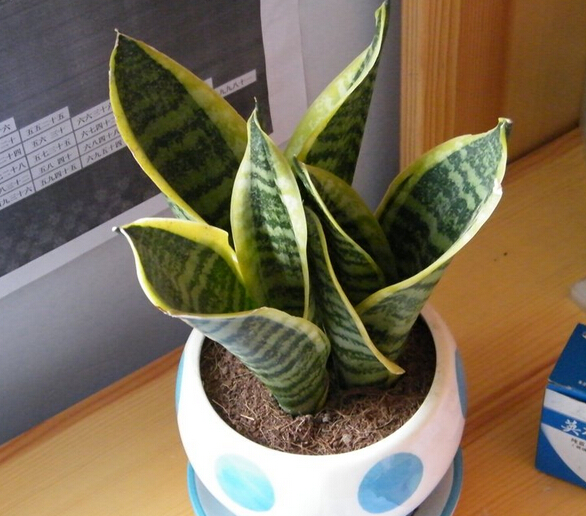
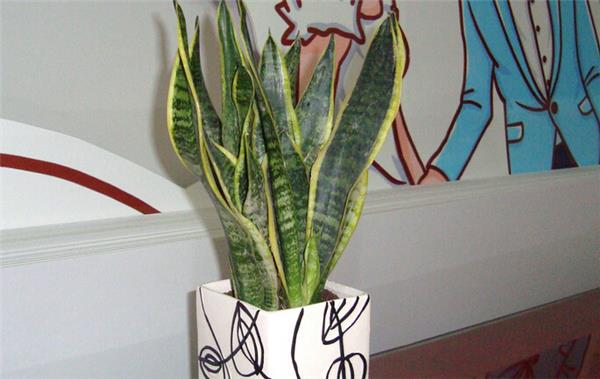
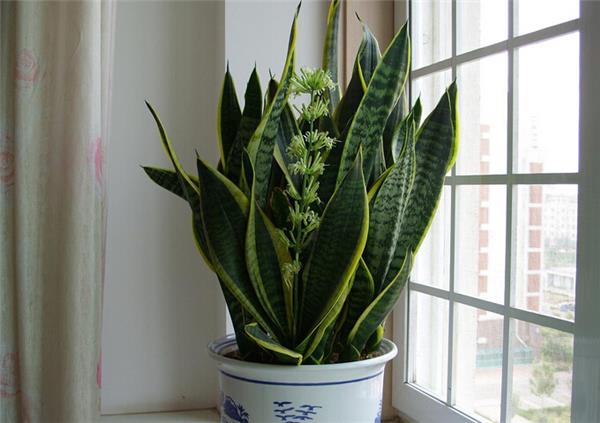
Snake Plant 'Laurentii' (Sansevieria trifasciata 'Laurentii') is a perennial herbaceous plant distributed in both tropical and subtropical regions. Its leaves are firm and upright, with grayish-white and dark green tiger-tail-like horizontal bands and markings across the surface, giving it a resolute, unusual and intriguing appearance. The plant form and leaf color of Snake Plant 'Laurentii' vary considerably, making it elegant and distinctive, and especially suitable for decorating studies, living rooms and offices, where it can be enjoyed for a long time. In addition, it is said that Snake Plant 'Laurentii' can also absorb harmful gases such as formaldehyde, making it even more popular. So what are the cultivation methods for Snake Plant 'Laurentii'?
Cultivation Methods for Snake Plant 'Laurentii'
☆——1. Propagation. The main propagation methods for Snake Plant 'Laurentii' are division and cuttings. With division, the new and old plants can be separated, and the old plant can be transplanted into another pot or planted in the ground. For propagation by cuttings, first cut the leaves into 7-8 cm long segments and insert them into the prepared growing medium, taking care to spray with water and treatment solution; they will root after 20-30 days.
☆——2. Temperature. Snake Plant 'Laurentii' grows best at 20-25°C and can be grown indoors year-round; when the weather warms up, it can be moved outdoors, where it will grow even better. From late autumn to early winter, when the weather turns cold, it should be placed indoors, preferably somewhere at 10°C or above, and watering should be controlled well. If the room temperature drops below 5°C, watering can be stopped; watering at low temperatures can very easily cause the death of Snake Plant 'Laurentii'.
☆——3. Watering. When cultivating Snake Plant 'Laurentii', more water should be given during the hot season, keeping the potting soil moist at all times. Snake Plant 'Laurentii' dislikes strong light, so it should also be shaded appropriately in summer; in winter, water less to keep the potting soil dry, and place it in a sunny spot. When growing it in a plastic pot or porcelain pot, water less, and err on the side of dryness rather than moisture; waterlogging will cause the roots of Snake Plant 'Laurentii' to rot and the plant to die. During the growing season of Snake Plant 'Laurentii', take care to keep the leaves clean; a spray bottle can be used to rinse them with water frequently, which also helps maintain humidity.
☆——4. Fertilizing. Snake Plant 'Laurentii' does not have high fertilizer requirements. In spring, a single application of decomposed cake fertilizer, such as sesame oil cake or soybean cake, can be given. During the growing season, Snake Plant 'Laurentii' only needs 1-2 applications of dilute liquid fertilizer per month to keep its leaves lush, green and thick. In winter, Snake Plant 'Laurentii' enters its dormant period and fertilizing should be stopped.
☆——5. Soil and planting. For potted Snake Plant 'Laurentii', it is best to use a clay pot for planting, and a plastic or porcelain pot can be placed outside the clay pot for ventilation and a more attractive appearance. Snake Plant 'Laurentii' prefers loose, breathable soil with good drainage. A nutritious soil mix can be made by blending leaf mold, loam or garden soil with an equal amount of coarse sand, plus a little decomposed manure, and mixing evenly.
☆——6. Pest and disease control. The main pests and diseases of Snake Plant 'Laurentii' are scale insects, rot disease and sunscald. Scale insects harm the plant's leaves and cause them to necrose, so timely control should be carried out to prevent the plant from dying. If rot disease appears, the potting medium should be replaced promptly and a treatment solution sprayed. When sunscald is found, ventilation should be increased or water introduced to lower the temperature, and appropriate shading should be provided during the hot season.
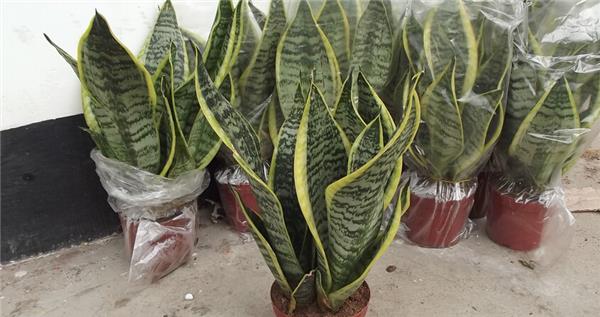
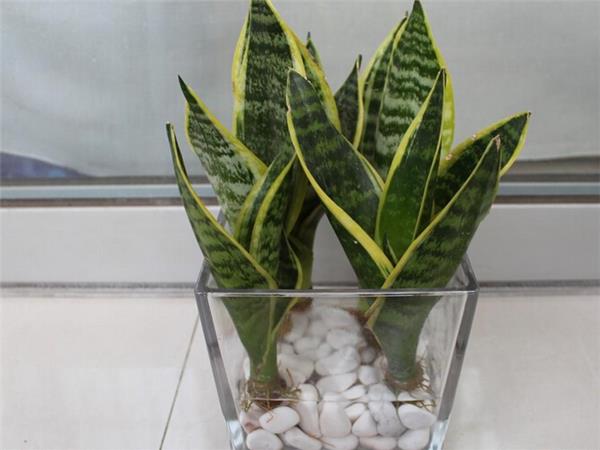
☆——7. Companion planting. When planting Snake Plant 'Laurentii', some plants can be planted around it as companions, but the companion plants chosen should have characteristics basically similar to those of Snake Plant 'Laurentii', which makes them easier to manage; the whole pot then complements one another and looks just right. Companion planting allows full play to creativity, effectively enhancing ornamental value while also making planting more enjoyable.
Snake plant likes warm temperatures. It needs plenty of sunlight but can also tolerate moderate shade. The suitable temperature is 18°C to 27°C, and growth stops below 13°C. Winter is its dormant period; in well-drained sandy soil, it can survive in environments where the temperature does not drop below 0°C. So what are the benefits of such a tough snake plant?
The Benefits of Snake Plant 'Laurentii'
☆——1. Beautifying the home environment
Snake Plant 'Laurentii' has the effect of beautifying and accenting the home environment. Although snake plant has no brightly colored flowers and no showy, flamboyant form, it actually has a tender yet strong character, and its distinctive patterns make it a rather special plant among many, with quite good results when used as an accent. A pot of vigorously growing snake plant placed in a corner of the home adds considerably to its appeal.
☆——2. Purifying formaldehyde
Snake Plant 'Laurentii' is a perennial herbaceous foliage plant with creeping rhizomes and linear lanceolate leaves. It has strong adaptability and is not demanding about its growing environment, making it very suitable for decorating living rooms, studies and similar places. Besides being ornamental, its greatest feature is that it can purify the air. According to experts, snake plant can absorb more than 80% of harmful gases indoors, and its ability to handle formaldehyde in particular is extremely strong; the effect is especially noticeable in newly renovated homes or after newly purchased furniture. Moreover, snake plant can also protect against radiation, reducing the harm to family members from toxic gases, radiation and the like.
Snake plant is a perennial herbaceous plant of the family Dracaenaceae, also known as tiger skin plant and brocade plant. It belongs to the genus Sansevieria in the family Dracaenaceae, and its varieties include Snake Plant 'Laurentii' and Snake Plant 'Silver Hahnii'. It is native to western and southern Africa. Because of its high ornamental value, it is now used as an ornamental potted plant and can commonly be seen in flower and bird markets and homes around the world. What are the classifications of snake plant?
Varieties and Classification of Snake Plant
☆——1. Snake Plant 'Laurentii'. Snake Plant 'Laurentii', also known as yellow-edged snake plant, is a cultivated variety of snake plant. The leaf margins have fine yellow band-like stripes, the middle is light green, and there are dark green horizontal stripes. It has higher ornamental value than common snake plant.
☆——2. Golden-edged short-leaf snake plant. Golden-edged short-leaf snake plant, also known as yellow short-leaf snake plant, is a variety of short-leaf snake plant. Apart from the yellow band at the leaf margin being wider and accounting for about half of the leaf, its other characteristics are similar to those of short-leaf snake plant. The leaves are short, broadly oblong, and arranged in a rosette. Its ornamental value is even higher.
☆——3. Short-leaf snake plant. Short-leaf snake plant is a cultivated variety of snake plant. The plant is low-growing, with a height not exceeding 20 cm. The leaves grow in a spiraling pattern from the center outward, overlapping one another to form a bird's nest shape. The leaves are short and wide, long ovate, with tapering tips and a distinct short tail point; the leaves are 10-15 cm long and 15-22 cm wide, dark green in color, with relatively wide yellow bands on both sides of the leaf margin and irregular silvery-gray streaks on the leaf surface. The leaves are clustered and lush.
 The above is the introduction to the cultivation methods for Snake Plant 'Laurentii' and the benefits of snake plant that we have shared with you. We hope that through this article you can better understand Snake Plant 'Laurentii'.
Snake plant is a perennial herbaceous plant of the family Dracaenaceae, also known as tiger skin plant and brocade plant. It belongs to the genus Sansevieria in the family Dracaenaceae, and its varieties include Snake Plant 'Laurentii' and Snake Plant 'Silver Hahnii'. It is native to western and southern Africa. Because of its high ornamental value, it is now used as an ornamental potted plant and can commonly be seen in flower and bird markets and homes around the world. What are the classifications of snake plant?
Varieties and Classification of Snake Plant
☆——1. Snake Plant 'Laurentii'. Snake Plant 'Laurentii', also known as yellow-edged snake plant, is a cultivated variety of snake plant. The leaf margins have fine yellow band-like stripes, the middle is light green, and there are dark green horizontal stripes. It has higher ornamental value than common snake plant.
☆——2. Golden-edged short-leaf snake plant. Golden-edged short-leaf snake plant, also known as yellow short-leaf snake plant, is a variety of short-leaf snake plant. Apart from the yellow band at the leaf margin being wider and accounting for about half of the leaf, its other characteristics are similar to those of short-leaf snake plant. The leaves are short, broadly oblong, and arranged in a rosette. Its ornamental value is even higher.
☆——3. Short-leaf snake plant. Short-leaf snake plant is a cultivated variety of snake plant. The plant is low-growing, with a height not exceeding 20 cm. The leaves grow in a spiraling pattern from the center outward, overlapping one another to form a bird's nest shape. The leaves are short and wide, long ovate, with tapering tips and a distinct short tail point; the leaves are 10-15 cm long and 15-22 cm wide, dark green in color, with relatively wide yellow bands on both sides of the leaf margin and irregular silvery-gray streaks on the leaf surface. The leaves are clustered and lush.
The above is the introduction to the cultivation methods for Snake Plant 'Laurentii' and the benefits of snake plant that we have shared with you. We hope that through this article you can better understand Snake Plant 'Laurentii'.