How to Prune Asparagus Fern: How to Prune It into a Beautiful Asparagus Fern
Asparagus fern is an excellent foliage and form plant, elegant in shape and light in posture, making it a very suitable green plant for the home. However, the stems of asparagus fern are climbing in nature and grow quickly; if left to grow freely, they can reach several meters in height, losing their layered structure and their light, airy quality. Therefore, the dead branches and old vines of asparagus fern should be pruned appropriately to encourage the sprouting of new vines and to shape the plant. Pruning asparagus fern is a necessary measure for maintaining and enhancing its ornamental value, so how should we prune asparagus fern?
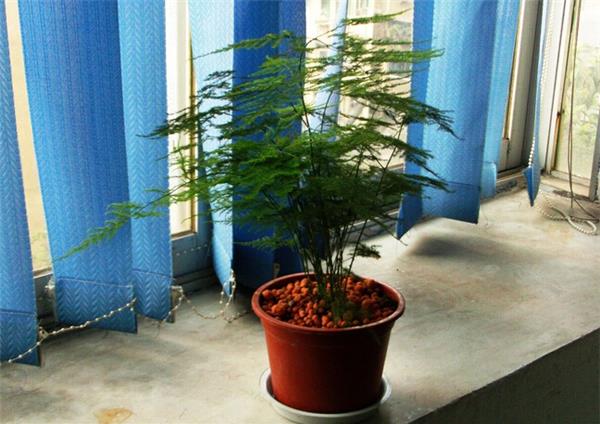
The pruning of asparagus fern aims to maintain the plant's shape and the density of its leaf-like branches, with an even, staggered arrangement of high and low. Pruning can be divided into: leaf-like branch pruning, whole-plant renewal pruning and trailing branch pruning.
How to Prune Asparagus Fern
❉1. Pruning asparagus fern where leaf-like branches are missing: When the small leaf-like branches on the main stems of asparagus fern do not grow in ideal positions or are missing for some reason, you can cut back the main stem at an appropriate position to force the dormant buds there to sprout. Generally, the height at which you cut is the height at which the leaf-like branches will sprout, and the position of the thorns on the branch is where the leaf-like branches will sprout, while the thicker the branch, the higher the sprouting rate of the dormant buds.
❉2. Whole-plant renewal pruning of asparagus fern: If the entire plant's branches and leaves grow poorly due to severe sunburn, overly dry potting soil, lack of fertilizer or some unknown reason, whole-plant renewal can be carried out. During renewal pruning, all leaf-like branches can be cut off, but pay attention to the position of the backward-pointing thorns on the branches, because they determine whether the distribution of the retained branches is even. Pruning during the growing season generally makes it easy for new branches to sprout; after pruning, watering should also be appropriately reduced, and the potting soil must absolutely not be kept too wet, otherwise the pruning will fail.
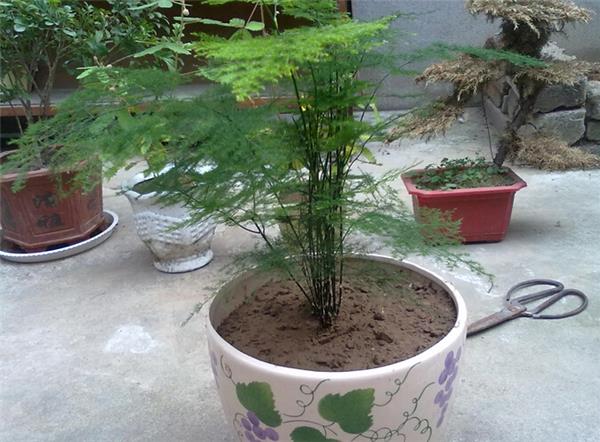
❉3. Trailing branch pruning: Trailing branches are generally weak and slender. If you do not want to keep seeds and want the plant to look good, you can cut them off from the base all at once; if you want to increase the number of leaf-like branches or fill a gap, you can cut back at a certain position. When pruning, pay special attention to comprehensive management such as fertilizing.
Asparagus fern is a evergreen climbing foliage plant that stays green all year round and is a very famous ornamental plant, also known as cloud bamboo and cloud-sheet pine. Asparagus fern is a plant that likes warmth and partial shade; it does not need very abundant light, but it does need sufficient moisture. The growth of asparagus fern has high requirements for soil; generally, its growth requires soil that is loose, fertile and well aerated. Asparagus fern is a plant that is not cold-tolerant and not drought-tolerant, so when planting it, it needs sufficient moisture but must not have waterlogging. In the process of growing asparagus fern, you will encounter various problems; let's take a look below.
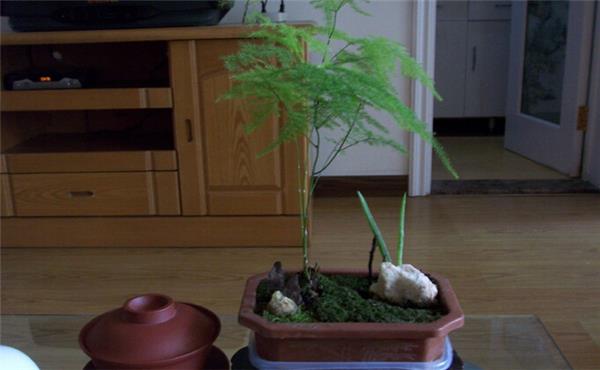
How to Grow Asparagus Fern?
Understanding its habits is key. Asparagus fern is a shade-loving plant that likes a warm and humid climate; it is neither cold-tolerant nor tolerant of summer heat. In winter, the temperature must not be lower than 10°C. If it drops below 5°C, it will suffer damage. If the summer temperature exceeds 5°C, growth will stop and the "leaves" will turn yellow. It has relatively strict requirements for light conditions: it can neither be shaded all year round nor withstand direct sun exposure; half a day in the blazing sun will also cause it to wither and turn yellow. Therefore, asparagus fern should be moved indoors for cultivation and placed in diffused light to grow, avoiding direct sunlight. Keep the soil fertile and well drained and aerated, and control the indoor temperature above 5°C in winter so that it can safely overwinter.
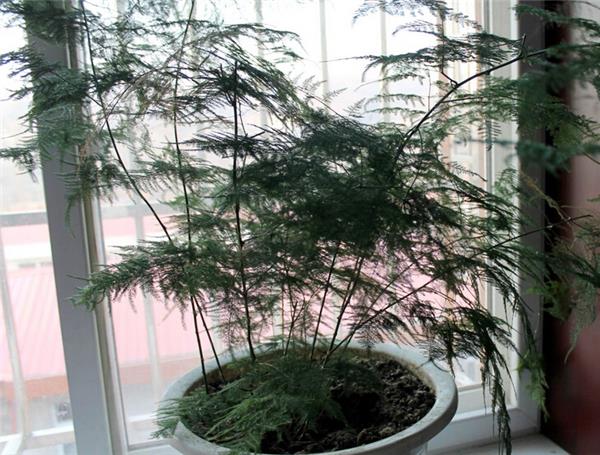
What to Do If Asparagus Fern Leaves Turn Yellow?
The reasons for asparagus fern leaves turning yellow may be too strong light, too rapid water evaporation, overly dry potting soil, or poor aeration in the pot; in severe cases, leaf drop and withering may also occur. To make asparagus fern lush with emerald-green color and upright stems, attention should be paid to applying more nitrogen and potassium fertilizer. Generally apply once about every half a month, and at the same time always ensure sufficient moisture in the pot. Solving the problem of asparagus fern leaves turning yellow is not enough; to make asparagus fern grow well, you should also pay attention to how to prune asparagus fern.
Asparagus fern is tolerant of pruning. During the spring and autumn growing seasons, you can prune the shape according to personal preference, and promptly cut off dense branches, weak branches and dead branches. After pruning, ventilation and light penetration are improved, which can stimulate the sprouting of new buds, and the plant will become more luxuriant. In addition, asparagus fern is most prone to red spider mites. Once pest infestation occurs, the leaves quickly turn completely yellow and lose their ornamental value. At this time, you can cut off all the parts with leaves and submerge the entire pot and plant in water for about half an hour. In a week, new buds will sprout and the pest problem will be eliminated.
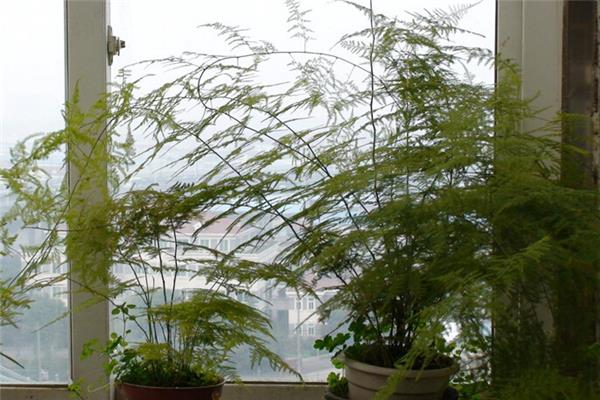
Asparagus fern, also known as cloud-sheet pine, thorn asparagus and cloud bamboo, is a perennial evergreen climbing foliage plant and a famous ornamental plant. It is the plant asparagus fern of the genus Asparagus in the Liliaceae family; its roots are used as medicine, having effects in treating acute bronchitis and relieving cough, and having a lung-moistening function. It is mainly grown in pots for its foliage and is also an important cut-foliage material. What great uses does the tiny asparagus fern have?
The Uses of Asparagus Fern
Asparagus fern can not only improve cultural refinement, but also has a certain regulating effect on people with liver disease, mental depression and low mood. At night, in addition to absorbing harmful gases such as sulfur dioxide, nitrogen dioxide and chlorine, asparagus fern can also secrete gases that kill bacteria, reducing the occurrence of infectious diseases such as colds, typhoid and laryngitis, which is greatly beneficial to human health.
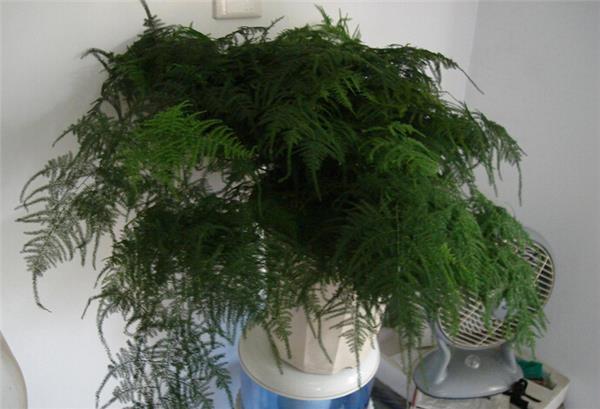
❉The Benefits of Asparagus Fern:
Nature and flavor: bitter, cold.
Effects and indications: cools the blood and detoxifies, promotes urination and treats strangury.
Usage and dosage: for internal use: 5-8 qian of asparagus fern, decocted in water and taken with rock sugar.
Medicinal identification: character identification. The roots are slender, slightly fleshy, 15-24cm long and 3-4mm in diameter. The surface is yellowish-white, with wrinkles of varying depth and fine branch roots. The texture is relatively flexible and not easy to break; the cross-section is yellowish-white. The odor is slightly fragrant, and the taste is bitter.
❉Supplementary formulas:
① To treat coughing blood due to stagnant heat: five to eight qian of asparagus fern. Mix with an appropriate amount of boiling water and rock sugar and stew to take.
② To treat dribbling urination: one liang of asparagus fern. Add an appropriate amount of water and decoct, take half a bowl, twice a day.
After reading the editor's introduction, do you now understand how to grow asparagus fern, what to do when its leaves turn yellow, how to prune asparagus fern, and the benefits of asparagus fern? As long as you care for it attentively, you can also grow asparagus fern beautifully, with luxuriant branches and leaves!
Submerge the entire pot and plant in water for about half an hour. In a week, new buds will sprout and the pest problem will be eliminated.
Asparagus fern, also known as cloud-sheet pine, thorn asparagus and cloud bamboo, is a perennial evergreen climbing foliage plant and a famous ornamental plant. It is the plant asparagus fern of the genus Asparagus in the Liliaceae family; its roots are used as medicine, having effects in treating acute bronchitis and relieving cough, and having a lung-moistening function. It is mainly grown in pots for its foliage and is also an important cut-foliage material. What great uses does the tiny asparagus fern have?
The Uses of Asparagus Fern
Asparagus fern can not only improve cultural refinement, but also has a certain regulating effect on people with liver disease, mental depression and low mood. At night, in addition to absorbing harmful gases such as sulfur dioxide, nitrogen dioxide and chlorine, asparagus fern can also secrete gases that kill bacteria, reducing the occurrence of infectious diseases such as colds, typhoid and laryngitis, which is greatly beneficial to human health.
❉The Benefits of Asparagus Fern:
Nature and flavor: bitter, cold.
Effects and indications: cools the blood and detoxifies, promotes urination and treats strangury.
Usage and dosage: for internal use: 5-8 qian of asparagus fern, decocted in water and taken with rock sugar.
Medicinal identification: character identification. The roots are slender, slightly fleshy, 15-24cm long and 3-4mm in diameter. The surface is yellowish-white, with wrinkles of varying depth and fine branch roots. The texture is relatively flexible and not easy to break; the cross-section is yellowish-white. The odor is slightly fragrant, and the taste is bitter.
❉Supplementary formulas:
① To treat coughing blood due to stagnant heat: five to eight qian of asparagus fern. Mix with an appropriate amount of boiling water and rock sugar and stew to take.
② To treat dribbling urination: one liang of asparagus fern. Add an appropriate amount of water and decoct, take half a bowl, twice a day.
After reading the editor's introduction, do you now understand how to grow asparagus fern, what to do when its leaves turn yellow, how to prune asparagus fern, and the benefits of asparagus fern? As long as you care for it attentively, you can also grow asparagus fern beautifully, with luxuriant branches and leaves!