Rhododendron pulchrum cultivation tips and a detailed guide to routine care
Not many people have seen the plant Rhododendron pulchrum. Next, let us take a look together at Rhododendron pulchrum cultivation tips and routine care for Rhododendron pulchrum.
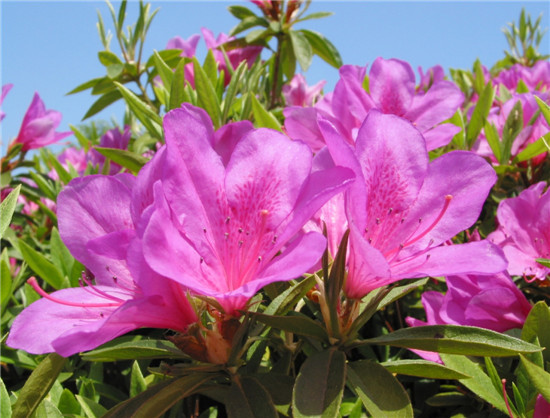
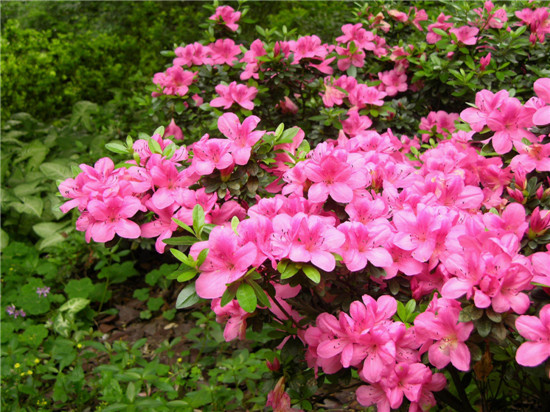
Rhododendron pulchrum prefers a cool, humid environment with plenty of sunlight. It is cold-hardy, afraid of heat, tolerant of partial shade, and not tolerant of prolonged intense sun exposure. The optimal growing temperature is 15-28°C, and in winter it can withstand low temperatures of -8°C. The soil should preferably be fertile, loose, well-drained acidic sandy loam. Traditional cultivars include 'Yu Hudie', 'Zi Hudie', 'Liuqiu Hong', 'Yu Ling', and others. Rhododendron pulchrum, summer azalea, Western azalea, Rhododendron molle, Rhododendron mucronulatum, Rhododendron ovatum, and Rhododendron yunyin. Fertilize once before and once after flowering each year, prune out overly dense inner branches, cut back leggy branches, and remove dead and diseased branches. When Rhododendron pulchrum is planted in mass beds, it looks like brocade in bloom, a riot of purple and red, and can enhance the natural landscape effect of a garden. It ranges from large trees (over 20 m tall) to small shrubs (only 10 cm-20 cm tall), with the main trunk upright or creeping, and branches alternate or whorled.
Evergreen or semi-evergreen shrub, up to 3 m tall, sparsely branched, young branches densely covered with light brown flat appressed hairs, leaves papery, dimorphic, elliptic to elliptic-lanceolate or oblong-obovate, 2.5-5.6 cm long, 8-18 mm wide, apex acute, with a mucronate tip, base cuneate, initially with scattered yellow sparse appressed hairs, later nearly hairless above, apex acute to obtuse, base cuneate, margin ciliate, petiole hairy, petiole 4-6 mm long, both leaf surfaces hairy with more hairs along the midvein, autumn leaves narrowly obovate or elliptic-lanceolate, thick and glossy.
Cultivation techniques for Rhododendron pulchrum
Potting soil
It prefers acidic soil and requires loose, well-drained soil rich in humus. Take 4 parts leaf mold, 2 parts old potting soil, and 1 part each of sand, burned soil, and sawdust, add an appropriate amount of cake fertilizer, mix well, and after composting for half a month it is ready to use.
Potting up
When potting up, keep more of the original soil around the seedling roots and damage the roots as little as possible; appropriately shorten overly long roots, and for larger plants prune the upper branches. First cover the drainage hole at the bottom of the pot with overlapping broken tiles, spread a layer of coarse-grained soil as a drainage layer, place part of the growing medium in the center, then put the plant into the pot and straighten it, add soil and firm it down. The planting depth should be equivalent to the original depth at which the seedling was lifted. Water thoroughly.
Watering
It fears both drought and waterlogging. From the end of November to the first ten days to mid-February of the following year, most open-ground potted Rhododendron pulchrum are in a dormant or semi-dormant state, so water appropriately according to whether the potting soil is dry or wet. In late February, when temperatures rise and flower buds and leaf buds begin to swell, appropriately increase the frequency of watering. From March to June is the period of vigorous new shoot growth, when water demand increases, so the frequency of watering should be increased as needed. From July to September, temperatures are high, so water every day. After October, the amount of watering can be reduced.
Fertilizing
It does not like heavy fertilizer and should be given dilute fertilizer frequently. Use slow-release fertilizers as base fertilizer, such as organic fertilizers like cake fertilizer, bone meal, and dried aged manure, buried in the potting soil when potting up, repotting, or in winter. Use quick-acting fertilizers as top dressing, such as organic human manure or nitrogen, phosphorus, and potassium chemical fertilizers. From the beginning of spring to before flowering, apply phosphorus and potassium fertilizer 1-2 times per month, and stop fertilizing during flowering. After the weather turns cool in autumn, apply 1-2 liquid fertilizer applications mainly of phosphorus fertilizer, and stop top dressing after winter begins.
Key cultivation points
For potted plants, repot every spring after flowering, using acidic soil rich in humus. Water promptly at ordinary times, especially during the flowering period, keeping the potting soil from drying out. Fertilizer and water are key to growth and development; during the growing season, fertilize once every half month or use Huiyou 21-7-7 acid fertilizer. In winter, growth basically stops, so fertilizer and water should be strictly controlled. During the growing season, pinching and pruning must be done, removing dead branches and adventitious shoots, which helps the tree shape develop in a balanced way. For ground planting, choose acidic soil in a high, dry location with ample sunlight and a deep soil layer. Fertilize once before and once after flowering each year, prune out overly dense inner branches, cut back leggy branches, and remove dead and diseased branches.
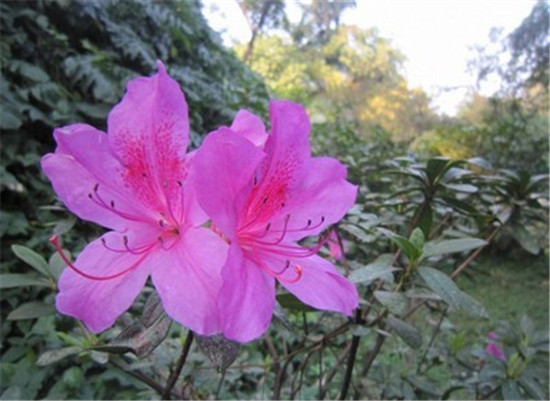
A newly renovated house is not suitable for growing Rhododendron pulchrum, because harmful gases such as formaldehyde in the renovated house have not yet dissipated and can easily harm Rhododendron pulchrum. Rhododendron pulchrum, like azaleas, is a difficult flowering plant to grow, so when planting Rhododendron pulchrum you need to carefully grasp the plant's habits. A riot of purple and red always means spring; when Rhododendron pulchrum reaches maturity in its flowering period, it can produce purple blooms similar to those of roses. Friends who love growing flowers can try planting Rhododendron pulchrum, this brilliantly colored flower, and it will surely make your life more colorful.
The above is all the content I have summarized for everyone on cultivation tips for Rhododendron pulchrum and an introduction to routine care for Rhododendron pulchrum. I hope this article can help everyone. Please also continue to follow us.