What is Amaryllis? A Complete Introduction to This Plant
There are a great many varieties of amaryllis, and there are a great many varieties of amaryllis. Next, let us take a look at detailed information about amaryllis!
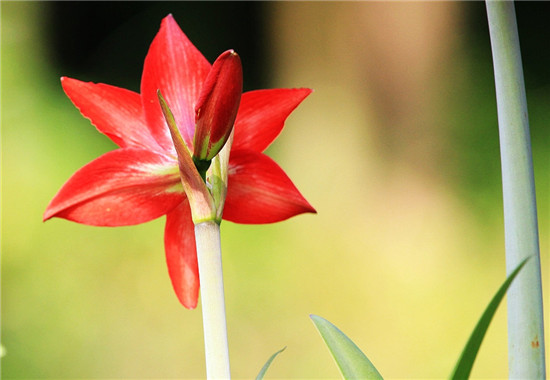
Amaryllis, also known as: belladonna lily, hundred-branch lotus, trumpet flower, pillar-top red, noble orchid, belladonna lily, opposite-leaf lotus, etc. It is a perennial bulbous herbaceous plant of the Amaryllidaceae family, genus Hippeastrum.
The bulb is plump and nearly spherical; the flower stem is 6-7.5cm long; the outer skin is yellowish-brown or pale green, varying with flower color. The leaves are opposite on both sides, broad and band-shaped, slightly pointed at the tip, 6-8 in number, elongating after flowering. The main flower stalk is hollow, taller than the leaves, covered with white powder, bearing 1-4 flowers; the flower shape resembles a trumpet, and the flowering period runs from late winter to spring, sometimes extending to early summer.
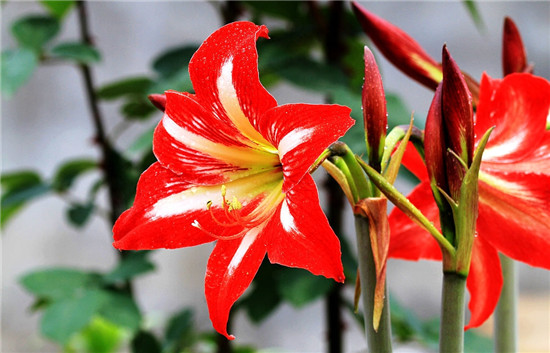
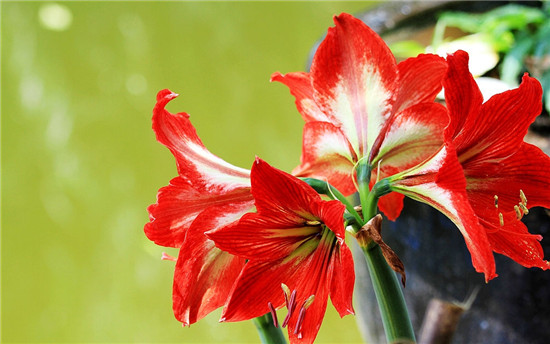
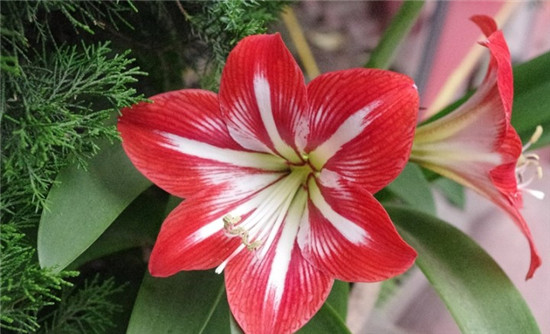
The capsule is spherical, and the fruit ripens in autumn. Modern cultivated varieties are mainly hybrid large-flowered types; flower colors include white, pale red, rose red, orange-red and bright red, with various stripes, and the flower diameter reaches more than 25cm. Suitable for keeping at home. Distribution area: native to the Peru and Brazil region, now distributed across the Americas, Asia, Europe and Africa.
It likes a warm, humid climate; the optimal growing temperature is 18-25°C. It does not like extreme heat, and sunlight should not be too intense, so it should be kept under a shade structure. It fears waterlogging. During the winter dormant period, it requires a cool and humid climate, ideally 10-12°C, and not lower than 5°C. It likes sandy loam rich in humus and with good drainage.
If the soil is highly moist in winter and the temperature exceeds 25°C, the stems and leaves grow vigorously, hindering dormancy and directly affecting normal flowering the following year. Light also has a certain influence on the growth and flowering of amaryllis; avoid strong direct light for long periods in summer, and ensure sufficient sunlight when cultivating in winter. The soil should be loose, fertile sandy loam with a pH of 5.5-6.5, and waterlogging must be strictly avoided.
Is amaryllis toxic:
Amaryllis belongs to the Amaryllidaceae family, and the bulbs of Amaryllidaceae plants all contain lycorine and narcissine. It is best to keep it maintained in a high place where children cannot reach it. Amaryllis has gorgeous flower colors and graceful leaves, making it a flower with very high ornamental value. You should not give up growing it just because it is slightly toxic. In fact, many flowers are toxic, such as narcissus, jasmine, croton, crown of thorns and so on. We should not give up eating for fear of choking; as long as you take care not to touch its sap and wash your hands promptly after contact, it is fine.
Do not place amaryllis in the room where you sleep, because in sunlight the plant performs photosynthesis, taking in carbon dioxide and releasing oxygen, while without sunlight the plant also needs oxygen. You can place the amaryllis in the living room.
How to grow amaryllis:
1. Soil: The soil for planting amaryllis should be loose, fertile sandy loam with a pH of 5.5-6.5, and waterlogging must be strictly avoided. The potting soil can be prepared by mixing 2 parts decomposed stable manure soil, 6 parts leaf mold and 2 parts sandy soil.
2. Watering: Amaryllis needs to be kept moist, and watering should be thorough. But avoid excessive water and poor drainage. Generally, indoor air humidity is sufficient.
3. Sunlight: Amaryllis likes sunlight, and a moderate amount of direct sunlight is acceptable, but not for too long. It should be placed by a window with bright light and good ventilation, without strong direct light.
4. Temperature: Amaryllis likes warmth and is not cold-tolerant. In summer it prefers coolness, with an ideal temperature of 18-22°C. During the winter dormant period it requires a cool, dry environment, and the temperature must not be lower than 5°C.
5. Fertilizing: Amaryllis likes fertilizer. When the leaves have grown to 5-6 cm long, start applying top dressing, generally applying decomposed cake fertilizer water once every half month; after flowering, change to applying it about once every 20 days, to promote bulb enlargement and the production of new bulbs.
6. Pests: To make amaryllis grow vigorously and bloom early, pest and disease control should be carried out, spraying pesticide once a month. Spraying should be done on clear days at around 9 a.m. and 4 p.m.; do not spray under the strong midday sun, to prevent chemical damage.
7. Pruning: Amaryllis grows fast, and its leaves are long and dense. When repotting and changing the soil, cut away withered leaves, dead roots, and roots and leaves affected by pests and diseases, leaving the vigorous leaves.
The above is the full content of my summary of what amaryllis is and what an introduction to amaryllis includes. I hope this article can help everyone. Please also continue to follow us.