How to Grow Peace Lilies: A Few Steps to a Healthy Peace Lily
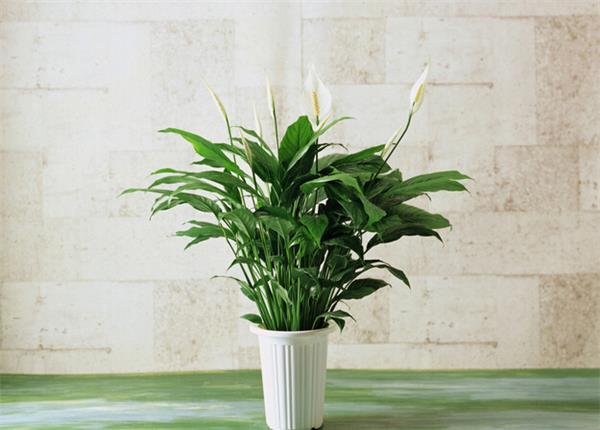
The peace lily (Spathiphyllum) is much loved by new plant owners for its easy care and elegant style. Besides being called peace lily, it is also known as white anthurium, and it is a very fine ornamental plant. So do you know how to grow a peace lily? And what points should you watch out for when growing one? Let's find out together below.
How to Grow Peace Lilies
❉1. Soil: Potted peace lilies require loose soil with good drainage and aeration; heavy clay soil must not be used. Generally, a mix of leaf mold, peat soil and a small amount of perlite can be prepared as the growing medium; add a small amount of organic fertilizer as a base fertilizer when planting.
❉2. Timing: Do this in spring from March to May, together with repotting, or in autumn.
❉3. Division: Choose vigorous two-year-old plants for propagation by division. Lift the whole peace lily out of the pot and cut the rhizome apart from the base of the clump, making sure each division has at least 3 to 4 leaves.
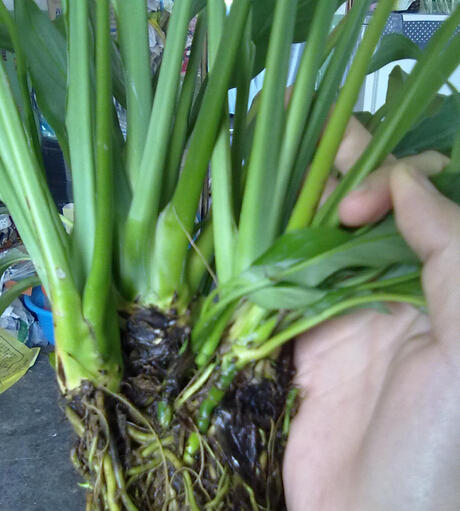
❉4. Potting up: Replant the divided plants into pots and place them in a semi-shaded spot to recover. Wait for them to root. Note that when cutting, you must keep a section of stem, then coat the wound with wood ash to prevent rot. Once the root system has returned to normal, move on to regular care.
❉5. Light: Light is very important for plant growth. Peace lilies need good light in winter and early spring, but as the light grows stronger you should shade them gradually. If the plant is displayed in a shaded spot, it must not be placed directly in the sun to bake, as this is very bad for its growth.
❉6. Temperature: The peace lily is a heat-loving species and should be grown in a warm greenhouse. In winter, the minimum nighttime temperature should be 14-16°C, and the daytime temperature should be around 25°C.
❉7. Watering: During the growing period, keep the potting soil moist, but do not water too much. Overwatering keeps the potting soil wet for long periods, which easily causes root rot and yellowing, withered plants.
❉8. Fertilizing: Do not apply concentrated or raw fertilizer, and after applying solid fertilizer, water once with clear water. It is best to use dilute liquid fertilizer instead of clear water for irrigation; this generally avoids fertilizer burn, and the peace lily will grow very lushly.
❉9. Pests: Plants are most attractive to pests during the growing period, so regularly spray with acaricides specifically for mites, such as dicofol, hexythiazox, and pyridaben.
❉10. Repotting: Repot once every 1-2 years. Along with repotting, prune the roots, remove some old roots and overly long roots, pick out the old soil, and replace it with fresh growing medium to encourage the peace lily to bloom.
Points to Note When Growing Peace Lilies
❉1. Because peace lilies grow quickly and have a high fertilizer requirement, liquid fertilizer must be applied once every 1-2 weeks during the growing season;
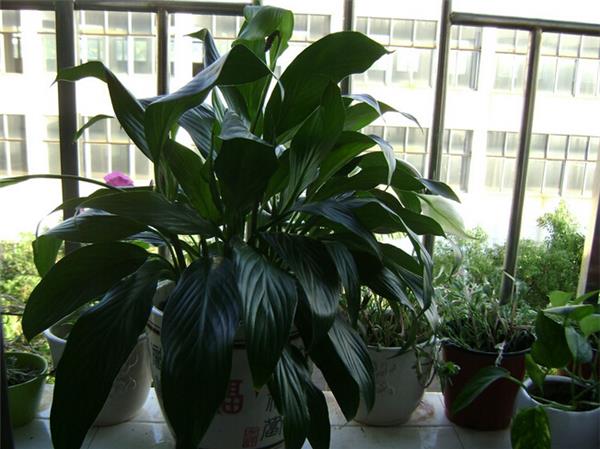
❉2. At the same time, supply enough water and keep the potting soil moist regularly. During high temperatures, also spray water on the leaves and the ground to raise air humidity. If the surrounding environment is too dry, new leaves become smaller and yellow, and in severe cases wither, yellow and fall off. In late autumn and winter, reduce watering and just keep the potting soil slightly moist;
❉3. It requires semi-shade or scattered light conditions, and during the growing season it must be shaded at 60%-70%. If the light is too strong, the leaves are easily scorched and burned, and the leaf color becomes dull and loses its luster; if the light is too dim for a long time, the plant grows weakly and does not bloom easily;
❉4. As a heat-loving species, long periods of low temperature and dampness easily cause root rot and yellowing, withering of the above-ground parts, so in winter pay attention to cold protection and warmth, while keeping the potting soil moist.
Peace lilies are relatively shade-tolerant; about 60% scattered light is enough to meet their growth needs, so they can be grown year-round indoors in a spot with bright, scattered light. In summer, 60%-70% of the sunlight can be shaded out; direct strong light is taboo, otherwise the leaves will turn yellow, and in severe cases sunscald will appear. In the north, greenhouse cultivation in winter can go without shading or with little shading. So, how much do you know about information on peace lilies?
A Detailed Introduction to Peace Lily Information
 Morphological Characteristics
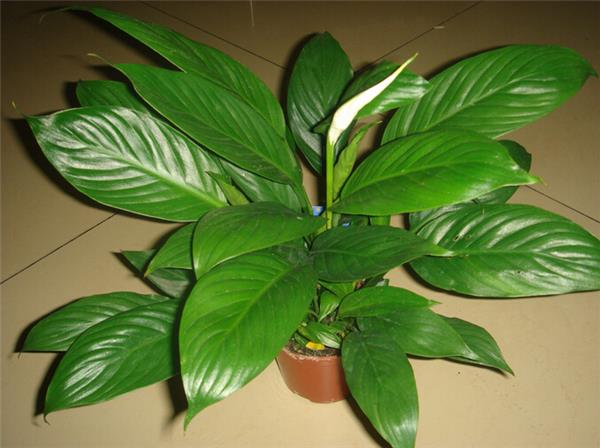
The peace lily is also known as white anthurium, spathe leaf taro and flat taro. Because its leaves resemble those of the arrowroot and its flowers look like a crane holding its head up, slender and graceful, pure white and flawless, it gives people a sense of "purity, calm, peace and well-being" and is regarded as the "flower of innocence." The peace lily is a perennial evergreen herbaceous foliage plant. The plant height is generally 40-60 cm, with a short rhizome, mostly growing in clumps. The leaves are oblong or nearly lanceolate, tapering at both ends, with a wedge-shaped base. The flower is a spathe, slightly fragrant, leaf-like; that is, its flower has no petals and is composed only of a white bract and a yellow-white spadix, closely resembling a palm, hence the name peace lily; its flowers are large and conspicuous, with long flower stalks that rise above the leaves, white or green. The flowering period is from May to August.
 Ornamental Value
Because people feel the peace lily carries an auspicious meaning, it has been given the elegant name "smooth sailing" after the image of its flower. Since the peace lily is beautiful in both flower and leaf, light and graceful, grows vigorously, and is shade-tolerant, it is deeply favored by people and is often used for indoor greening and decorative display. It is an excellent foliage plant; in southern regions it can be planted in the ground, while in other regions it is mostly grown in pots for viewing. The peace lily is an "expert" at suppressing waste gases exhaled by humans, such as ammonia and acetone. It can also filter benzene, trichloroethylene and formaldehyde from the air. Its high transpiration rate can prevent the nasal mucosa from drying out, greatly reducing the likelihood of illness. This beautiful indoor plant, native to the tropical rainforests of Venezuela, is undoubtedly a marvel of medicinal biology.
Types
The peace lily is a perennial herb. It has a short rhizome. The leaves are long elliptic-lanceolate, tapering at both ends, with obvious veins, long petioles, and a sheath-like base. The scape is upright, rising above the leaf cluster; the spathe is upright, slightly rolled, white; the spadix is cylindrical, white. Common varieties include the following.
The above is the introduction to how to grow peace lilies summarized by the editor, and I hope it can help everyone better understand peace lilies and grow healthy ones.
Morphological CharacteristicsThe peace lily is also known as white anthurium, spathe leaf taro and flat taro. Because its leaves resemble those of the arrowroot and its flowers look like a crane holding its head up, slender and graceful, pure white and flawless, it gives people a sense of "purity, calm, peace and well-being" and is regarded as the "flower of innocence." The peace lily is a perennial evergreen herbaceous foliage plant. The plant height is generally 40-60 cm, with a short rhizome, mostly growing in clumps. The leaves are oblong or nearly lanceolate, tapering at both ends, with a wedge-shaped base. The flower is a spathe, slightly fragrant, leaf-like; that is, its flower has no petals and is composed only of a white bract and a yellow-white spadix, closely resembling a palm, hence the name peace lily; its flowers are large and conspicuous, with long flower stalks that rise above the leaves, white or green. The flowering period is from May to August.
Ornamental Value
Because people feel the peace lily carries an auspicious meaning, it has been given the elegant name "smooth sailing" after the image of its flower. Since the peace lily is beautiful in both flower and leaf, light and graceful, grows vigorously, and is shade-tolerant, it is deeply favored by people and is often used for indoor greening and decorative display. It is an excellent foliage plant; in southern regions it can be planted in the ground, while in other regions it is mostly grown in pots for viewing. The peace lily is an "expert" at suppressing waste gases exhaled by humans, such as ammonia and acetone. It can also filter benzene, trichloroethylene and formaldehyde from the air. Its high transpiration rate can prevent the nasal mucosa from drying out, greatly reducing the likelihood of illness. This beautiful indoor plant, native to the tropical rainforests of Venezuela, is undoubtedly a marvel of medicinal biology.
Types
The peace lily is a perennial herb. It has a short rhizome. The leaves are long elliptic-lanceolate, tapering at both ends, with obvious veins, long petioles, and a sheath-like base. The scape is upright, rising above the leaf cluster; the spathe is upright, slightly rolled, white; the spadix is cylindrical, white. Common varieties include the following.
The above is the introduction to how to grow peace lilies summarized by the editor, and I hope it can help everyone better understand peace lilies and grow healthy ones.