How to Grow Mimosa pudica? Simple Methods for Growing a Healthy Sensitive Plant
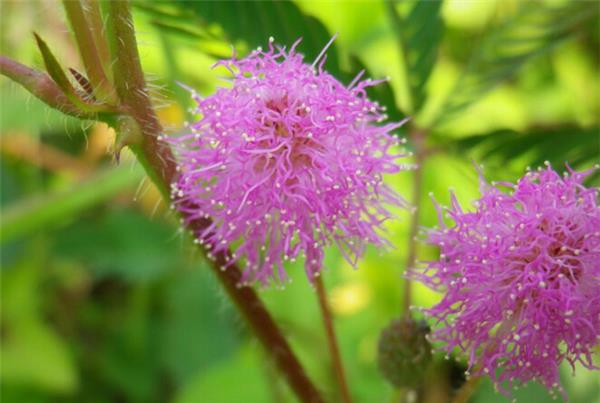
The leaves of Mimosa pudica (sensitive plant) react to heat and light, and close immediately when touched by an external force, which is how it got the name "sensitive plant." Its flowers are pink and shaped like fuzzy balls, very endearing. Mimosa pudica is not only highly ornamental but also relatively easy to keep alive, making it suitable as a potted flower for balconies and indoors. So how do you grow Mimosa pudica?
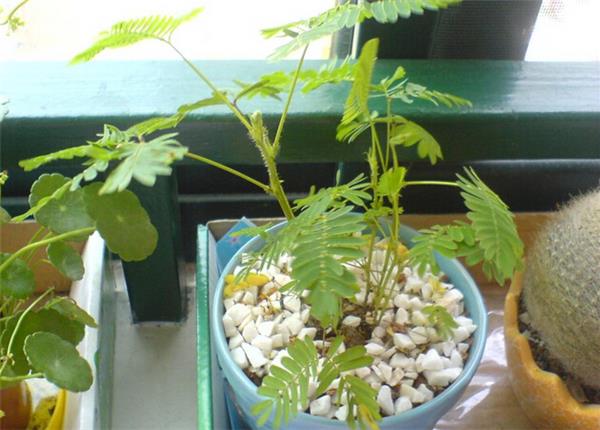
How to Grow Mimosa pudica
☆1. Soil. It can be grown in ordinary soil, but fertile, loose sandy loam is best; the soil should be deep, fertile and moist.
☆2. Fertilizing. It needs little fertilizer during the growing period; applying dilute liquid fertilizer 2 to 3 times is enough. Do not over-fertilize; as long as the leaves are green and the growth is sturdy, that is sufficient. Avoid leggy growth, because Mimosa pudica is mainly grown as a novelty foliage plant and is best kept small.
☆3. Watering. Mimosa pudica likes moisture and needs frequent watering; during the summer growing period, water once a day. Mimosa pudica originally comes from the tropics and likes a humid environment, so keep the potting soil moist at all times. In summer, water according to the condition of the potting soil, roughly once a day; do not let the soil dry out. You can mist the plant frequently. In winter, reduce watering to prevent cold damage.
☆4. Light. Make sure there is plenty of sunlight; Mimosa pudica likes sunlight, so it is best placed on a sunny balcony or by a window. Full exposure to sunlight benefits its growth; if there is too little sunlight, its growth may be hindered.
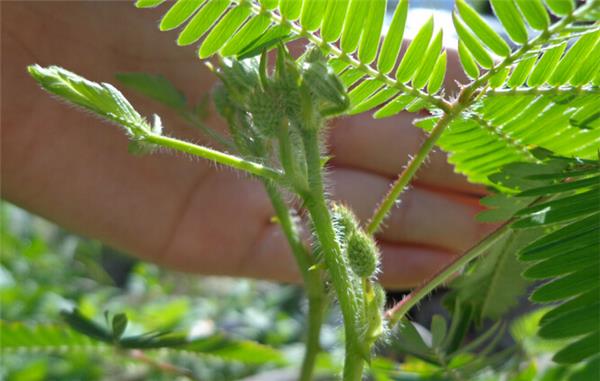
☆5. Pest and disease prevention. Mimosa pudica generally has few pests and diseases; the most common pest is the slug. If you find any, you can sprinkle some lime powder to control them. If the plant is not growing well, check whether there is insufficient light or not enough water.
Mimosa pudica is commonly known as "shy grass" or "response grass." It belongs to the genus Mimosa in the Fabaceae family and is a perennial herbaceous plant. The plant grows 30-60 cm tall; the stem is trailing, much branched, and scattered all over with backward-pointing bristles and sharp prickles; the petiole is 1.5-4 cm long; the stipules are lanceolate and have bristles; the leaves are pinnate, with 2-4 pinnae arranged in a palmate pattern, and the leaflets are oblong, closing and drooping when touched; the flowers are numerous, in heads, generally pink, blooming from July to October; the pods are flat, with bristles along the edges, 3-4 pod segments, each segment with 2 seeds, which fall off on their own when ripe. So, do you know why Mimosa pudica is shy?
Why Mimosa pudica Is Shy
 In fact, the phenomenon of Mimosa pudica folding its petiole and lowering its head is not because it is shy, but a response of the plant after being stimulated or shaken. In biology, this response is called a nastic movement, and it is the result of changes in cell turgor after Mimosa pudica receives an external stimulus.
 The ancestral home of Mimosa pudica is Brazil in tropical South America, where there are often strong winds and heavy rain. Whenever the first drop of rain hits a leaf, it immediately closes its leaflets and drops its petiole to reduce the damage from the storm. This is one way it adapts to changes in its external environment. In addition, this response of Mimosa pudica can also be seen as a form of self-defense: as soon as an animal touches it, it folds its leaves, and the animal no longer dares to eat it.
 The reason Mimosa pudica is shy is closely related to its native environment. Mimosa pudica originated in tropical South America, where the climate is harsh and violent storms are common. To protect itself, when the first drop of rain falls on its leaves, it promptly and effectively closes its leaflets and drops its petiole, avoiding damage from the storm; this is the self-adjusting nature of the biological world.
At the base of the petiole and at the base of each leaflet of the compound leaf, there is a relatively swollen part called the pulvinus. When the vibration reaches the pulvinus, the cell sap in the parenchyma cells of the upper half of the pulvinus is expelled into the intercellular spaces, reducing the turgor pressure of the cells in the upper half of the pulvinus, while the intercellular spaces of the parenchyma cells in the lower half still maintain their original turgor pressure. As a result, the leaflets are caused to stand upright, the two leaflets close together, and even the whole leaf droops.
Mimosa pudica is a perennial herbaceous plant or subshrub of the Fabaceae family. Because its leaves react to heat and light and close immediately when touched by an external force, it is named Mimosa pudica. It is native to the tropical regions of South America, likes warmth and humidity, and is not demanding about soil. Its flowers are pink and shaped like fuzzy balls, endearing and lovely. After flowering, it produces pods, and the fruit is flat and round. What uses does such an endearing Mimosa pudica have?
The Uses of Mimosa pudica:
☆Uses of Mimosa pudica: 1. Ornamental☆
Mimosa pudica has a loose plant form, and its feathery leaves are slender and elegant; its leaves close as soon as they are touched. Mimosa pudica has many flowers and is delicate and charming, giving people an impression of delicate beauty. It can be planted in the ground at the corner of a courtyard, or grown in a pot on a windowsill or desk. When giving it as a gift, gently cover the pot with pink gauze and tie it with a pink ribbon bow. If you can add pink mohair pompoms as decoration, it will be even more fun.
☆Uses of Mimosa pudica: 2. Weather Forecasting☆
Mimosa pudica is a wonderful plant that can foretell changes between sunny and rainy weather. If you touch it with your hand and its leaves close very quickly but open very slowly, this indicates that the weather will turn clear; if, when you touch Mimosa pudica, its leaves contract slowly and droop slowly, or even close slightly and then open again, this indicates that the weather will turn from clear to overcast or that it is about to rain.
☆Uses of Mimosa pudica: 3. Earthquake Prediction☆
According to Turkish seismologist Ercan, several hours before a strong earthquake occurs, the leaves of Mimosa pudica, which are sensitive to external touch, suddenly shrivel and then wither. In earthquake-prone Japan, scientists have found through research that under normal conditions, the leaves of Mimosa pudica open during the day and close at night. If the leaves of Mimosa pudica show the abnormal phenomenon of closing during the day and opening at night, it is a precursor to an earthquake.
☆Uses of Mimosa pudica: 4. Medicinal☆
It has effects such as clearing heat and promoting urination, resolving phlegm and relieving cough, calming the nerves and relieving pain, detoxifying, dissipating blood stasis, stopping bleeding, and astringing. It is used for colds, high fever in children, acute conjunctivitis, bronchitis, gastritis, enteritis, urinary stones, malaria, and neurasthenia; externally it is used to treat swelling and pain from falls and blows, sores and swelling with toxin, coughing up blood, and shingles.
The above is what the editor has introduced to you about how to grow Mimosa pudica well and the uses of Mimosa pudica. Mimosa pudica has ornamental and medicinal uses, and also has the unique functions of forecasting weather and predicting earthquakes. If you like Mimosa pudica, you might as well grow a few pots and place them in your home. The editor hopes this article can help everyone better cultivate Mimosa pudica.
It promptly and effectively closes its leaflets and drops its petiole, avoiding damage from the storm; this is the self-adjusting nature of the biological world.At the base of the petiole and at the base of each leaflet of the compound leaf, there is a relatively swollen part called the pulvinus. When the vibration reaches the pulvinus, the cell sap in the parenchyma cells of the upper half of the pulvinus is expelled into the intercellular spaces, reducing the turgor pressure of the cells in the upper half of the pulvinus, while the intercellular spaces of the parenchyma cells in the lower half still maintain their original turgor pressure. As a result, the leaflets are caused to stand upright, the two leaflets close together, and even the whole leaf droops.
Mimosa pudica is a perennial herbaceous plant or subshrub of the Fabaceae family. Because its leaves react to heat and light and close immediately when touched by an external force, it is named Mimosa pudica. It is native to the tropical regions of South America, likes warmth and humidity, and is not demanding about soil. Its flowers are pink and shaped like fuzzy balls, endearing and lovely. After flowering, it produces pods, and the fruit is flat and round. What uses does such an endearing Mimosa pudica have?
The Uses of Mimosa pudica:
☆Uses of Mimosa pudica: 1. Ornamental☆
Mimosa pudica has a loose plant form, and its feathery leaves are slender and elegant; its leaves close as soon as they are touched. Mimosa pudica has many flowers and is delicate and charming, giving people an impression of delicate beauty. It can be planted in the ground at the corner of a courtyard, or grown in a pot on a windowsill or desk. When giving it as a gift, gently cover the pot with pink gauze and tie it with a pink ribbon bow. If you can add pink mohair pompoms as decoration, it will be even more fun.
☆Uses of Mimosa pudica: 2. Weather Forecasting☆
Mimosa pudica is a wonderful plant that can foretell changes between sunny and rainy weather. If you touch it with your hand and its leaves close very quickly but open very slowly, this indicates that the weather will turn clear; if, when you touch Mimosa pudica, its leaves contract slowly and droop slowly, or even close slightly and then open again, this indicates that the weather will turn from clear to overcast or that it is about to rain.
☆Uses of Mimosa pudica: 3. Earthquake Prediction☆
According to Turkish seismologist Ercan, several hours before a strong earthquake occurs, the leaves of Mimosa pudica, which are sensitive to external touch, suddenly shrivel and then wither. In earthquake-prone Japan, scientists have found through research that under normal conditions, the leaves of Mimosa pudica open during the day and close at night. If the leaves of Mimosa pudica show the abnormal phenomenon of closing during the day and opening at night, it is a precursor to an earthquake.
☆Uses of Mimosa pudica: 4. Medicinal☆
It has effects such as clearing heat and promoting urination, resolving phlegm and relieving cough, calming the nerves and relieving pain, detoxifying, dissipating blood stasis, stopping bleeding, and astringing. It is used for colds, high fever in children, acute conjunctivitis, bronchitis, gastritis, enteritis, urinary stones, malaria, and neurasthenia; externally it is used to treat swelling and pain from falls and blows, sores and swelling with toxin, coughing up blood, and shingles.
The above is what the editor has introduced to you about how to grow Mimosa pudica well and the uses of Mimosa pudica. Mimosa pudica has ornamental and medicinal uses, and also has the unique functions of forecasting weather and predicting earthquakes. If you like Mimosa pudica, you might as well grow a few pots and place them in your home. The editor hopes this article can help everyone better cultivate Mimosa pudica.