How to Grow Mimosa Pudica and an Introduction to Its Main Functions
The leaves of mimosa pudica react to heat and light, and when the plant is touched by an external force, its leaves close up. Mimosa pudica is a plant that likes warmth and humidity, and it is not demanding about soil. Both its flowers and its leaves have great ornamental value. Nowadays, many people like to grow potted plants at home, and mimosa pudica is a good choice. Many people like mimosa pudica, but many do not know how to grow it. So how much do you know about how to grow mimosa pudica? Let's take a look together below.
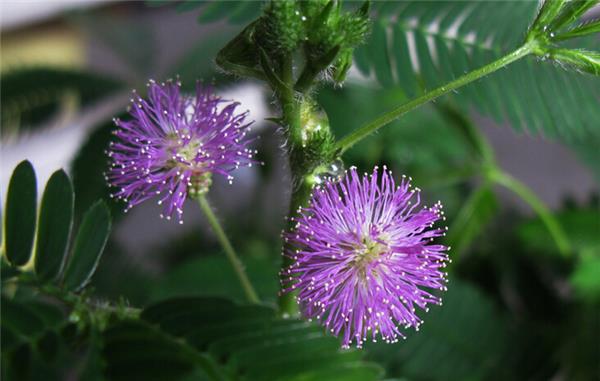
How to Grow Mimosa Pudica
◇--How to Grow Mimosa Pudica: Sunlight--◇
Make sure there is plenty of sunlight. Mimosa pudica likes sunlight, so it is best to place it on a sunny balcony or by a window. Full exposure to sunlight is good for the growth of mimosa pudica. If there is too little sunlight, it may hinder its growth.
◇--How to Grow Mimosa Pudica: Watering--◇
It needs frequent watering. Mimosa pudica is originally a tropical plant and likes a humid environment, so the potting soil should always be kept moist. In summer, water according to the condition of the potting soil, about once a day. Do not let the soil dry out. You can often spray water on the plant. In winter, reduce the amount of watering to prevent frost damage.
◇--How to Grow Mimosa Pudica: Soil--◇
Choose fertile, loose soil. Mimosa pudica is not demanding about soil; ordinary garden soil is enough. But if you want mimosa pudica to grow better, choose relatively loose and fertile soil. You can use a mix of leaf mold and sandy soil, or use only leaf mold. Humus soil is also a good choice.
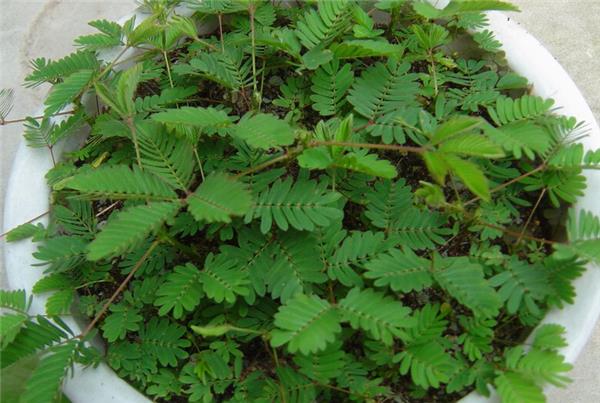
◇--How to Grow Mimosa Pudica: Fertilizing--◇
Fertilize according to your own situation. Mimosa pudica only needs fertilizing once a month, but some people think that potted mimosa pudica looks bad when it grows too large, so those who think this way should not fertilize it.
◇--How to Grow Mimosa Pudica: Pest and Disease Control--◇
Prevent pests and diseases. Mimosa pudica generally rarely has pests or diseases. The most common pest is the slug. If found, you can sprinkle some lime powder for control. If the plant is not growing well, check whether there is insufficient light or not enough water.
The flowers, leaves and pods of mimosa pudica all have good ornamental effect, and it is relatively easy to keep alive. It is suitable as a potted flower for balconies and indoors, and can also be grown in courtyards and other places. Mimosa pudica is different from ordinary plants. When it is touched by the outside world, its petiole droops and its leaflets close. This action is understood by people as "shyness", so it is called mimosa pudica, zhixiu cao, and paichou cao. So, do you know why mimosa pudica is shy?

Why Mimosa Pudica Is Shy
◇--Why Mimosa Pudica Is Shy, Reason One
Plants and animals are not the same. Plants do not have a nervous system or muscles and cannot perceive external stimuli, but why mimosa pudica is shy is indeed related to the nervous system. Mimosa pudica is supported by fine, network-like actin. When it closes, the actin falls away, producing the closing movement. Actin contains muscle fibers, which is very rare in plants.
◇--Why Mimosa Pudica Is Shy, Reason Two
If the leaves of mimosa pudica are touched, they immediately fold up. The stronger the touch, the faster they close, until finally the whole leaf droops as if listless. The leaves and petiole of mimosa pudica have a special structure. In the middle there is a pulvinus, which is most sensitive to stimuli. Once touched, the stimulus is transmitted directly to the pulvinus at the base of the petiole, causing the leaf to close.
The leaves of mimosa pudica are feathery, the fruit is flat and round, and the flowers are pink, shaped like pom-poms and comparable to dandelions. Mimosa pudica comes from the tropical regions of South America. It likes warmth and humidity and is not strict about soil. Besides its beautiful appearance, mimosa pudica also has special functions that other plants do not have. What are these special functions?
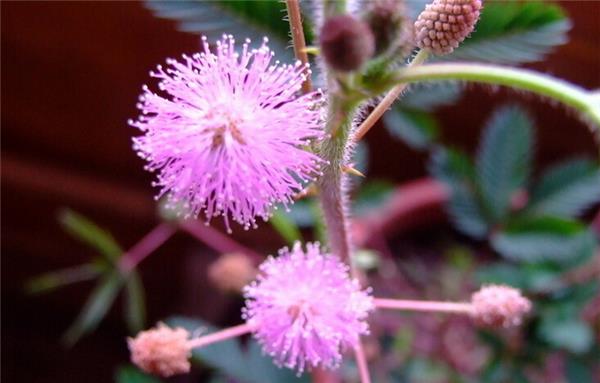
The Special Functions of Mimosa Pudica
◇--Forecasting Weather--◇
Mimosa pudica is a wonderful plant that can foretell changes in sunny and rainy weather. If you touch it with your hand, its leaves close very quickly but open very slowly, this indicates that the weather will turn clear; if when you touch mimosa pudica its leaves contract slowly and droop slowly, or even close slightly and then open again, this indicates that the weather will turn from clear to overcast or that it is about to rain.
The reason why the speed of the opening and closing of mimosa pudica leaves can foretell whether the weather is cloudy or clear is mainly that at the neck of the mimosa pudica leaf there is a small drum-shaped thin-walled cell tissue, the pulvinus, and the pulvinus is filled with water. When you touch a mimosa pudica leaf with your hand, the leaf vibrates, and the water in the cells of the lower part of the pulvinus immediately flows upward and to both sides. In this way, the lower part of the pulvinus becomes deflated, while the upper part bulges, the petiole droops, and the leaf closes. Therefore, the closing and opening of the leaf is caused by the turgor pressure of the pulvinus. The turgor pressure of the pulvinus is closely related to the humidity in the air. When the air humidity is very low, the turgor pressure of the pulvinus is obvious, and the leaf closes and opens quickly; when the air humidity is very high, the leaf opens and closes slowly. Therefore, the speed of the opening and closing of mimosa pudica leaves indirectly reflects the level of humidity in the air and can serve as a reference for weather forecasting.
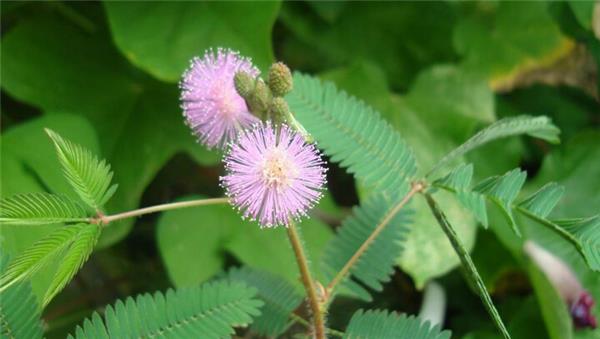
◇--Predicting Earthquakes--◇
According to Turkish seismologist Ercan, several hours before a strong earthquake occurs, the leaves of mimosa pudica, which are sensitive to external touch, suddenly shrivel and then wither. In earthquake-prone Japan, scientists found through research that under normal conditions, mimosa pudica leaves open during the day and close at night. If mimosa pudica leaves show the abnormal phenomenon of closing during the day and opening at night, it is a precursor to an earthquake. For example: at 7 a.m. on January 11, 1938, mimosa pudica began to open, but by 10 o'clock, the leaves suddenly all closed, and indeed on the 13th a strong earthquake occurred. In 1976, members of the Japan Earthquake Club observed the abnormal closing phenomenon of mimosa pudica leaves many times, and afterward earthquakes occurred each time. These are true events.
In addition, mimosa pudica can also predict disastrous weather changes. It will produce growth activities that go against the norm in response to sudden out-of-season temperature differences, changes in geomagnetism and geoelectricity, and so on. We can place some potted mimosa pudica plants indoors to observe them for the prediction and prevention of natural disasters.
 The above is today's introduction to knowledge about mimosa pudica. Mimosa pudica is quite cute and suitable for decorating a fresh, simple home. Perhaps many people, after learning why mimosa pudica is shy, lose their previous enthusiasm for it, but if you want to grow mimosa pudica at home, you may as well read the above methods for growing mimosa pudica carefully.
The reason why the speed of the opening and closing of mimosa pudica leaves can foretell whether the weather is cloudy or clear is mainly that at the neck of the mimosa pudica leaf there is a small drum-shaped thin-walled cell tissue, the pulvinus, and the pulvinus is filled with water. When you touch a mimosa pudica leaf with your hand, the leaf vibrates, and the water in the cells of the lower part of the pulvinus immediately flows upward and to both sides. In this way, the lower part of the pulvinus becomes deflated, while the upper part bulges, the petiole droops, and the leaf closes. Therefore, the closing and opening of the leaf is caused by the turgor pressure of the pulvinus. The turgor pressure of the pulvinus is closely related to the humidity in the air. When the air humidity is very low, the turgor pressure of the pulvinus is obvious, and the leaf closes and opens quickly; when the air humidity is very high, the leaf opens and closes slowly. Therefore, the speed of the opening and closing of mimosa pudica leaves indirectly reflects the level of humidity in the air and can serve as a reference for weather forecasting.
◇--Predicting Earthquakes--◇
According to Turkish seismologist Ercan, several hours before a strong earthquake occurs, the leaves of mimosa pudica, which are sensitive to external touch, suddenly shrivel and then wither. In earthquake-prone Japan, scientists found through research that under normal conditions, mimosa pudica leaves open during the day and close at night. If mimosa pudica leaves show the abnormal phenomenon of closing during the day and opening at night, it is a precursor to an earthquake. For example: at 7 a.m. on January 11, 1938, mimosa pudica began to open, but by 10 o'clock, the leaves suddenly all closed, and indeed on the 13th a strong earthquake occurred. In 1976, members of the Japan Earthquake Club observed the abnormal closing phenomenon of mimosa pudica leaves many times, and afterward earthquakes occurred each time. These are true events.
In addition, mimosa pudica can also predict disastrous weather changes. It will produce growth activities that go against the norm in response to sudden out-of-season temperature differences, changes in geomagnetism and geoelectricity, and so on. We can place some potted mimosa pudica plants indoors to observe them for the prediction and prevention of natural disasters.
The above is today's introduction to knowledge about mimosa pudica. Mimosa pudica is quite cute and suitable for decorating a fresh, simple home. Perhaps many people, after learning why mimosa pudica is shy, lose their previous enthusiasm for it, but if you want to grow mimosa pudica at home, you may as well read the above methods for growing mimosa pudica carefully.