The Legend of Hyacinth and a Detailed Guide to Its Cultivation
From ancient times to the present, humans have always been an exceptionally imaginative species, so they always hold particularly intense curiosity about all kinds of legends. Everyone knows that flowers are all the more fascinating because of their legends, so people are also quite interested in flower legends. So what flower legend does the hyacinth have, and how is it cultivated? Below, let us take a look together at the legend of the hyacinth and learn about how to cultivate hyacinths.
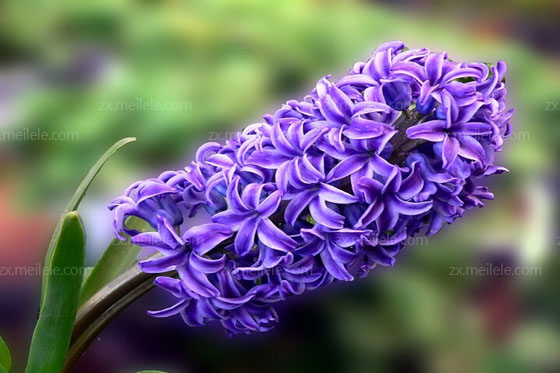
The Legend of Hyacinth
It is said that long, long ago in the era of ancient Greek mythology, the handsome and elegant young man Hyacinthus was the grandson of Zeus, the king of the gods. He was the Greek god of plants and a very close friend of Apollo, the sun god, and Zephyrus, the west wind god. But Hyacinthus was cheerful and optimistic, so he was closer to Apollo, the sun god who symbolized light, and this aroused intense jealousy in the west wind god. So one time, when Hyacinthus and Apollo were playing at throwing the discus, the west wind god used his divine power to change the discus's trajectory, and the heavy discus struck Hyacinthus right on the forehead, causing him to bleed heavily and die from serious injuries. The blood that flowed from Hyacinthus fell onto the grass and bloomed into bright flowers. To commemorate him, Apollo named them hyacinth.
How to Cultivate Hyacinth
1. At present, people mainly cultivate hyacinths in two ways: one is soil cultivation in pots, and the other is water cultivation in vases. However, whether growing in soil or water, the first thing to do when cultivating hyacinths is to choose good hyacinth bulbs. Only healthy and undamaged bulbs can produce abundant and beautiful hyacinth flowers, so before cultivation, everyone needs to select hyacinth bulbs. The best hyacinth bulbs are those with undamaged skins, fleshy scales that are not excessively shrunken, and that are relatively hard, heavy, and plump. At the same time, everyone should note that the color of the bulb's outer skin is greatly related to the color of the flowers that will come later. Bulbs with purplish-red outer skins generally produce purplish-red flowers, so one should choose carefully.
2. After the variety has been selected, it is time to confirm the hyacinth cultivation method. If everyone chooses soil cultivation in pots, then it is time to prepare the soil. Hyacinths need sandy soil with good drainage that is loose and breathable. Loam, leaf mold, fine sand, and the like can be mixed into nutrient soil. Before planting, put in a sufficient amount of base fertilizer, then place the bulb into the soil. If growing in water, then it is necessary to prepare the nutrient solution needed by the bulb and a vase. This needs to be analyzed according to the specific situation, but before cultivating hyacinths, charcoal needs to be used for anti-corrosion and disinfection. At the same time, the bulb also needs to be fully disinfected before cultivation, and then placed into the nutrient solution. Note that the bulb only needs to be immersed to the bottom of the bulb.
3. After the bulb has been planted, everyone needs to carry out daily care. First, everyone should note that hyacinths do not have a particularly high demand for light, but insufficient light can also cause the plant to become weak and develop poorly, so sufficient light is still needed. However, during high temperatures in summer, care should be taken to avoid direct sunlight. At the same time, in terms of temperature, hyacinths are not tolerant of high temperatures. When the temperature is higher than 35°C, the differentiation of the plant's flower buds will be hindered, thereby affecting the blooming of hyacinth flowers. Also, when the plant is in low-temperature conditions, it is also prone to cold damage. In addition, hyacinths do not have a very high demand for fertilizer. Soil-grown hyacinths can be given one topdressing in winter and spring.
Conclusion: Hyacinth is a flower that everyone greatly loves, and its legend is also very mysterious and beautiful, but its cultivation method is actually relatively simple, so everyone need not worry too much when growing it.
[You may be interested in]
☑ Tatami mattress ☑ Blue rose flower language ☑ Flannel fabric ☑ Clivia miniata growing methods and precautions ☑ Dracaena
☑ Black-and-white pictures ☑ Cherry blossom flower language ☑ Forget-me-not flower language ☑ Ceramic painting ☑ Woodcut