The complete guide to water lily planting methods: learn to grow a pond of moonlight
As we all know, every season of the year has its own distinctive representative plants, and the most typical plant of summer is the lotus, among which the water lily is one that people especially love. The lotus emerges from mud unstained, and rises from clear water without being coquettish, so through the ages very, very many people have grown water lilies. But how exactly are water lilies grown, and what exactly are the planting methods for water lilies? Below, let us look together at the complete guide to water lily planting methods.
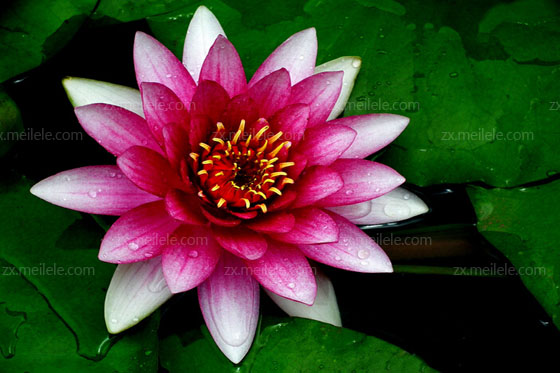
Introduction to the water lily
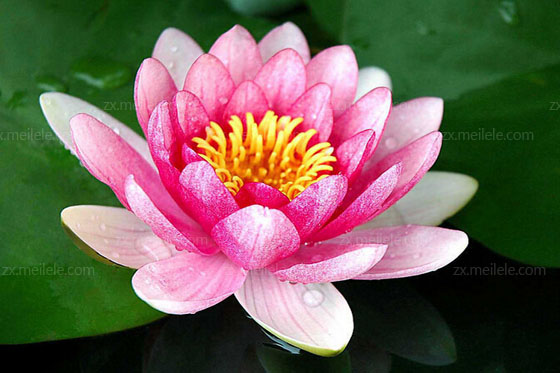
The water lily, scientific name Nymphaea L., is a perennial herbaceous aquatic plant of the genus Nymphaea in the family Nymphaeaceae. It is distributed very widely, and because it grows in still-water bodies such as ponds or lakes, and the plant is extremely bright and beautiful, it is often cultivated continuously by people as an ornamental plant for park water bodies, and is deeply loved by the general public. Normally, water lily leaves are round or nearly round or ovate, with the upper surface green and the reverse purplish red, very glossy. The flowering period of the water lily is summer, from May to August; when it blooms, the flowers are huge and the flower colors are rich, including red, pink, blue, purple and white, and so on.
The complete guide to water lily planting methods
1. Water lily propagation methods
At present, there are mainly two propagation methods by which people grow water lilies: one is division propagation, and the other is seed propagation, among which division propagation is more common. Division propagation of water lilies is generally carried out in early spring, in March to April, when sprouting is strong; select water lily rhizomes with plump new buds, cut them into root segments 8 to 10 cm long, and each segment must carry at least 1 bud, then plant them. After planting, they must be given a little sunlight before water is added; in summer, after the plants sprout, the water can be appropriately increased. Seed propagation of water lilies is usually done in spring, in March to April, grown in pots, with a sowing temperature of 25 to 30 degrees being best, and the survival rate is also high.
2. Water lily planting methods
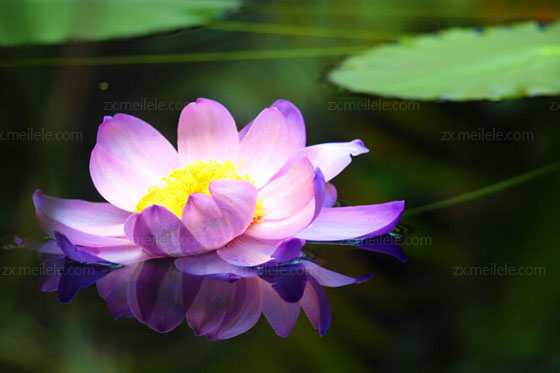
Plant growth needs sufficient nutrients, so when planting water lilies it is best to choose a pond with fertile soil, and the bottom of the pond should have at least about 30 cm of deep mud, so that the survival rate of the water lilies will be higher. At the same time, in order to grow water lilies better, strictly controlling water and temperature is also very important. In the early stage of growth, the leaf stalks of the water lily are still relatively short; at this time the water should not be too much, the plant leaves need to be fully exposed to the air, and a somewhat higher water temperature is more suitable. By the peak growth period, that is, summer, the water demand is greatest, the temperature is high, and the plant grows smoothly.
When planting water lilies, you must also pay attention to the issue of timely topdressing. Although water lilies grow in water, and fertilizing seems to have no effect, it is actually very necessary; proper topdressing can not only promote the growth of water lilies but also will not pollute the water quality, so it is still necessary. However, when topdressing, use tough, highly absorbent paper to wrap the fertilizer well, and poke a few small holes in the packet so that the fertilizer can be released. In addition, as a kind of plant and flower, the water lily also has many pests and diseases, so when planting, various pest and disease prevention and control tasks also need to be done well, to avoid the danger of pests and diseases occurring in water lilies.
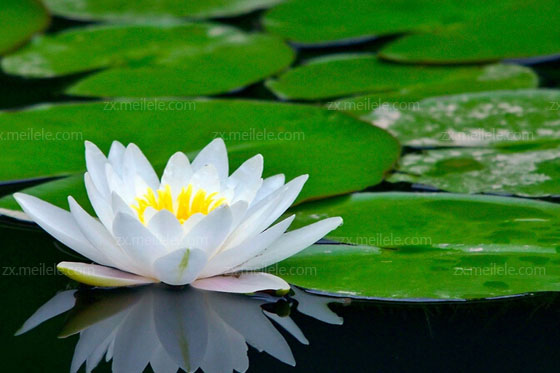
Conclusion: In summer, with bright sunshine, the blooming water lilies are like elves fallen to the mortal world, making people rejoice while also sending a trace of coolness, making people feel very cool even in the hot summer.
[You may be interested in]
☑ Pothos growing methods and precautions ☑ Venetian blinds ☑ Curtain fabrics ☑ Electric curtains ☑ Cloth
☑ Anthurium growing methods and precautions ☑ Anti-theft screen windows ☑ Curtain making ☑ Latex mattresses ☑ Blankets
☑ Anthurium growing methods and precautions ☑ Anti-theft screen windows ☑ Curtain making ☑ Latex mattresses ☑ Blankets