How to Grow and Care for Bleeding Heart Vine (Clerodendrum thomsoniae)
Bleeding heart vine (Clerodendrum thomsoniae) is a very beautiful ornamental flower, often grown as a potted plant for everyone to enjoy. Let's take a look at how to grow bleeding heart vine.
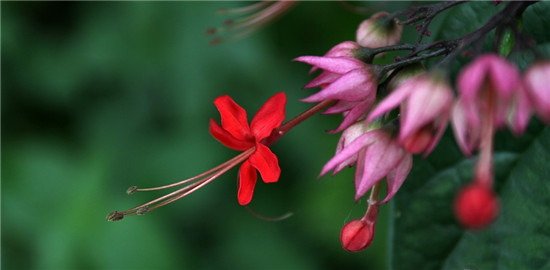
Bleeding heart vine (Clerodendrum thomsoniae) is native to tropical West Africa. It is a perennial evergreen vine, with plants generally 2-5 m tall. Its flowers are uniquely shaped and bloom profusely, making it very suitable for greenhouse cultivation as an ornamental, and it can also be used on flower trellises. Sometimes people also grow it as a potted plant to decorate the home environment. Bleeding heart vine likes a warm, humid, semi-shaded environment with plenty of sunlight, and is not cold-tolerant. Its overwintering temperature should be above 15°C; being below 10°C for a long time will cause leaf drop and eventually death. Bleeding heart vine is commonly propagated by sowing or cuttings. The seeds have a short lifespan, so they can be sown right after harvest.
Growth Habits of Bleeding Heart Vine
Bleeding heart vine is native to the tropics and likes a warm, humid environment with plenty of sunlight; it is not cold-tolerant. The suitable growth temperature for bleeding heart vine is 18-30°C from February to October, and 13-16°C from October to February of the following year. In winter the temperature should not be lower than 8°C, otherwise it will at best drop its leaves, and at worst the tender stems will wither.
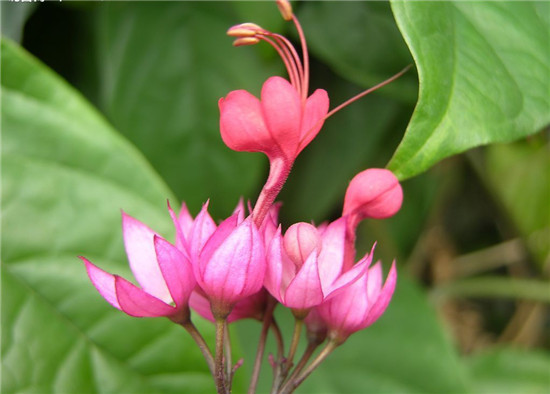
Bleeding heart vine is sensitive to water. During the stem and leaf growth period, keep the soil moist, but do not overwater. Too much water will cause it to grow only vines without flowering, and may even cause the leaves to yellow and drop and the roots to rot and die. In winter, reduce watering to let it go dormant so it can overwinter safely. In the hot summer season, water thoroughly and provide appropriate shade.
In winter, bleeding heart vine needs sufficient light. When light is insufficient, it will grow vines without flowering. Stronger light promotes flower bud differentiation and development. It should not be kept in darkness for long periods.
Use fertile, loose, well-drained sandy loam soil. For potted plants, use a mix of potting soil or peat soil and coarse sand.
How to Propagate Bleeding Heart Vine
Potted bleeding heart vine has deep green leaves, jade-like calyces and bright red corollas, full of poetic charm. It can be placed at windows and on balconies, and can also decorate indoor spaces. It is a top-grade potted flower.
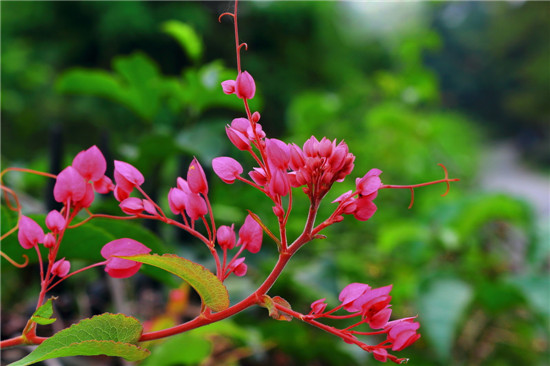
Bleeding heart vine is propagated by cuttings and by sowing, mainly by cuttings. The method is: during the growth period in May-June, select mature and robust branches, cut them into 10-12 cm sections (each section has 2-4 nodes, cut at 0.5 cm below a node at the lower end, and each has 2 pairs of buds on top) as cuttings, and remove the lower leaves. River sand can be used for the cutting medium. Before use, rinse the sand with clean water to remove the mud, then put it into a shallow pot for propagation. The sand can also be made into a sand bed in the greenhouse for use when rooting cuttings.
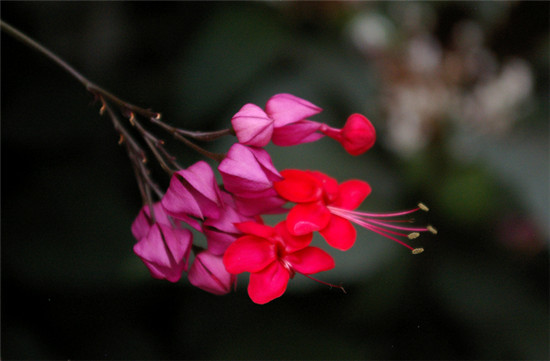
Insert the cuttings to a depth of 3-4 cm. After inserting, water thoroughly, place in a cool, shady spot, and keep the potting soil moist regularly. At a temperature of 20-25°C, roots will form in about 1 month. For plants rooted in sand, because sand lacks nutrients, once the cuttings have rooted they should be transplanted into pots promptly. When new shoots grow to 4-5 cm long, pinch them promptly to encourage branching and more flowers.
The above is the complete content of how to grow bleeding heart vine and tips for growing bleeding heart vine that I have summarized for you. I hope this article can help everyone. Please also continue to follow us.