How to Grow Snapdragons: This One Article Teaches You How to Grow Them
When snapdragons are mentioned, many people mistakenly think it is a kind of aquatic plant for raising goldfish. In fact, it is a very beautiful flower. Let us now learn about snapdragons and how to grow them!
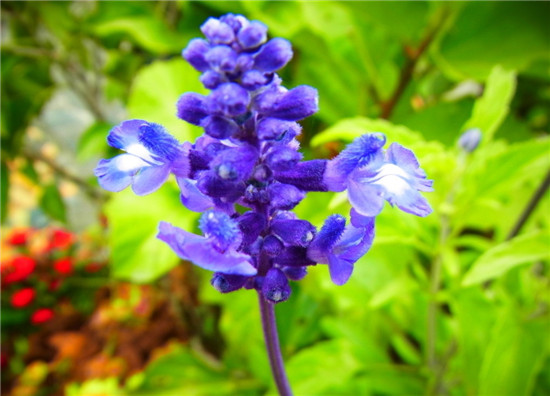
Snapdragon (Antirrhinum majus) is a perennial herbaceous plant that can be grown in pots. Because of its brilliant flower colors, it is very suitable for ornamental purposes. Snapdragon gets its name because its flowers resemble goldfish, and it is also a traditional Chinese medicine, with effects of clearing heat and detoxifying, cooling the blood and reducing swelling.
Because it comes in many flower colors and looks very beautiful when in bloom, many people now choose snapdragons to decorate their homes, which has made snapdragons highly popular among the many flowers.
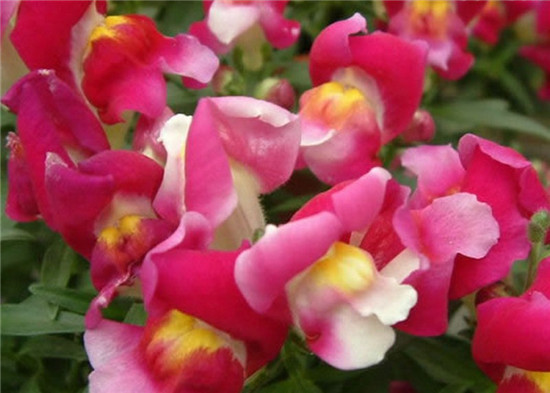
How to Grow Snapdragons
1. Soil: Snapdragons do not have high soil requirements. The soil should be fertile, loose, well-drained, slightly acidic sandy loam.
2. Watering: Snapdragons are relatively sensitive to moisture. The potting soil must stay moist, and potted seedlings must be watered thoroughly. However, the potting soil must drain well and must not become waterlogged, otherwise the roots will rot and the stems and leaves will turn yellow and wither.
3. Sunlight: Snapdragons are light-loving herbaceous plants. Under sufficient sunlight, the plants are short, compact and bushy, grow uniformly, are consistent in height, bloom uniformly, and have vivid flower colors. Under semi-shade conditions, the plants grow taller, the flower spikes elongate, and the flower colors are paler.
4. Temperature: Snapdragons are relatively cold-tolerant and not heat-tolerant. The suitable growing temperature is 7-10°C from September to March of the following year, and 13-16°C from March to September. Seedlings pass through the vernalization stage at 5°C. High temperatures are unfavorable for the growth and development of snapdragons. The suitable temperature for flowering is 15-16°C. For some varieties, when the temperature exceeds 15°C, no branching occurs, which affects plant form.
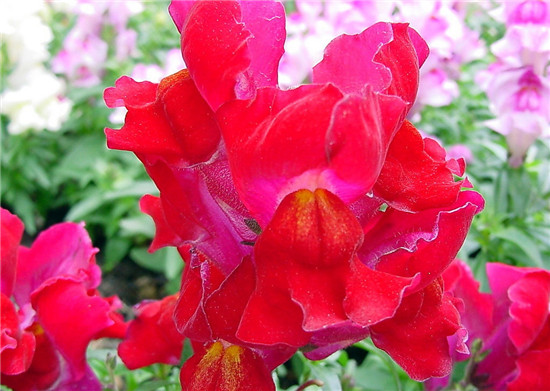
5. Fertilizing: Snapdragons need strengthened fertilizer and water management. Fertilization should pay attention to the combination of nitrogen, phosphorus and potassium. Snapdragons have root nodules and can fix nitrogen themselves, so under normal circumstances there is no need to apply nitrogen fertilizer; appropriately increasing phosphorus and potassium fertilizer is sufficient. During the growing period, apply fermented oil residue water once every half month along with watering. When flower buds appear, spraying with a 0.1%-0.2% potassium dihydrogen phosphate solution is even better. Before each fertilization, loosen the soil and remove weeds.
6. Pruning: When snapdragon seedlings grow to about 10 cm, pinching can be done to reduce plant height, increase the number of side branches, and increase the number of flowers. When pruning, cut off diseased and weak branches, dead old branches and overly dense branches. After each flowering, cut off the branches that have already bloomed to encourage new branches to sprout and continue blooming.
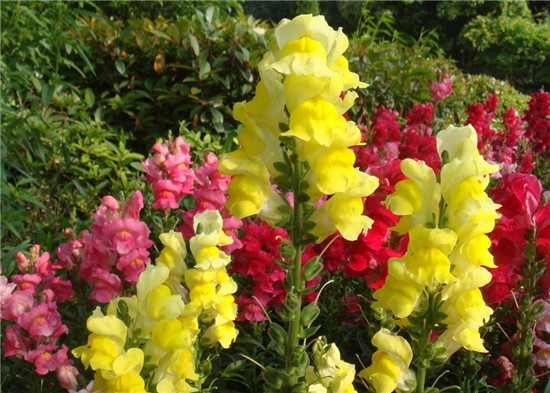
Notes on Growing Snapdragons
1. Variety selection: For potted snapdragons, it is advisable to choose varieties with short plants and abundant flowers to improve the ornamental value of the potted plant.
2. Selection of pots and potting soil: For potted containers, it is advisable to use clay pots or plastic pots with a pot diameter of about 15 cm, but with good air permeability. The growing medium should be loose, fertile, well-drained culture soil, or an even mixture of leaf mold, peat, and plant ash. Before planting, apply some dry livestock manure or cake fertilizer powder, and add a little bone meal or superphosphate as a base fertilizer.
3. Watering and fertilizing: After planting, water thoroughly, and afterward water whenever the potting soil becomes dry. During the growing period, apply a dilute liquid fertilizer mainly of nitrogen and potassium fertilizer once every 10 days. During the bud stage, spray 0.1% potassium dihydrogen phosphate to make the flower colors vivid. Usually, prevent waterlogging in the potting soil and pay attention to loosening the soil regularly.
4. Pruning: After flowering, the aboveground parts can be cut off level with the soil, then water thoroughly once. After about one week, new branches will sprout, and then apply a dilute liquid fertilizer once every 10 days or so until flower buds form. Usually, pay attention to watering appropriately, and in summer provide appropriate shading and cooling, so that it can bloom again in autumn.
The above is all the content I have summarized for you on how to grow snapdragons. I hope this article can help everyone. Please also continue to follow us.