What flower is Dianthus caryophyllus? Let us introduce you to this flower
Dianthus caryophyllus is a perennial herbaceous plant with persistent roots, native to the Mediterranean region, and is one of the most popular cut flowers. Next, let us learn about this plant in detail.
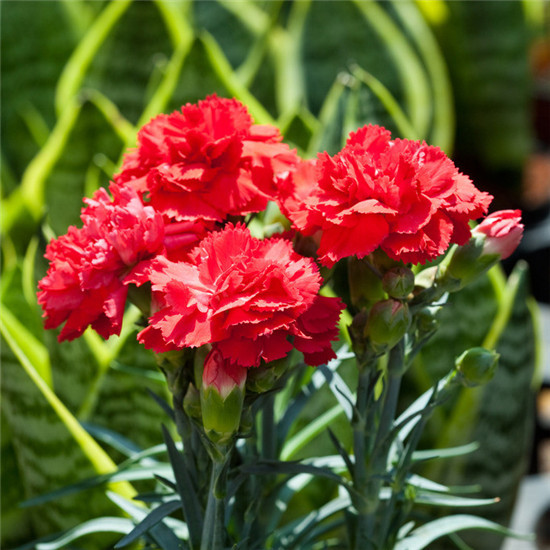
Dianthus caryophyllus is actually what we commonly call carnation, also known as multibloom carnation. It is the flower of Mother's Day. In 1907, Jarvis of Philadelphia, USA, first used the pink carnation as the symbol of Mother's Day, so today it is often given as a flower to mothers. It is a perennial plant of the family Caryophyllaceae, genus Dianthus, grown on a large scale. It usually bears double flowers, with diverse and vivid colors and a fragrant scent. The carnation is one of the most popular cut flowers, representing health and good wishes. It can be used for flower arrangements, boutonnieres, and more.
The carnation is a high-altitude plant, growing on rocky slopes, especially in calcareous soil, and requires direct sunlight. This plant can withstand the severe cold winters of Britain and Northern Europe. The Athenians of Greece and the coasts of Southern Europe cultivated carnations in large quantities and held them in great esteem, calling them the flower of Zeus. Because it was often used to add the sweet clove-like fragrance to wine, and to make wreaths and crowns, it became known as the carnation.
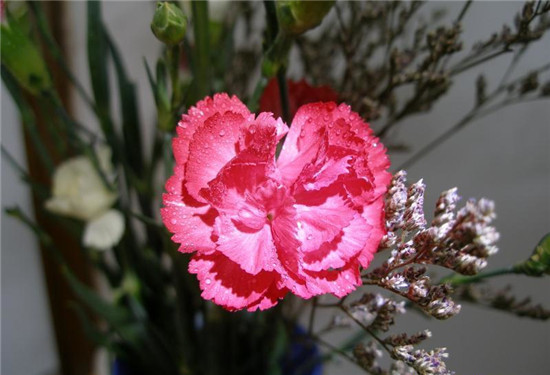
Dianthus caryophyllus has the effects of beautifying the skin, calming the nerves and quenching thirst, clearing the heart and brightening the eyes, reducing inflammation and relieving irritability, promoting body fluid and soothing the throat, and strengthening the stomach and resolving food stagnation. It has a clear therapeutic effect on headaches and toothaches. Dianthus caryophyllus contains various trace elements needed by the human body, can accelerate blood circulation, promote metabolism, and has the effects of clearing the heart and removing dryness, detoxifying and beautifying the skin, and regulating the endocrine system.
At the same time, Dianthus caryophyllus has the effects of strengthening the kidneys and boosting essence, and treating consumptive disease, cough, and excessive thirst. It clears the liver and cools the blood, whitens the skin, and removes spots and wrinkles. It can improve blood circulation, enhance the body's metabolism, and has effects such as clearing the heart and removing dryness, detoxifying and beautifying the skin, delaying aging, regulating the female endocrine system, tonifying the kidneys and supporting vitality, strengthening and stimulating the appetite, and regulating blood lipids for weight loss.
In 1907, Jarvis of Philadelphia, USA, used the pink carnation as the symbol of Mother's Day. In Europe, the carnation was once used to treat fever, and in the Elizabethan era it was also used as a spice additive for wine and ale, to replace the more expensive clove. Several other countries also use the carnation as their national flower: Morocco, Monaco, Czechia, Honduras, Turkey, and Spain.
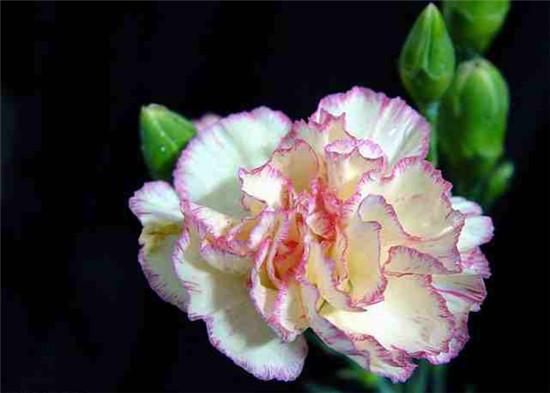
It prefers a cool, dry, sunny, and well-ventilated ecological environment. It has good cold tolerance and poor heat tolerance. The most suitable growing temperature is 14-21°C. When the temperature exceeds 27°C or falls below 14°C, the plant grows slowly. It should be planted in humus-rich, well-drained calcareous soil. It loves fertilizer!
Native to the Mediterranean coast, it prefers a cool environment with plenty of sunlight, and is not tolerant of heat, dryness, or low temperatures. It should be planted in humus-rich, well-drained calcareous soil. The flowering period is from April to September, and under protected cultivation it blooms all year round.
A preference for strong light is an important characteristic of the carnation. Whether overwintering indoors, spending the summer in pots, or being forced in a greenhouse, it needs sufficient light and should be placed in a sunny position exposed to direct sunlight.
The carnation is an excellent cut flower variety, with delicate and beautiful colors, a fragrant scent, and a long flowering period. It is suitable for various flower arrangement needs and is often combined with gladiolus, asparagus fern, asparagus, and ferns to form beautiful bouquets.
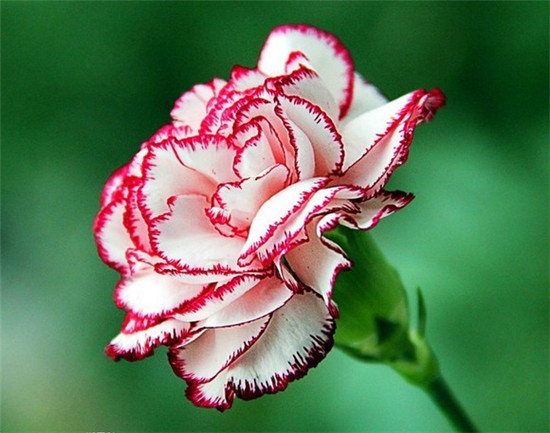
Key points for cultivating carnations
1. Soil: It requires well-drained, humus-rich, clayey soil with good fertilizer retention that is slightly alkaline.
2. Watering: Carnations grow vigorously and are relatively drought-tolerant. In rainy and overly wet areas, the soil tends to become compacted, and the root system develops abnormally due to poor ventilation, so during the rainy season attention should be paid to loosening the soil and draining water. In addition to timely watering during the peak growing and flowering seasons, less watering can be done at ordinary times, with the aim of keeping the soil moist. The air humidity should preferably be maintained at around 75%. Appropriately spraying water before flowering to adjust humidity can prevent the buds from splitting open prematurely.
3. Fertilizing: Carnations love fertilizer. Before planting, apply a sufficient amount of baked fertilizer and bone meal. During the growing period, liquid fertilizer should also be applied continuously, generally once every 10 days or so with decomposed, dilute fertilizer water, and one topdressing after flower harvesting.
4. Other: To encourage carnations to branch more and bloom more, multiple pinching should be carried out starting from the seedling stage: when the seedlings grow 8 to 9 pairs of leaves, carry out the first pinching, keeping 4-6 pairs of leaves; when the side branches grow more than 4 pairs of leaves, carry out the second pinching, keeping 3-4 pairs of leaves per side branch, and finally making the whole plant have 12-15 side branches. When budding, keep only one flower bud at the tip of each side branch, and promptly remove all the small flower buds and side branches sprouting from the leaf axils below the top. After the first flowering, promptly cut off the flower stalks, keeping only two buds at the base of each branch. Through such repeated pinching, the plant shape can be made graceful, with abundant and colorful flowers.
The above is the complete content I have summarized for you on what the Dianthus caryophyllus flower is. I hope this article can help everyone. Please also continue to follow us.
When budding, keep only one flower bud at the tip of each side branch, and promptly remove all the small flower buds and side branches sprouting from the leaf axils below the top. After the first flowering, promptly cut off the flower stalks, keeping only two buds at the base of each branch. Through such repeated pinching, the plant shape can be made graceful, with abundant and colorful flowers.The above is the complete content I have summarized for you on what the Dianthus caryophyllus flower is. I hope this article can help everyone. Please also continue to follow us.