What to Do If the Leaves of the Guanyin Lotus Are Drooping? A Detailed Explanation of the Guanyin Lotus's Benefits
The Guanyin Lotus is a houseplant that has gained great fame in recent years. Because of its shape resembling a lotus throne, its succulent texture, and the pleasing purple-red tips of its leaves, its sales have soared. The Guanyin Lotus actually falls into two different plant families. What we usually grow at home is the Crassulaceae Guanyin Lotus, which has a lotus-like appearance and is a succulent plant; there is also another type with broad leaves and clearly visible veins on the leaf surface, which belongs to the Araceae family and is also called Guanyin Lotus. Don't mix them up. So what are the benefits of the Guanyin Lotus?
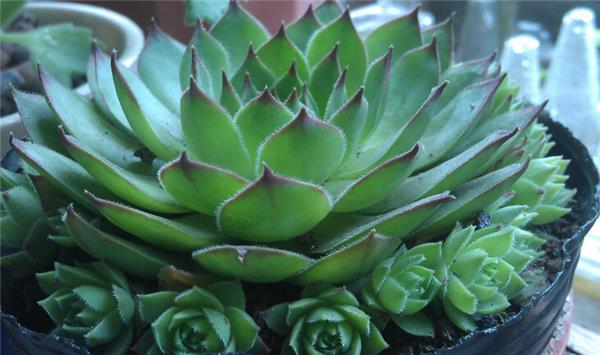
The Benefits of the Guanyin Lotus:
※Benefit of the Guanyin Lotus: Purifying the Air
The Araceae Guanyin Lotus has a slight effect on absorbing indoor toxic gases, collecting dust, killing bacteria, purifying the air and filtering out stale air, and it can slightly increase indoor humidity. The Guanyin Lotus can be used as medicine, with effects such as dispelling wind and dampness and relieving pain. Its main use is to treat typhoid diarrhea, rheumatism, rhinitis and various skin diseases. The succulent Guanyin Lotus likewise has a slight effect on absorbing indoor toxic gases, collecting dust, killing bacteria, purifying the air and filtering out stale air, and it can slightly increase indoor humidity.
※Benefit of the Guanyin Lotus: Ornamental Value
Sempervivum plants are not large in form, come in many varieties and vary greatly in appearance, and the red and purple leaf tips are even more striking; Sempervivum arachnoideum, meanwhile, is a fairly classic type among succulents. In Europe and America the two are often planted indoors beside rock gardens and stone walls for viewing. They can also be used as small potted plants to decorate the home. In addition, succulent enthusiasts often collect and cultivate them as varieties, placing plants of different varieties together for combined viewing, similar yet different, which is quite charming.
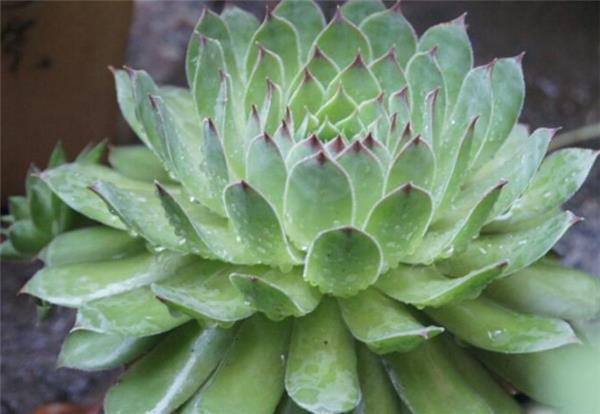
※Benefit of the Guanyin Lotus: Medicinal Value
The Guanyin Lotus has certain effects in treating malarial fevers, severe vomiting and diarrhea, intestinal typhoid, rheumatic pain, hernia, abnormal vaginal discharge, carbuncles and swellings, atrophic rhinitis, scrofula, boils, scabies, and snake and dog bites.
The Guanyin Lotus is an indoor foliage plant with a distinctive style. It is very popular on the foliage plant market and has fairly wide uses. If you like it too, you can use it to decorate your home. So, is the Guanyin Lotus poisonous?
Is the Guanyin Lotus Poisonous?
For ordinary household growing, what you need to note is that the Araceae Guanyin Lotus is poisonous, not the Crassulaceae succulent Guanyin Lotus; the whole plant of the Araceae Guanyin Lotus is poisonous, with the stem being the most toxic. Symptoms of poisoning: skin contact with the sap causes itching; contact of the eyes with the sap causes blindness; accidentally eating the stem or leaves causes itching and swelling of the tongue and throat, drooling; burning pain in the stomach and intestines, nausea, vomiting, diarrhea, sweating, convulsions, and in severe cases suffocation and death from cardiac paralysis.
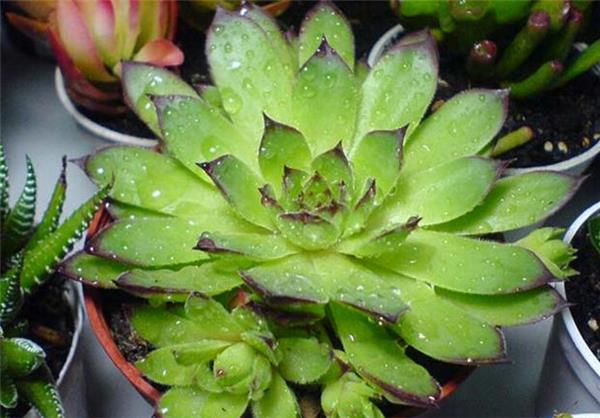
[Rescue methods] For skin poisoning, wash with acetic acid or vinegar. For poisoning from accidental ingestion, take egg white or flour paste, drink plenty of sugar water, or receive an intravenous drip of glucose saline. For abdominal pain, morphine can be injected. For convulsions, inject a sedative, then take potassium bromide or inhale ether. Folk remedies boil a little vinegar with ginger juice and take it orally or use it as a gargle. But it is also fine to just be careful when growing it.
When growing the Araceae Guanyin Lotus, try to avoid growing it in households with children, and be careful during care as well. Be sure to prevent children and people who do not know about it from accidentally eating it or taking it in through other means. Once it is accidentally eaten, in mild cases there is swelling of the tongue and throat and vomiting and diarrhea, and in severe cases suffocation and cardiac paralysis. If poisoning occurs from accidental ingestion, immediately take egg white or flour paste, drink plenty of sugar water, or receive an intravenous injection of glucose saline.
The Crassulaceae succulent Guanyin Lotus is not poisonous. It has a slight effect on absorbing indoor toxic gases, collecting dust, killing bacteria, purifying the air and filtering out stale air, and it can slightly increase indoor humidity.
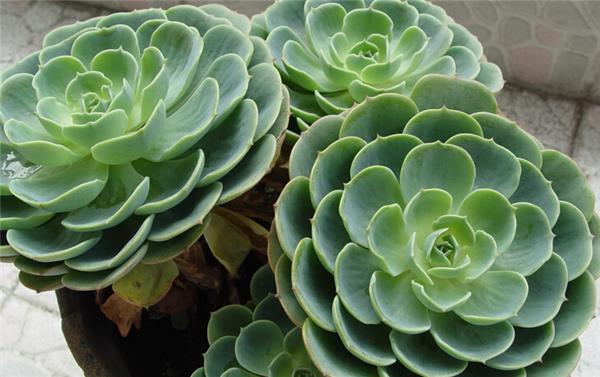
There are two kinds of Guanyin Lotus. One is the Araceae Guanyin Lotus, also known as Alocasia cucullata, black-leaf taro or black-leaf Guanyin Lotus. This Guanyin Lotus is poisonous in the whole plant. Once accidentally eaten, in mild cases there is swelling of the tongue and throat and vomiting and diarrhea, and in severe cases suffocation and cardiac paralysis. If poisoning occurs from accidental ingestion, immediately take egg white or flour paste, drink plenty of sugar water, or receive an intravenous injection of glucose saline. The other is the Crassulaceae Guanyin Lotus, which is the succulent Guanyin Lotus that people usually grow at home. So what is the flower language of the Guanyin Lotus?
The Flower Language of the Araceae Guanyin Lotus
The flower language of the Araceae Guanyin Lotus is happiness and purity, symbolizing holy devotion, eternal union and good fortune. This Guanyin Lotus has a compact, upright form, and its leaves are broad and thick with a special metallic luster; the veins are as clear as a painting, full of poetic charm, making it a foliage plant of distinctive style; it is also one of the foliage plants popular at home and abroad, and the Guanyin Lotus has fairly wide applications. It can be grown in small to medium pots and used to decorate studies, living rooms, bedrooms and offices, appearing noble and elegant.
There are many reasons why the leaves of the Guanyin Lotus droop, and you need to find the specific cause and treat it accordingly to solve the problem of drooping leaves. So what are the causes of drooping leaves in the Guanyin Lotus, and what should be done?
The causes of drooping leaves in the Guanyin Lotus should be the following:
※1. High humidity and low temperature make the tuber extremely prone to rot, or it has already rotted.
※2. If the indoor temperature is below 15°C, the Guanyin Lotus stops growing and enters a dormant state. The above-ground leaves begin to gradually wither, and at this time the amount of watering must be reduced as much as possible.
※3. Overwatering causes waterlogging, the roots cannot breathe, and the leaves droop or even die. It is best to mist, which ensures humidity while not letting water accumulate in the pot.
※4. Poor root growth caused by transplanting means the plant cannot absorb water.
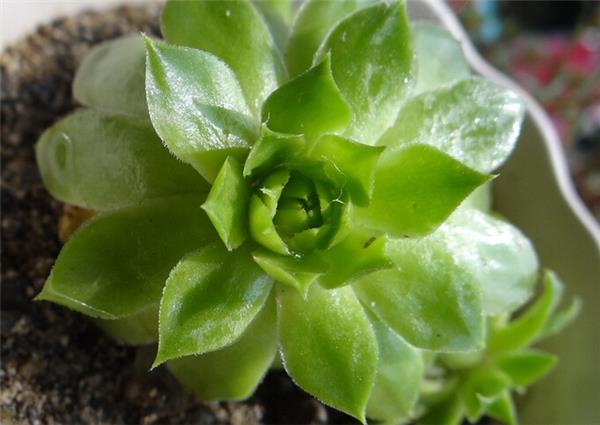
How to Prevent Drooping Leaves in the Guanyin Lotus
※1. A sunny, cool and dry environment is suitable. Except for providing appropriate shade during high summer temperatures to avoid scorching sun exposure, it should receive full light in all other seasons. Although it can also grow normally in semi-shade, for some varieties whose leaf tips are not green, the color of the leaf tips tends to fade, affecting their ornamental value.
※2. The Guanyin Lotus is relatively cold-tolerant. Reduce watering in winter, and it can withstand low temperatures of 2°C. During the growing seasons of spring and autumn, keep the potting soil moist, but do not let water remain continuously.
※3. Apply a decomposed liquid fertilizer once every 2 to 3 weeks. The fertilizer solution should be dilute rather than concentrated, and in particular the nitrogen content must not be high, otherwise the plant will grow leggy.
※4. During the high-temperature period in summer, Sempervivum has a fairly long dormant period. It should be slightly shaded, with attention to ventilation and cooling, keeping the potting soil moderately dry to prevent the plant from rotting due to stuffiness and dampness.
※5. Repot once every 1 to 2 years in spring. The potting soil should be fertile and have good drainage and air permeability. A common mix is 2 parts leaf mold with 1 part coarse sand and 1 part vermiculite, plus a small amount of plant ash and bone meal as a base fertilizer. When repotting, tidy up the root system, remove rotten roots or overly long old roots, let it dry slightly for a day, then plant it into a slightly larger pot filled with fresh growing medium.
 The above is a detailed explanation from the editor about the benefits of the Guanyin Lotus and the question that troubles everyone, whether the Guanyin Lotus is poisonous. I hope it can help everyone understand the Guanyin Lotus better and easily solve the small problems encountered in growing it.
There are many reasons why the leaves of the Guanyin Lotus droop, and you need to find the specific cause and treat it accordingly to solve the problem of drooping leaves. So what are the causes of drooping leaves in the Guanyin Lotus, and what should be done?
The causes of drooping leaves in the Guanyin Lotus should be the following:
※1. High humidity and low temperature make the tuber extremely prone to rot, or it has already rotted.
※2. If the indoor temperature is below 15°C, the Guanyin Lotus stops growing and enters a dormant state. The above-ground leaves begin to gradually wither, and at this time the amount of watering must be reduced as much as possible.
※3. Overwatering causes waterlogging, the roots cannot breathe, and the leaves droop or even die. It is best to mist, which ensures humidity while not letting water accumulate in the pot.
※4. Poor root growth caused by transplanting means the plant cannot absorb water.
How to Prevent Drooping Leaves in the Guanyin Lotus
※1. A sunny, cool and dry environment is suitable. Except for providing appropriate shade during high summer temperatures to avoid scorching sun exposure, it should receive full light in all other seasons. Although it can also grow normally in semi-shade, for some varieties whose leaf tips are not green, the color of the leaf tips tends to fade, affecting their ornamental value.
※2. The Guanyin Lotus is relatively cold-tolerant. Reduce watering in winter, and it can withstand low temperatures of 2°C. During the growing seasons of spring and autumn, keep the potting soil moist, but do not let water remain continuously.
※3. Apply a decomposed liquid fertilizer once every 2 to 3 weeks. The fertilizer solution should be dilute rather than concentrated, and in particular the nitrogen content must not be high, otherwise the plant will grow leggy.
※4. During the high-temperature period in summer, Sempervivum has a fairly long dormant period. It should be slightly shaded, with attention to ventilation and cooling, keeping the potting soil moderately dry to prevent the plant from rotting due to stuffiness and dampness.
※5. Repot once every 1 to 2 years in spring. The potting soil should be fertile and have good drainage and air permeability. A common mix is 2 parts leaf mold with 1 part coarse sand and 1 part vermiculite, plus a small amount of plant ash and bone meal as a base fertilizer. When repotting, tidy up the root system, remove rotten roots or overly long old roots, let it dry slightly for a day, then plant it into a slightly larger pot filled with fresh growing medium.
The above is a detailed explanation from the editor about the benefits of the Guanyin Lotus and the question that troubles everyone, whether the Guanyin Lotus is poisonous. I hope it can help everyone understand the Guanyin Lotus better and easily solve the small problems encountered in growing it.