What are the characteristics and features of Dianthus? A detailed explanation in one article
Dianthus is a perennial herbaceous plant, often grown as an ornamental plant, and it also has certain medicinal value. Next, let us take a look at the features of Dianthus!
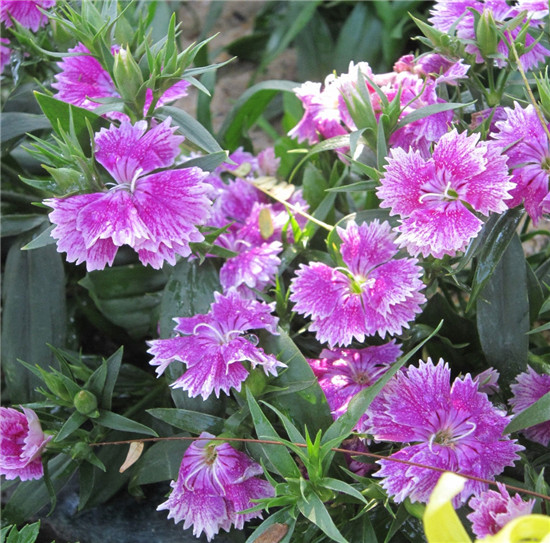
Dianthus is a perennial herb, rarely annual. The roots are sometimes woody. The stems are mostly clustered, cylindrical or angular, with nodes, and the nodes are swollen. The leaves are grass-like, opposite, linear or lanceolate, often glaucous, with parallel veins, rough margins, and slightly connate at the base.
Flowers are red, pink, purple or white, solitary or in cymes, sometimes clustered into heads and surrounded by involucral bracts; the calyx is cylindrical, with 5 toothed lobes, without a dry membranous commissure, with 7, 9 or 11 veins, and 1-4 pairs of bracts adnate at the base; petals 5, with long claws, the limb margins toothed or fimbriate-laciniate, rarely entire; stamens 10; styles 2, ovary 1-locular, with numerous ovules and a long gynophore.
The capsule is cylindrical or oblong, rarely ovoid, dehiscing at the apex by 4 teeth or valves; seeds numerous, circular or shield-shaped; the embryo is straight, and the endosperm is often to one side. Morphological characteristics: plant height 15-25 cm. Stems erect, swollen at the nodes, mostly branching in a clustered manner. Leaves opposite, linear-lanceolate, grayish green, clasping at the base. Flowers solitary or in inflorescences, petals 5 or double, with shallow teeth at the apex, flower diameter about 3 cm, in colors such as pink, purplish red, and white. Capsule, seeds flat, black. There are many species and cultivars of Dianthus; those often grown as annual or biennial plants include Dianthus chinensis, Dianthus barbatus (also known as sweet William), and Armeria maritima.
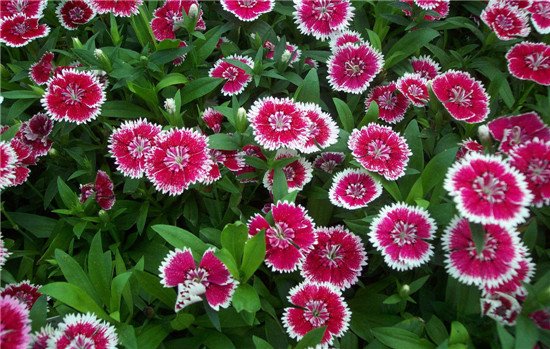
Growth habit: it likes a sunny, dry, ventilated and cool environment, has good cold tolerance, and is suitable for well-drained, fertile, loose and slightly alkaline soil. The flowering period is generally May, and the fruit ripening period is June-October. The main propagation method is sowing, mostly sown in mid-to-late August in autumn, and the seedlings grow robustly and bloom abundantly. Spring sowing is generally from late March to early April. They germinate in 7-10 days, but their growth is not as good as that of autumn-sown seedlings.
What effects does Dianthus have? The whole plant or root of Dianthus can be used as medicine, and its medicinal value is also very high. Next, I will explain its effects for everyone.
Nature, flavor and meridian entry: bitter, cold. Enters the Heart and Small Intestine meridians.
Chemical composition: the whole plant contains saponins and volatile oil; the oil mainly contains eugenol, phenylethyl alcohol, benzyl benzoate, benzyl salicylate, and methyl salicylate.
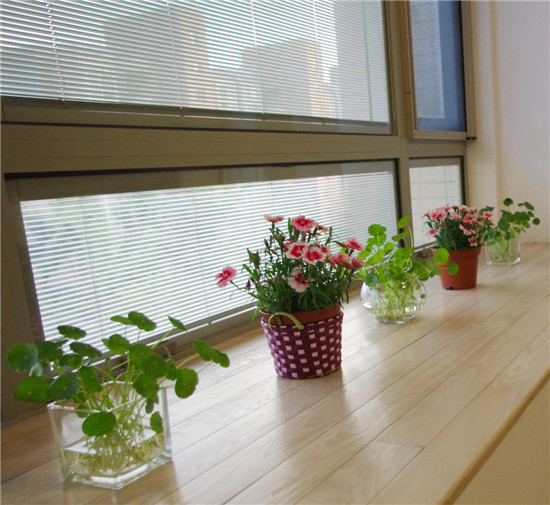
Effects and indications: Dianthus has effects such as clearing heat and promoting diuresis, activating blood, and promoting menstruation. It can be used to treat urethritis, cystitis, nephritis, hypertension, amenorrhea, irregular menstruation, pharyngitis, diarrhea, edema, joint stiffness, venomous snake bites, sores, boils and carbuncles, and intestinal excitement. "Bencao Beiyao" says: "It lowers heart fire, benefits the small intestine, and drives out pathogenic heat from the bladder; it is an essential medicine for treating strangury."
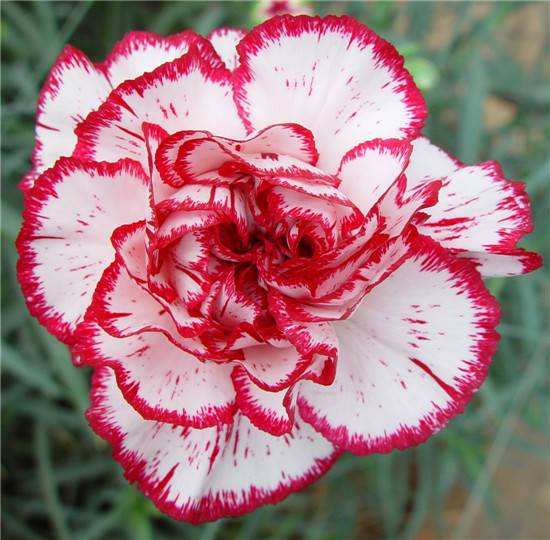
Dianthus has a low plant type, stems like bamboo, and verdant foliage. Its natural flowering period is May-September, and it can bloom from late spring to mid-autumn; potted in a greenhouse, it can bloom in all four seasons. Flowers are terminal on the branch tips, solitary or paired, and sometimes in paniculate cymes. The flower diameter is not large, only 2 to 3 cm, but the flowers are abundant, rising one after another, and the ornamental period is relatively long. Flower colors include white, pink, red, pink, bright red, purple, light purple, yellow, blue, etc., colorful and endlessly varied.
The above is all the content I have summarized for everyone on the characteristics of Dianthus and the features of Dianthus. I hope this article can help everyone. Please also continue to follow us.