What are the effects and functions of Hehuan bark (Albizia julibrissin bark)? A detailed analysis
Hehuan bark belongs to the sedative-tranquilizing medicines, also known as Hehun bark, Yehe bark, and Hehuan wood bark. The medicinal part is the tree bark; Hehuan bark is the bark of the legume plant Albizia julibrissin. Albizia julibrissin is a deciduous tree, growing on hillsides and also cultivated, distributed across Northeast, East, Central-South, and Southwest China. The bark is peeled in summer and autumn, cut into sections, and sun-dried or kiln-dried. So, what are the effects and functions of Hehuan bark?
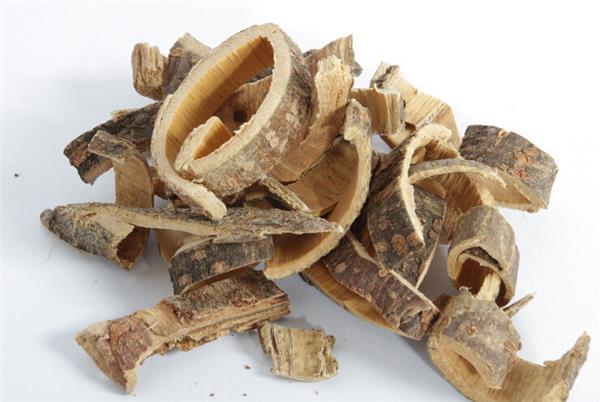
The effects and functions of Hehuan bark
[Effects] Calms the mind and relieves depression, invigorates blood and reduces swelling, promotes tissue regeneration and mends bones.
[Pharmacological effects]
☆1. Calming the mind and relieving depression: Used for restlessness due to deficiency, depression and irritability, forgetfulness and insomnia, etc. It can be used alone or in combination with Baishao (white peony root), Baiziren (Chinese arborvitae seed), Longchi (fossilized tooth), Hupo (amber), etc.
☆2. Invigorating blood and reducing swelling:
① For lung abscess with coughing of phlegm, it can be used alone or in combination with Lugen (reed root), Gongying (dandelion), Taoren (peach kernel), Yiyiren (coix seed), Dongguaren (winter melon seed), etc.
② For traumatic injuries, it can be used in combination with Danggui (angelica sinensis), Chishao (red peony root), Chuanxiong (Szechuan lovage rhizome), Taoren (peach kernel), etc.
☆3. Promoting tissue regeneration and mending bones: For tendon and bone injuries, it can be ground into powder with Baijiezi (white mustard seed) and taken mixed with yellow wine. Or the medicinal powder can be applied externally to the affected area.
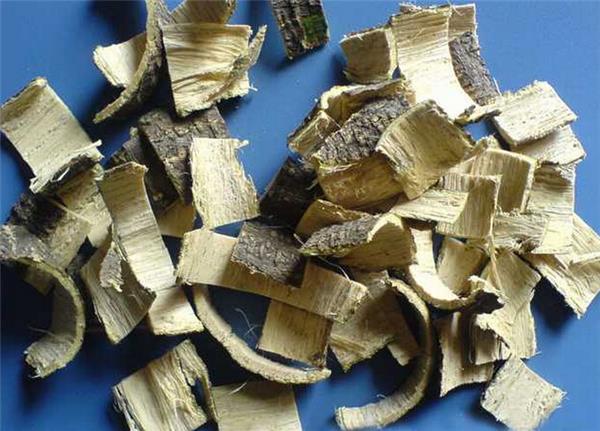
Hehuan bark is the dried tree bark, cylindrical or semi-cylindrical in shape, over 30 cm long, 1-2 mm thick, with a rough outer surface, grayish-green or grayish-brown, scattered with fine transverse cracks, slightly longitudinally wrinkled, with lenticels round or oblong, bearing a brownish-red color; the inner surface is light brown or light yellow, with fine dense wrinkles, hard and brittle in texture, with a light yellow fracture, fibrous. Slight odor, bland taste.
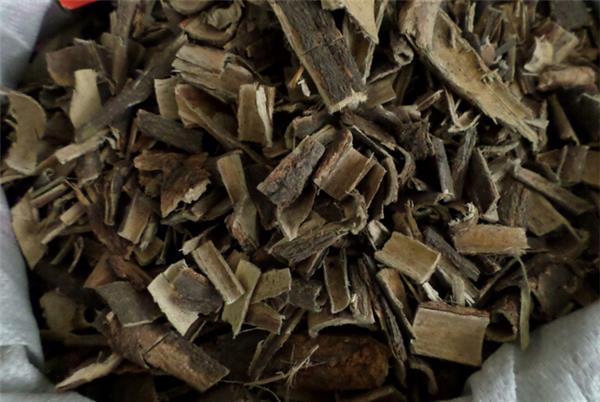
[Usage and dosage] Internal use: decocted in water, 1.5~3 qian; or made into powder. External use: ground into powder and applied.
[Clinical effects of Hehuan bark]
☆1. Anti-fertility effect. The cold water extract of Hehuan bark has a significant anti-fertility effect. Intra-amniotic administration can cause fetal atrophy in mid-pregnancy rats, with pale color, thereby terminating pregnancy. Under the action of Hehuan bark extract, the contraction tension and amplitude of human pregnant uterine strips are significantly increased, while the contraction frequency is significantly reduced. The effect of Hehuan bark is similar to oxytocin, but with a slower onset and longer duration.
☆2. Anti-allergic effect. Oral administration of Hehuan bark decoction to rats can inhibit peritoneal mast cell degranulation, and in vitro tests show similar effects. Hehuan bark decoction can significantly inhibit the sensitization process and antibody production process induced by antigen (horse serum) in rats. Its active component appears to be a heat-resistant water-soluble substance.
☆3. Anti-tumor effect. The polysaccharides contained in Hehuan bark have an inhibition rate of 73% against transplanted tumor S180 in mice.
☆4. Effect on blood pressure. Intravenous injection of Hehuan oxytocin into anesthetized animals can cause a brief decrease in blood pressure.
[Differential application] Hehuan flower and Hehuan bark come from the same plant, one is the bark and the other is the flower. Both have the function of relieving depression and calming the mind, and both can be used for mental restlessness and depression with insomnia. However, Hehuan flower can regulate qi and stimulate appetite, while Hehuan bark can invigorate blood and reduce swelling, relieve pain and promote tissue regeneration. This is the difference between the two. Generally, the flower is used more for relieving depression, and the bark is used more for invigorating blood.
Difference between the two: Hehuan flower mainly relieves depression and calms the mind. Used for mental restlessness and depression with insomnia.
The bark (Hehuan bark) contains saponins and tannins, and has the function of relieving depression, calming the mind, invigorating blood and reducing swelling; used for mental restlessness, depression and insomnia, lung abscess and sores, and traumatic injuries. The leaves contain tannins and quercitrin. If neither is available, they can be substituted for each other.
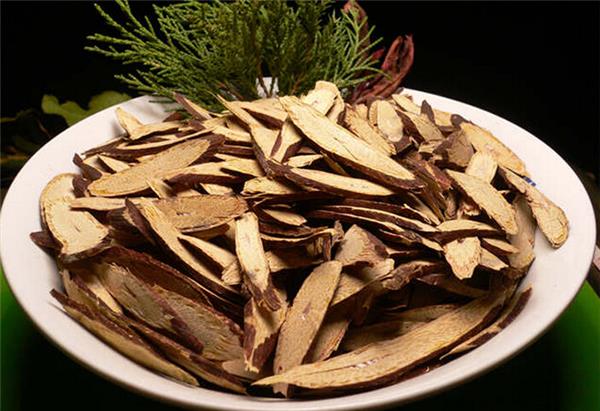
[Compatibility applications]
☆1. Combined with wheat: Nourishes the heart and calms the mind. Wheat is sweet in flavor and enters the heart meridian, can nourish the heart and calm the mind. Hehuan flower relieves depression and calms the mind. When the two medicines are combined, their power to nourish the heart and calm the mind is enhanced, commonly used for mental disorders, mental restlessness, and agitation.
☆2. Combined with wine: Unblocks collaterals and relieves pain. Wine is pungent in flavor and warm in nature, pungent and aromatic, dispersing and warming, with the function of invigorating blood and unblocking collaterals. Hehuan flower activates collaterals and relieves pain. When used together, they can invigorate blood and unblock collaterals, reduce swelling and relieve pain, and can be used for traumatic injuries with swelling and pain.
[Application precautions] Use with caution in those with yin deficiency and fluid damage.
[Usage and dosage] Internal use: 3~9 grams, in decoction, or in pills and powders.
[Characteristics of effects] This product can benefit the heart and spleen, relieve depression, and is commonly used for mental restlessness, worry and anger, forgetfulness, insomnia, etc. It can also reduce swelling and relieve pain, promote tissue regeneration and mend bones, and is especially suitable for lung abscess with turbid sputum, tendon and bone injuries, etc.
[Contraindications of Hehuan bark]
Contraindications: Use with caution in patients with peptic ulcer and gastritis; contraindicated in those with wind-heat spontaneous sweating and insomnia due to exogenous pathogens.
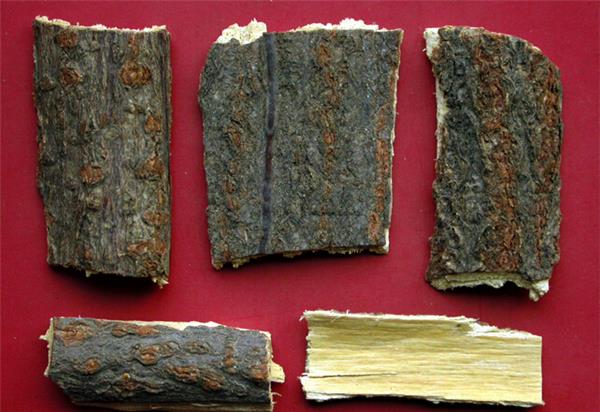
Hehuan bark is the dried tree bark, cylindrical or semi-cylindrical in shape, over 30 cm long, 1-2 mm thick, with a rough outer surface, grayish-green or grayish-brown, scattered with fine transverse cracks, slightly longitudinally wrinkled, with lenticels round or oblong, bearing a brownish-red color; the inner surface is light brown or light yellow, with fine dense wrinkles, hard and brittle in texture, with a light yellow fracture, fibrous. Slight odor, bland taste. So, what are the pharmacological effects of the side effects of Hehuan bark?
Pharmacological effects of the side effects of Hehuan bark
☆1. Effect on smooth muscle. Hehuan oxytocin has a uterine-contracting effect. In isolated experiments, Hehuan oxytocin can cause contraction of guinea pig or human uterus in a resting state; when the uterus has spontaneous activity, it can increase its contraction force or frequency. Intravenous injection of Hehuan oxytocin into anesthetized animals (guinea pigs, rabbits, cats, and monkeys) at 0.1~8 mg/kg can enhance the activity of the uterus in situ, with the pregnant uterus being particularly sensitive. Atropine and antihistamines have no blocking effect on it (except in monkeys). For various non-anesthetized animals, administration of Hehuan oxytocin during any period of pregnancy can induce abortion within 12 hours. Hehuan oxytocin does not cause contraction of isolated guinea pig small intestine even at high concentrations.
☆2. Effect on blood pressure. Intravenous injection of Hehuan oxytocin into anesthetized animals can cause a brief decrease in blood pressure.
☆3. Effect on sperm. Research shows: Shanhehuan saponin E has a spermicidal effect.
 The above is an introduction to relevant information about the effects and functions of Hehuan bark compiled by the editors. We hope it can help everyone better understand Hehuan bark and better apply Hehuan bark.
Pharmacological effects of the side effects of Hehuan bark
☆1. Effect on smooth muscle. Hehuan oxytocin has a uterine-contracting effect. In isolated experiments, Hehuan oxytocin can cause contraction of guinea pig or human uterus in a resting state; when the uterus has spontaneous activity, it can increase its contraction force or frequency. Intravenous injection of Hehuan oxytocin into anesthetized animals (guinea pigs, rabbits, cats, and monkeys) at 0.1~8 mg/kg can enhance the activity of the uterus in situ, with the pregnant uterus being particularly sensitive. Atropine and antihistamines have no blocking effect on it (except in monkeys). For various non-anesthetized animals, administration of Hehuan oxytocin during any period of pregnancy can induce abortion within 12 hours. Hehuan oxytocin does not cause contraction of isolated guinea pig small intestine even at high concentrations.
☆2. Effect on blood pressure. Intravenous injection of Hehuan oxytocin into anesthetized animals can cause a brief decrease in blood pressure.
☆3. Effect on sperm. Research shows: Shanhehuan saponin E has a spermicidal effect.
The above is an introduction to relevant information about the effects and functions of Hehuan bark compiled by the editors. We hope it can help everyone better understand Hehuan bark and better apply Hehuan bark.