How to Grow Dianthus? A Detailed Guide to Dianthus Cultivation Methods
Dianthus is a plant that mostly grows in grasslands and hillside meadows, and now it has been planted in pots in households everywhere. Next, let us learn about the cultivation methods and precautions for Dianthus.
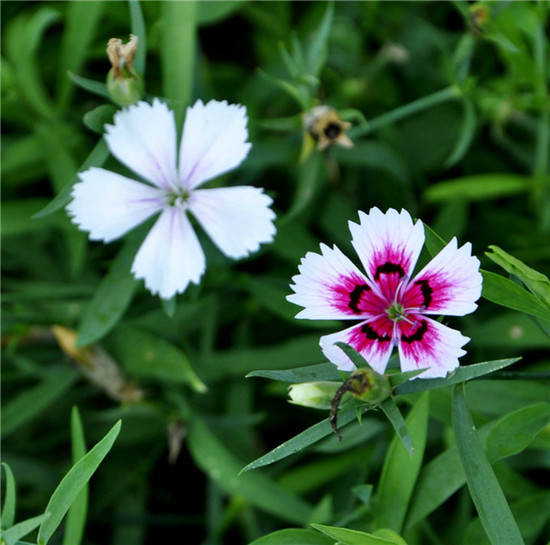
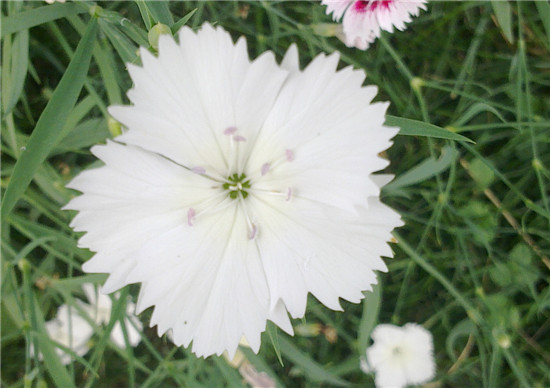
Dianthus flower is a perennial herbaceous flower of the Caryophyllaceae family with a perennial root system, and it is now mostly cultivated as a biennial flower. The plant height is 30-50 cm, and it is white-green. The stems are clustered and smooth without hairs. The leaves are linear or lanceolate. The flowers are solitary, single or double, in light red, red, light purple, purple, white, mixed colors, etc., and the petal edges are serrated. The flowering period is from May to September. The capsule is oblong, and the seeds are black. There is another type produced in Europe, called the American Dianthus flower, whose flowers are cymes.
Characteristics: It likes sunlight, tolerates cold, tolerates drought, and dislikes waterlogging. It prefers well-drained, fertile sandy loam. It is cold-tolerant but not tolerant of extreme heat, and it likes sunny, high and dry, ventilated conditions and well-drained fertile loam.
Dianthus flower is a perennial herbaceous flower with weak perennial-rootedness, and it is mostly cultivated as a 1-2 year plant. Potted Dianthus flowers require sufficient base fertilizer, with 2-3 plants per pot. When the seedlings grow to 15 cm tall, remove the terminal buds to promote branching. After that, pay attention to properly removing axillary buds; otherwise, too many branches will disperse nutrients and make the flowers small. Properly removing axillary buds concentrates the nutrients and can promote larger flowers with brighter colors.
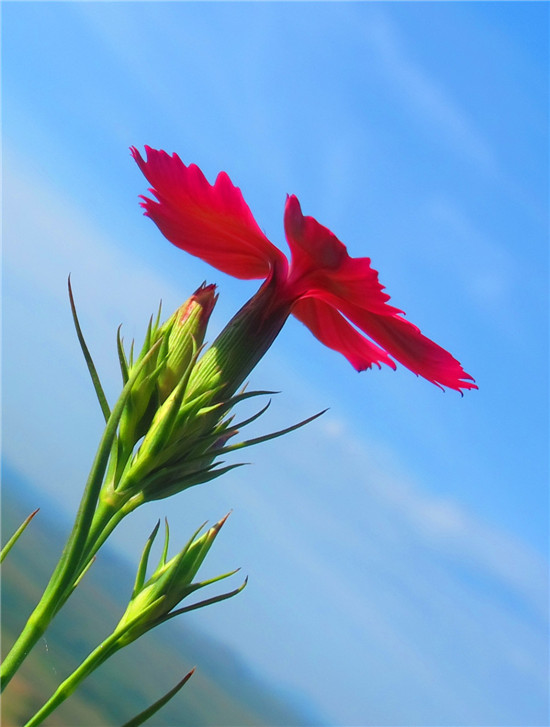
During the growth period, it should be placed in a sunny, well-ventilated place for care, and the potting soil should be kept moist. Apply 1 time of fully decomposed dilute liquid fertilizer about every 10 days. In summer, when there is too much rain, pay attention to drainage and loosening the soil. Dianthus flowers cross easily, so those saving seeds need isolated planting. Before flowering, some axillary flower buds should be removed in time, mainly to ensure that the terminal flower buds bloom. In winter, watering should be reduced. If the temperature is kept at 5-8°C, it will continue to bloom in winter and spring.
Dianthus cultivation methods:
1. Soil: It requires well-drained, humus-rich, clayey soil with good fertilizer retention that is slightly alkaline. A culture soil mixed with 6 parts garden soil, 2 parts compost, and 2 parts sandy soil can be used.
2. Watering: Dianthus grows vigorously and is relatively drought-tolerant. In rainy and overly wet areas, the soil easily becomes compacted, and the root system develops abnormally due to poor ventilation, so in the rainy season pay attention to loosening the soil and drainage. In addition to timely watering during the peak growing and flowering seasons, at ordinary times water less, just enough to keep the soil moist.
3. Temperature: The suitable growth temperature for Dianthus is 15-20°C. In winter, it should be placed in a greenhouse, with the temperature kept above 12°C. The air humidity should preferably be kept at about 75%. Properly spraying water before flowering to adjust humidity can prevent the flower buds from splitting open early.
4. Fertilization: Dianthus likes fertilizer. Before planting, apply a sufficient amount of baked fertilizer and bone meal. During the growth period, liquid fertilizer should also be applied continuously as a top dressing. Generally, apply fully decomposed dilute fertilizer water about every 10 days, and apply 1 top dressing after flower harvesting.
5. Light: Ensure 6-8 hours of light every day. In midsummer, Dianthus flowers are in a semi-dormant state, and at this time care should be taken to avoid exposure to scorching sun. The potting soil must not be waterlogged, otherwise the roots rot easily.
Pest and disease control
Rust disease
After clearing diseased branches in the garden, spray pesticide in time for prevention. You can spray 2-5 degree lime sulfur mixture or sodium pentachlorophenate 200-300 times solution. To control rust on alternate host plants, spray 1-2 times in early to mid-March to kill overwintering fungal spores. During the growing season, after new leaves unfold, you can choose 25% triadimefon 1500-2000 times solution, 50% mancozeb 500 times solution, or 25% metalaxyl-copper wettable powder 800 times solution for spraying, once every 7-10 days, for 2-3 consecutive treatments. You can spray with 50% carboxin wettable powder 1500 times solution.
Red spider mite
Before overwintering eggs hatch, scrape the bark and burn it in a concentrated manner. After scraping the bark, whitewash the trunk (lime water) to kill most of the overwintering eggs. According to the hatching pattern of red spider mite overwintering eggs and the habit of first feeding and reproducing on weeds after hatching, plow the ground in early spring, clear the weeds on the ground, and keep the field free of weeds during the hatching period of overwintering eggs, so that red spider mites die because they cannot find food. For chemical control, uniformly spray with 4000-5000 times solution of Pyridaben, 40% dicofol emulsifiable concentrate 1000-1500 times solution, 20% clofentezine wettable powder 2000 times solution, 15% pyridaben emulsifiable concentrate 2000 times solution, 1.8% abamectin emulsifiable concentrate 6000-8000 times solution, etc., all of which can achieve ideal control effects.
The above is all the content I have summarized for you on how to grow Dianthus and the cultivation methods for Dianthus. I hope this article can help everyone. Please also continue to follow us.