What Are the Morphological Characteristics of Yucca? A Complete Guide
Yucca, also known as Yucca filamentosa, belongs to the Asparagaceae family, genus Yucca. Let's take a look at the morphological characteristics of Yucca.
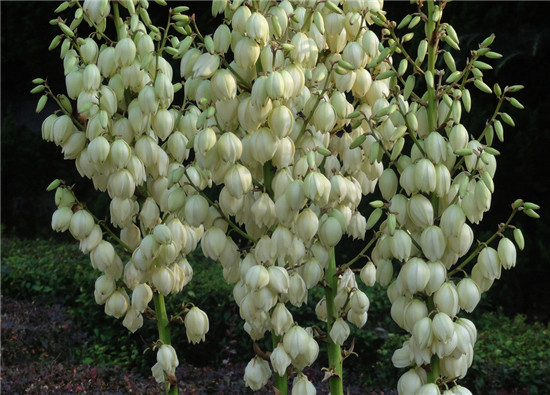
Yucca, also known as pineapple flower, is an evergreen shrub in the Asparagaceae family, genus Yucca, native to North and South America. Both its flowers and leaves are attractive, and it requires minimal management. It can be planted both indoors and outdoors, making it a highly ornamental flowering plant.
Yucca, a very, very, very ancient and magical plant. Legend has it that after a phoenix failed in its nirvana rebirth, having no new body, it attached itself to a nearby plant. Then, they broke through the soil and bloomed into Yucca that sways in dance to welcome the phoenix.
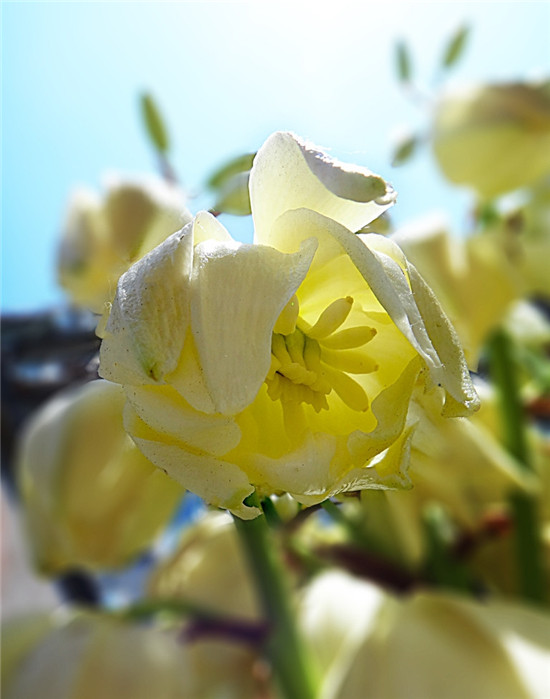
Yucca leaves are deep green, with a waxy layer on the surface, hard as swords; for field-planted specimens, leaves are 40 to 70 cm long and 3 to 6 cm wide, densely clustered in a spiral arrangement on short stems, spreading out in a radial pattern. In summer and autumn, thick flower stalks emerge from the leaf bases, reaching over 1 m in height, with panicle inflorescences, each bearing 200 to 400 flowers that open gradually from bottom to top, creamy white, cup-shaped, drooping. Yucca likes sunlight and tolerates shade, and can be placed in an entrance hall with ample indirect light for viewing. It is not demanding about soil, with fertile, loose sandy loam being ideal.
Yucca is robust by nature, rarely affected by pests or diseases, and highly resistant; it has strong resistance to sulfur dioxide, hydrogen fluoride, chlorine gas, ammonia gas, and more, while also being able to absorb harmful gases. Yucca is suitable for planting in flower beds, lawns, or beside rockeries; for home cultivation, it can be planted in larger pots; small offshoot clusters can also be cut from the roots and planted in small flower pots, placed on side tables.
Morphological Characteristics of Yucca
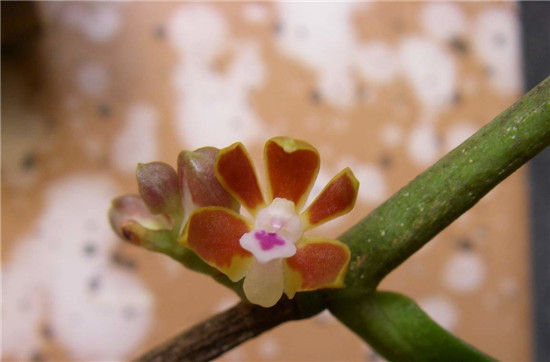
Plants clustered. Stems pendulous, up to 50 cm long, internodes 1.5-2 cm long. Leaves distichous, borne along the entire length of the stem, slightly fleshy, narrowly lanceolate, 7-10 cm long, 1.2-1.5 cm wide, apex acute, base with amplexicaul sheaths. Racemes very short, borne opposite the leaves at each node along the stem, with 3-6 flowers, peduncle about 3-6 mm long; floral bracts broadly triangular, about 2 mm long; pedicels and ovary about 5.5 mm long; flowers white, spreading; dorsal sepal oblong, 7 mm long, 2.5 mm wide, apex acute; lateral sepals obliquely ovate, 6 mm long, 4 mm wide, apex acute, base narrowed; petals falcate-oblanceolate, 7 mm long, 2 mm wide, apex slightly acute; lip thick and fleshy, 3-lobed; lateral lobes purple, erect, triangular, very small, apex obtuse; mid-lobe white with purple apex, broadly ovate, curved upward, about 1 mm long, about 2.5 mm wide, apex obtuse, base (in front between the lateral lobes) with 1 ligulate hairy fleshy protrusion; spur conical, about 2.5 mm long, inner back wall with 1 ligulate appendage.
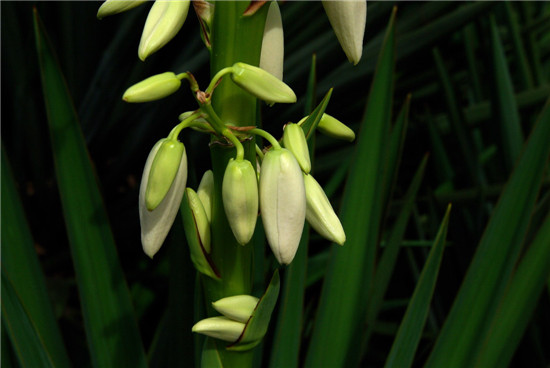
Yucca leaves are deep green, with a waxy layer on the surface, hard as swords; for field-planted specimens, leaves are 40 to 70 cm long and 3 to 6 cm wide, densely clustered in a spiral arrangement on short stems, spreading out in a radial pattern. In summer and autumn, thick flower stalks emerge from the leaf bases, reaching over 1 m in height, with panicle inflorescences, each bearing 200 to 400 flowers that open gradually from bottom to top, creamy white, cup-shaped, drooping.
Main Value of Yucca
Yucca is deep green year-round, with both beautiful flowers and leaves, and a peculiar tree form; several plants form a clump, varying in height, with sword-shaped leaves. When blooming, the flower stalks rise tall and upright, the flowers are pure white, and the numerous white flowers droop like bells, graceful in posture, with a long blooming period and a pleasant fragrance. It is a fine garden ornamental tree and also a good material for fresh-cut flowers. It is often planted in the center of flower beds, in front of buildings, in lawns, beside ponds, on terraced slopes, near buildings, along roadsides, and in hedges. The leaf fibers are white, strong, and resistant to water, known as "white hemp palm," and can be used for cables. The leaves can also be used to extract steroid hormones.
Yucca leaves are deep green year-round; several plants form clumps, varying in height, with sword-shaped leaves arranged neatly in a radial pattern. It can be planted in the center of flower beds, beside rocks or terraced slopes, and near modern buildings. Its sharp leaf tips can also be used as a hedge, or it can be planted under walls and fences. Yucca has strong resistance to harmful gases and can be used as a landscaping and beautification material in industrial and mining areas.
The above is the complete content of the morphological characteristics of Yucca that I have summarized for everyone. I hope this article can help you. Please continue to follow us.