What are the benefits and effects of peony? A detailed introduction for you in one article
Peony is a perennial herbaceous flower. It is not only very beautiful, but also has excellent benefits and effects. Let us take a look together next!

Legend has it that neither tree peonies nor herbaceous peonies are ordinary flowers. In a certain year, when a plague struck the human world, the Jade Maiden or the Flower Goddess stole the Queen Mother of the West's immortal elixir and scattered it over the human world to save people. As a result, some became woody tree peonies, and others became herbaceous peonies. To this day, peony still carries the character "medicine" in its name.
The differences between herbaceous peony and tree peony
1. The most fundamental difference: tree peony is a woody plant that can grow to 2 m tall, while herbaceous peony is a short (perennial tuberous-rooted) herbaceous plant no taller than 1 m.
2. The flowering period of tree peony is earlier than that of herbaceous peony. Tree peony generally blooms in mid-to-late April, while herbaceous peony blooms in early-to-mid May. The difference in their flowering periods is about 15 days.
3. Tree peony leaves are broad, with the upper side green and slightly yellowish; while herbaceous peony leaves are narrow, and both the upper and lower sides are dark green.
4. Tree peony flowers are borne at the tips of flowering branches and are mostly solitary, with a flower diameter generally around 20 cm; while herbaceous peony flowers are mostly clustered at the branch tips, with a flower diameter around 15 cm.
5. Tree peony is called the king of flowers. Herbaceous peony is called the minister of flowers.
6. Tree peony leaves are more grayish green, while herbaceous peony leaves are more glossy.
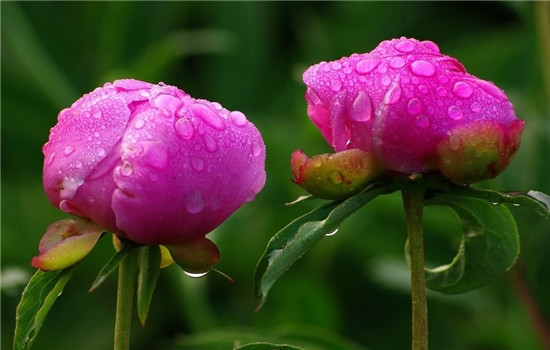
The effects of peony
1. The main chemical component of peony root is paeoniflorin. In addition, it also contains paeonol, benzoic acid, volatile oil, resin, tannins, sugars, starch, triterpenoids and other components.
2. Paeoniflorin has an inhibitory effect on the central nervous system and also has relatively good pharmacological effects such as relieving spasms, relieving pain, sedation, reducing fever, anti-convulsion, anti-inflammation, anti-ulcer, dilating the coronary arteries and hindlimb blood vessels, and lowering blood pressure.
3. Red peony root is a medicine for clearing heat and cooling blood. It is bitter in taste and slightly cold in nature, and enters the liver meridian. It has the effects of clearing heat and cooling blood, dispersing blood stasis and relieving pain. It mainly treats heat entering the nutrient and blood levels, skin rashes, vomiting blood, epistaxis, traumatic injuries, amenorrhea and abdominal masses, carbuncles, swellings and sores, red eyes and eye obstructions, etc.
4. White peony root has the functions of nourishing blood and astringing yin, and softening the liver and relieving pain. It mainly treats liver blood deficiency, irregular menstruation, disharmony between the liver and spleen, pain in the chest, hypochondrium, epigastrium and abdomen, cramps of the limbs, liver yang rising, headache and dizziness, etc.
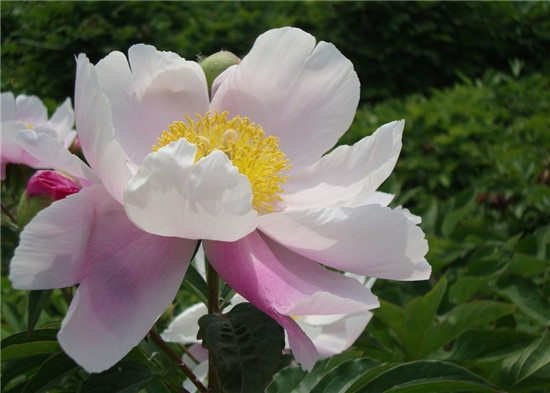
The benefits and effects of peony flowers
Peony has an obvious effect of nourishing and protecting the liver, and it can also improve and treat chloasma on our skin and face to a certain extent.
Peony has a very good effect on regulating women's endocrine system and irregular menstruation; if you have gained weight due to metabolism or have acne or spots on your skin, peony can also help.
Office workers who often use their eyes may experience eye pain, and can drink some peony tea to nourish the liver. At the same time, if women want beauty care and want their skin to be more radiant, they can also use peony to help.
Suitable groups
1. People with blood deficiency and yin deficiency who have pain in the chest, abdomen, hypochondrium and ribs, liver area pain, or pain from cholecystitis and gallstones are suitable to consume it.
2. People with diarrhea, abdominal pain, or menstrual abdominal pain in women are suitable to consume it.
3. People with spontaneous sweating, easy sweating, or night sweats are suitable to consume it.
4. Patients with calf muscle spasms, contracture and pain of the limbs, or restless legs syndrome are suitable to consume it.
5. Used together with licorice, it can relieve various types of chest, abdominal and limb pain.
The above is all the content I have summarized for everyone on what the benefits and effects of peony are. I hope this article can help everyone. Please also continue to follow us.