How to Plant Sedum lineare? A Detailed Guide to Planting Methods
Sedum lineare has emerald-green leaves and strong vitality, and is often used as a ground cover plant or for rooftop greening. Below, we introduce the planting methods for Sedum lineare.
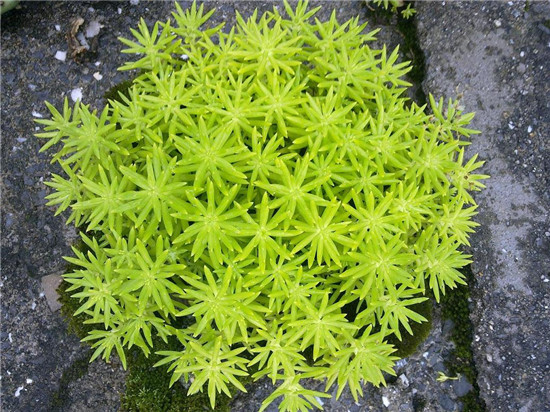
Sedum lineare, also known as Wanniancao, Fozhijia, and Banzhilian, is a perennial herbaceous plant of the genus Sedum in the Crassulaceae family. Sedum lineare is a succulent plant with an extremely high water content, and the cuticle of its leaf and stem epidermis has an extraordinary ability to prevent water evaporation. Sedum lineare has strong growth adaptability, tolerating cold, drought, salinity and alkalinity, and poor soil, and resisting pests and diseases; its stems are juicy and its small emerald-green leaves resemble jade, neat and beautiful. It can be enjoyed as a potted plant or planted outdoors as an ornamental ground cover.
Cultivation methods for Sedum lineare:
1. Soil: It is naturally robust and can tolerate poor and thin soil, growing normally in various loams such as clayey and sandy soils. When potted, a relatively small flower pot can be used, and the potting soil can be a growing medium made by mixing ordinary garden soil with a small amount of river sand.
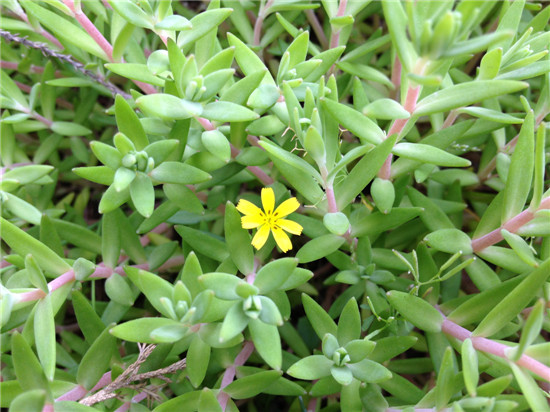
2. Watering: When the temperature warms up in spring and Sedum lineare begins to sprout, watering should be sufficient, and care should be taken to keep the soil moist. By April-May, it can be kept slightly drier, as this plant is relatively drought-tolerant. If there is too much water at this time and the potting soil is too wet, it will instead grow poorly.
3. Light: Sedum lineare has a characteristic of "responding to light." In a sunny place, its leaves are yellow-green; if moved to a slightly shadier place, the leaves become a deeper green. If it lacks light for a long time, its stems and vines will grow excessively lush, the internodes will elongate, and the plant will become less compact.
4. Temperature: It can tolerate cold slightly. In cold winter, as long as the temperature is not below 10°C, it can still grow fairly well. If it can be placed in a sunny, wind-sheltered spot and the potting soil is not too dry or too wet, it will not be frostbitten and can grow vigorously again the following spring.
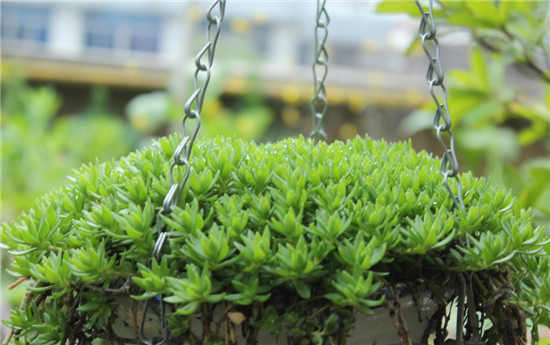
5. Fertilizing: During the growing season of Sedum lineare, it is best to apply well-rotted manure once a month, which can make it grow lush and vigorous with stems and vines spreading on all sides. By May-June, it will bloom more, growing yellow flowers all over the pot and creating a very good ornamental effect.
Growth Habits
Sedum lineare has extremely strong vitality, with relatively strong tolerance to drought, high temperatures, and severe cold. It prefers cool, moist environments. A loose, fertile, well-drained sandy loam is better, and it can grow on relatively thin substrates, but overly sticky or waterlogged ground is not suitable for planting. For indoor potting, it grows normally as long as the temperature is not below 10.
Light Management
Sedum lineare has a characteristic response to light, "responding to light." In a sunny place, its leaves are yellow-green; if moved to a slightly shadier place, the leaves become a deeper green. If it lacks light for a long time, its stems and vines will grow excessively lush, the internodes will elongate, and the plant will become less compact.
How to Water
For newly planted ones, the soil should be kept moist. When Sedum lineare begins to sprout in spring, watering should be sufficient, and care should be taken to keep the soil moist. By April-May, it can be kept slightly drier, as this plant is relatively drought-tolerant. If there is too much water at this time and the potting soil is too wet, it will instead grow poorly.
Fertilizing Methods
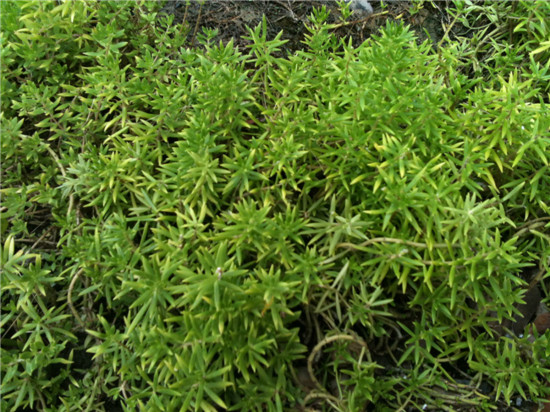
Sedum lineare generally only needs fertilizing about 2-3 times a year. During its growing season, it is best to apply well-rotted manure once a month, which can make it grow lush and vigorous with stems and vines spreading on all sides. By May-June, it will bloom more, growing yellow flowers all over the pot and creating a very good ornamental effect.
The cultivation method for Sedum lineare is actually very simple. It has tenacious vitality, is not picky about soil, and when grown indoors in a pot, it stays lush green through all four seasons, with the plant emerald and crystal-clear, and it also greatly helps improve indoor air quality.
The above is the full content I have summarized for you on how to plant Sedum lineare. I hope this article can help everyone. Please also continue to follow us.