How to grow water lilies? Easily master the cultivation methods
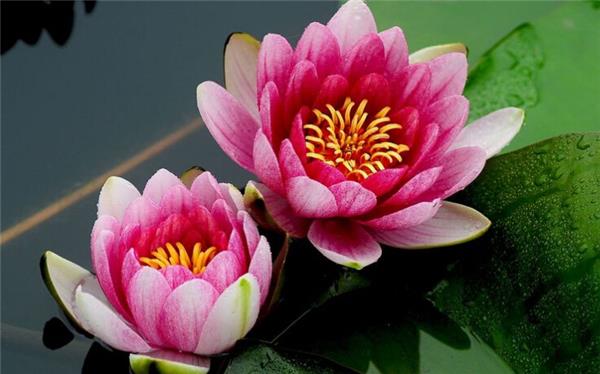
Water lilies are a type of lotus, and we can often see them in park ponds; they have excellent ornamental value. Also known as Ziwu lotus and water fennel flower, they are perennial aquatic plants belonging to the genus Nymphaea in the family Nymphaeaceae, and water lilies are precious flowers among aquatic flowering plants. Their appearance is similar to that of lotus flowers, except that the leaves and flowers of lotus flowers rise above the water surface, while the leaves and flowers of water lilies float on the water surface. Because they open by day and close by night, water lilies are praised as the "sleeping beauty among flowers." Water lilies are also the national flower of the ancient civilization of Egypt. So, what are the cultivation methods for water lilies?
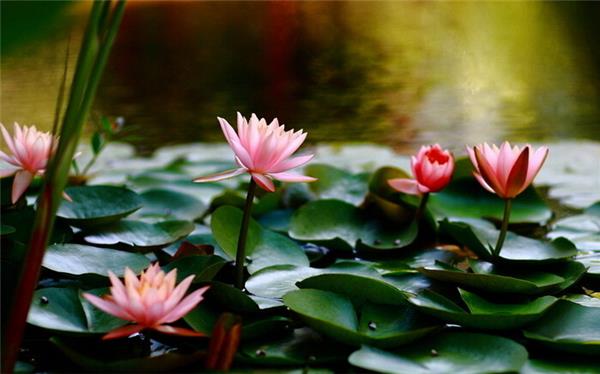
Cultivation methods for water lilies
[Propagation methods]
Division propagation: This is the main propagation method for water lilies. In March to April each spring, when the buds are just beginning to sprout, dig up the rhizomes and cut them into several pieces with a sharp knife. Make sure each rhizome piece has more than two plump bud eyes, then plant them into river mud in a pond or tank.
Seed propagation: Place plump black oval seeds in clean water and store them sealed until taking them out before sowing the following spring. Soak them in water at 25-30°C to promote germination, changing the water every day; they will germinate after two weeks. When the seedlings grow to 3-4 cm, they can be planted in a pond, ensuring sufficient water depth.
[Cultivation management]
Pot cultivation: Around the Spring Equinox each year, place decomposed bean cake, bone meal, hoof pieces or other fertilizers at the bottom of the flowerpot, then add more than 30 cm of fertile river mud on top. Then plant the rhizome with bud eyes flat into the river mud, cover with soil so that the top buds are just buried, add 1 cm of coarse sand and small pebbles, then add water to the pot or tank. Change the water promptly during hot seasons to avoid the growth of algae, which would affect its appearance.
Pond cultivation: In early spring, drain the water completely, apply base fertilizer, add fresh pond mud, and fill with sufficient water for planting. In winter, maintain a water depth of more than 1.1 m so the rhizomes can overwinter safely.
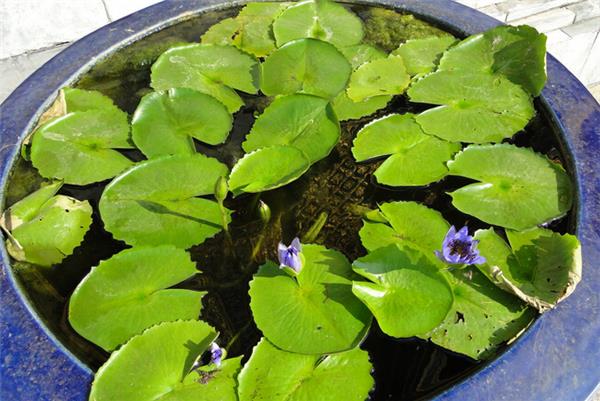
[Key cultivation points]
Choose good cultivation soil: Water lilies prefer humus-rich, fertile clay soil; therefore, for cultivation it is best to choose silt that has long accumulated in rivers or ponds.
Choose good seed rhizomes: Water lilies are mostly cultivated by division; choosing good seed rhizomes is also a key part of successful cultivation. For the underground rhizomes used as seed, select a section that is vigorous, healthy, virus-free, undamaged, and not rotting, with new buds, and cut it into 6-10 cm long segments.
Plant appropriately shallow: If the underground rhizome used for planting is buried too deep in the mud, first, the soil temperature is lower, and second, oxygen is insufficient, which is not conducive to early growth and rapid development. Generally, keep the cultivation depth such that the new buds on the underground rhizome are level with the soil surface.
Sufficient light: Water lilies prefer a climate with abundant sunlight, warmth and humidity, and good ventilation; water lilies grown in pots or tanks must be placed in a position with sufficient light so they receive full sunlight.
[Water lilies through summer]
Water lilies are strong-light plants and prefer well-ventilated, warm and calm water surfaces. They especially require clean water quality; otherwise, the leaves will rot. As the temperature rises, the leaves extend and gradually enlarge. In summer, irrigate to a water depth of about 15 cm. If changing the water, do it in the early morning. In hot seasons, pay attention to keeping the water in the pot clean. After flowering, promptly cut off dead leaves, leaf stalks and flower stems to prevent nutrient consumption and keep the plant attractive. However, after the flowers fade, the flower stems that sink into the water must not be cut off, so that they can complete the seed-setting stage.
Water lilies have so many alternative names, and their varieties are countless. This flower, whose appearance closely resembles the lotus, is the king of flowers and has the reputation of being the sleeping beauty among flowers. Its uses are also quite wide-ranging. As a deeply qualified flower admirer, below I will teach everyone how to make water lilies bloom more.
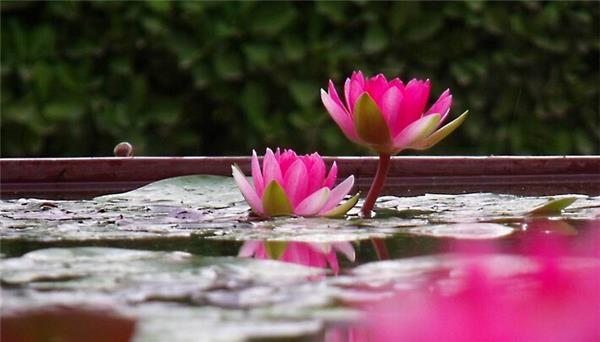
How to make potted water lilies bloom more
❉(1) Variety selection. For potted water lilies, choose varieties that bloom abundantly and tolerate extensive management.
❉(2) Water lilies like fertilizer. For potted water lilies, generally choose fertile soil rich in humus, and add some bone meal etc. as base fertilizer when planting. During the flowering period, apply several additional topdressings mainly of phosphorus and potassium. Do not apply too much nitrogen fertilizer, otherwise vegetative growth will be too vigorous, inhibiting reproductive growth and causing poor flowering or no flowering. In addition, around the Spring Equinox each year, repot and change the soil to meet the nutrient needs of water lilies.
❉(3) Ensure water lilies have sufficient growing space. If the water surface is small and the leaves overlap, flowering will be affected. Therefore, containers of different specifications have a great impact on the growth and development of water lilies. It is best to grow potted plants in nested tanks; providing more than 1 sq m of water surface per plant can promote more flowering.
❉(4) Attention should be paid to preventing and controlling pests and diseases.
Water lily is also known as water floating lotus and Ziwu lotus, and is a perennial aquatic flowering plant in the family Nymphaeaceae. It is native to eastern Asia and prefers environments with strong light, high temperature, humidity and good ventilation. It is cold-tolerant but avoids freezing. It is not strict about soil selection, but fertile soil rich in organic matter is best. So, how should it be cared for during the process of growing water lilies?
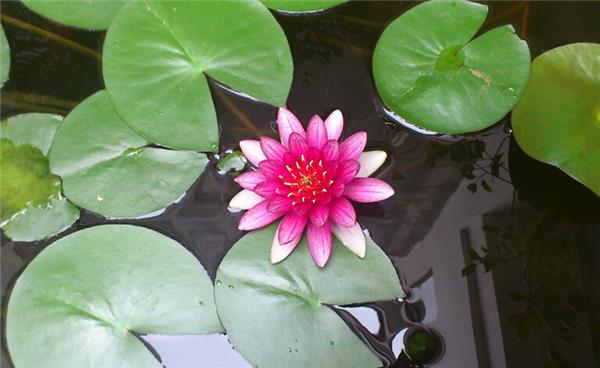
Water lily care
❉1. Measures to make it bloom earlier
To make water lilies bloom before "June 1," you can use division propagation to raise seedlings from late March to early April. Plant the newly divided rhizomes into flowerpots. The planting time should be no later than 50 to 60 days before the desired flowering date. The cultivation substrate needs to maintain a water layer 10 to 20 cm high. Under these conditions, water lilies grow very rapidly. Fertilizer supply must be sufficient. In addition to applying an appropriate amount of base fertilizer at planting, during the vigorous growth stage it is best to insert stick-shaped organic fertilizer into the cultivation substrate as topdressing every 10 days. Water lilies are aquatic plants, and water management after the flowers open is the same as before flowering. It is best to topdress frequently, otherwise blind buds are likely to appear. Be careful not to place them in shaded areas, because water lilies can only bloom normally when sunlight is sufficient. In addition, note that the temperature of the placement environment should not be too low, so as to avoid inhibiting the plant's flowering.
❉2. Storage and freshness preservation of rhizomes
After autumn begins, when the stems and leaves of the plant turn yellow and withered, the rhizomes can be dug out of the mud, then classified and grouped according to different varieties for storage. Note that water lilies are aquatic plants, so operations should be quick and the rhizomes must not be allowed to lose water, otherwise the new buds will be damaged. The prepared rhizomes can be stored in an environment with a relative humidity of 95% to 100% and a temperature of 4°C to 6°C. Usually under the above conditions, water lily rhizomes can be stored for 110 days to 120 days.
❉3. Storage and freshness preservation of cut flowers
Harvest when the flower buds are fully colored. It is best to carry out the operation in the morning when the temperature is lower. After harvesting, place the cut flowers temporarily in a place without direct sunlight and precool them as soon as possible. After harvesting, they also need to be graded.
Package water lily flowers with stems of the same grade and variety in groups of 20 stems in 1 plastic bag, then place them separately into corrugated cardboard boxes labeled with the product name and lined with breathable film, and store them in an environment with a relative humidity of 90% to 95% and a temperature of 5°C to 6°C. They can usually be kept for one or two days. During transport, water lilies can only be stored dry for a short time, and after opening the box they must be inserted into water immediately.
 The above is the introduction to the cultivation methods of water lilies and the issues to note during cultivation that the editor has shared with everyone. I hope it can help everyone better understand water lilies.
Water lily care
❉1. Measures to make it bloom earlier
To make water lilies bloom before "June 1," you can use division propagation to raise seedlings from late March to early April. Plant the newly divided rhizomes into flowerpots. The planting time should be no later than 50 to 60 days before the desired flowering date. The cultivation substrate needs to maintain a water layer 10 to 20 cm high. Under these conditions, water lilies grow very rapidly. Fertilizer supply must be sufficient. In addition to applying an appropriate amount of base fertilizer at planting, during the vigorous growth stage it is best to insert stick-shaped organic fertilizer into the cultivation substrate as topdressing every 10 days. Water lilies are aquatic plants, and water management after the flowers open is the same as before flowering. It is best to topdress frequently, otherwise blind buds are likely to appear. Be careful not to place them in shaded areas, because water lilies can only bloom normally when sunlight is sufficient. In addition, note that the temperature of the placement environment should not be too low, so as to avoid inhibiting the plant's flowering.
❉2. Storage and freshness preservation of rhizomes
After autumn begins, when the stems and leaves of the plant turn yellow and withered, the rhizomes can be dug out of the mud, then classified and grouped according to different varieties for storage. Note that water lilies are aquatic plants, so operations should be quick and the rhizomes must not be allowed to lose water, otherwise the new buds will be damaged. The prepared rhizomes can be stored in an environment with a relative humidity of 95% to 100% and a temperature of 4°C to 6°C. Usually under the above conditions, water lily rhizomes can be stored for 110 days to 120 days.
❉3. Storage and freshness preservation of cut flowers
Harvest when the flower buds are fully colored. It is best to carry out the operation in the morning when the temperature is lower. After harvesting, place the cut flowers temporarily in a place without direct sunlight and precool them as soon as possible. After harvesting, they also need to be graded.
Package water lily flowers with stems of the same grade and variety in groups of 20 stems in 1 plastic bag, then place them separately into corrugated cardboard boxes labeled with the product name and lined with breathable film, and store them in an environment with a relative humidity of 90% to 95% and a temperature of 5°C to 6°C. They can usually be kept for one or two days. During transport, water lilies can only be stored dry for a short time, and after opening the box they must be inserted into water immediately.
The above is the introduction to the cultivation methods of water lilies and the issues to note during cultivation that the editor has shared with everyone. I hope it can help everyone better understand water lilies.