A Detailed Guide to Peony Cultivation Methods and Their Benefits and Effects
Peonies are cold-hardy, love fertilizer but fear waterlogging, and prefer moist soil, though they are also drought-tolerant. They love sunlight and prefer cool climates in summer. Potted peonies are prone to scorched leaves under the scorching summer sun, so shade should be provided. Peonies have fleshy roots and a relatively long root system, so they should be planted in fertile, loose, well-drained sandy loam; planting them in clay or low-lying waterlogged spots easily leads to root rot. So, what are the cultivation methods for peonies?
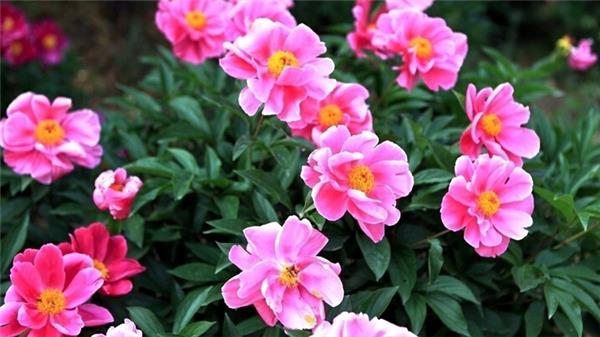
Peony cultivation methods:
1. Planting time for peonies: Peonies love sunlight and are cold-hardy. They prefer cool temperatures and fear heat, growing poorly during high summer temperatures. Autumn is the best time to plant peonies.
2. Soil: For field planting, choose a sunny spot on high ground with good drainage, and never plant them in low-lying spots prone to water accumulation. Peonies have fleshy roots, so when planting, choose loose, fertile, slightly acidic sandy soil. They are not suited to growing in alkaline soil. If the soil is too alkaline, it will cause the leaves to yellow and even shrivel and die.
3. Cultivation points: For open-field cultivation, apply barnyard manure, deep plow, break up the soil finely, and form raised beds. Generally the bed height is 10-15 cm, the bed width is 70 cm, and the length is unlimited. The planting spacing is 80 cm. When planting, dig holes according to the length and size of the root system, taking care that the roots are spread out and not planted too deep; cover with soil to a depth of 4-5 cm above the top buds. After planting, water thoroughly once and mound soil over them for winter.
4. Fertilizer and water management: Aside from natural rainfall, field-planted peonies do not need frequent watering. Usually they only need a few appropriate waterings around flowering time, when water demand is highest, and during spring drought, to supplement the shortage of soil moisture; each watering should not be too much. Topdressing should be controlled, with three topdressings per year. The first is when new shoots are rapidly emerging. When the leaves and flower buds are extending, apply mainly quick-acting fertilizer, known as flower-promoting fertilizer.
5. Shaping and pruning: To make peony flowers abundant and colorful and the plants grow robustly, shaping and pruning are very important. Peony shaping mainly includes trunk establishment, branch pruning, bud removal, bud thinning, and removal of spent flowers. Peonies can be shaped for trunk establishment after 2-3 years of planting. For varieties with especially strong and vigorous growth, they can be pruned into single-trunk peonies. For varieties with weak growth and few branches, generally cut out the thin, weak branches and keep the strong ones.
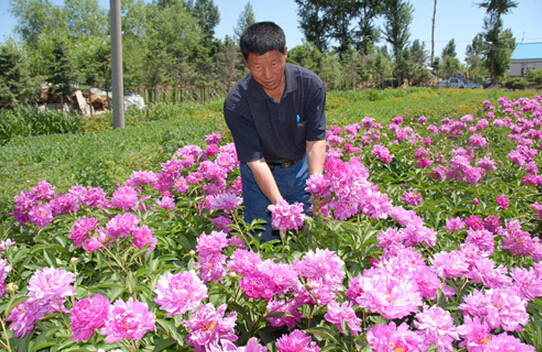
6. Pest and disease control: Common peony pests and diseases include brown spot disease, anthracnose, rust disease, root rot, and root-knot nematode disease, as well as longhorn beetles, red spiders, scarab beetles, mole crickets, and others. Among these, brown spot disease, anthracnose, and rust disease are fungal diseases. Pest and disease control should focus on early prevention; once pests or diseases occur, according to the degree of outbreak and the above dosage, appropriately shorten the spraying interval and increase the number of applications.
Before peonies bloom, once side buds appear, they can be promptly removed to concentrate nutrients and encourage the terminal buds to produce large, beautiful flowers. After the flowers fade, if you do not plan to grow them from seed, the flower stalks should be cut off at any time to prevent seed formation and nutrient consumption. So, do you know how peonies are classified?
Classification characteristics of peony flower forms
1. Single-flower type: The flower consists of a single bloom
1.1 Thousand-layer subclass: Petals increase naturally toward the center, arranged neatly, similar in shape, gradually becoming smaller from outside to inside; stamens are borne only around the ovary, decreasing correspondingly as petals increase until they disappear. The flower shape is flat.
① Single-petal type: Petals in 2-3 whorls, broad, with normally developed stamens and pistils, usually referring to the original species type.
② Lotus type: Petals in 4-5 whorls, broad, similar in shape and size, stamens normal or individual stamens petaloid into fragmented petals, lanceolate petals, or filamentous petals scattered among the stamen cluster; pistils normal.
③ Chrysanthemum type: Petals in more than 6 whorls, gradually becoming smaller from outside to inside, stamens normal, fewer in number; pistils normal, increased or decreased in number.
④ Rose type: Petals extremely numerous, gradually smaller from outside to inside, stamens all disappeared; pistils normal, degenerated and smaller, or completely disappeared.
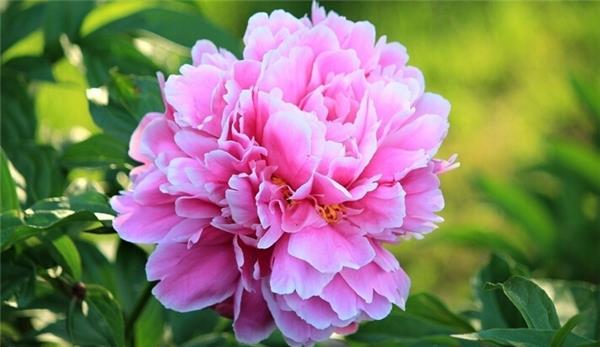
1.2 Tower subclass: Outer petals broad, 2-3 whorls; stamens petaloid in a centrifugal manner, pistils normal, petaloid, or degenerated. Flower shape raised or tall (except for the golden-stamen type).
① Golden-stamen type: Outer petals broad, 2-3 whorls, stamen anthers enlarged, filaments thickened, the stamen cluster appearing bright golden yellow; pistils normal.
② Anemone type: Outer petals broad, 2-3 whorls, stamens completely petaloid into filamentous petals, needle-like petals, or lanceolate petals, slightly larger from outside to inside, standing erect within the outer petals; pistils normal or petaloid into ligulate petals, with the color of the ligulate petals or petal tips often being the original color of the stigma.
③ Golden-ring type: Outer petals broad, 2-3 whorls, most stamens petaloid, the petaloid petals tall, but a ring of normal stamens remains between the petaloid stamens and the outer petals; pistils normal or petaloid.
④ Crown type: Outer petals broad and flat, 2-3 whorls, with a small number of filamentous petals, needle-like petals, lanceolate petals, or fragmented petals borne in a ring close to the inner side of the outer petals, above which are ligulate petals or lanceolate petals petaloid from stamens, erect, raised, clustered within the outer petals, with a small number of stamens at the center, or degenerated into a short, small state; pistils normal or petaloid, degenerated.
⑤ Hydrangea type: Most stamens petaloid into ligulate petals, resembling secondary outer petals; when fully open, the whole flower is full, shaped like a hydrangea, with very few or degenerated central stamens; pistils smaller or degenerated.
2. Proliferate type: Refers to the phenomenon in which, when the plant blooms, the growth point at the center of the flower (or inflorescence) or between the flowers differentiates again into flower buds and blooms. At the center of the flower (lower flower), another flower (upper flower) forms, and the upper flower overlaps with the lower flower, thereby increasing the degree of doubleness; some varieties even consist of 3 or even 4 flowers overlapping.
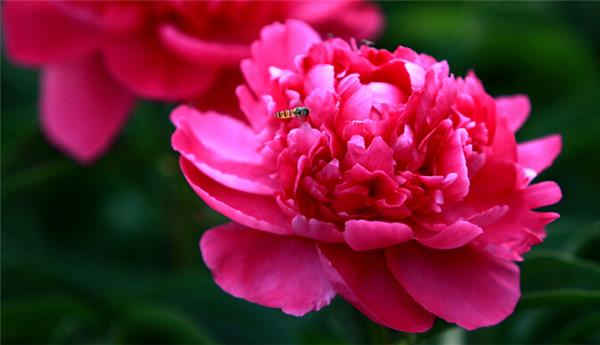
2.1 Thousand-layer subclass: The basal single flower (lower flower) has the basic characteristics of the thousand-layer subclass of the single-flower type. Thousand-layer proliferate type (primary proliferate type): The pistils of the lower flower are normal or slightly petaloid; the upper flower generally has normal stamens and pistils. The whole flower is relatively flat.
2.2 Tower subclass: The lower flower has 2-3 whorls of petals, stamens petaloid, pistils petaloid or degenerated. The whole flower is tall.
① Colored-petal proliferate type: The pistils of the lower flower are petaloid, and many stamens are petaloid; the stamens and pistils of the upper flower are normal or slightly petaloid.
② Layered proliferate type: The petaloid pistils of the lower flower become no different from normal petals, and the petaloid stamens are shorter and smaller than normal petals; many stamens of the upper flower are also petaloid into short petals, and the pistils are petaloid or degenerated. The whole flower has a distinct layered structure.
③ Ball-flower proliferate type: The petaloid stamens of the lower flower elongate and widen to be no different from normal petals, and the petaloid pistils also become normal petals; many petaloid stamens of the upper flower are also difficult to distinguish from normal petals, and the pistils are petaloid or degenerated. The whole flower is ball-shaped.
Everyone loves beautiful flowers. In fact, besides their ornamental value, beautiful flowers also have their own unique roles in other respects. In medicine they can be used as Chinese herbal medicine, in daily life they can bring people emotional pleasure and visual enjoyment, and placed at home they can also purify the air. Let us learn below about the benefits and effects of peony flowers.
The effects and benefits of peony flowers: Nourish the blood and soothe the liver, dissipate stagnation and remove blood stasis, improve facial chloasma, rough and aging skin, clear heat, nourish the blood and soothe the liver, strengthen the five viscera, disperse stagnant blood, and regulate menstruation. They can treat freckles, chloasma, and acne caused by endocrine disorders. Promote metabolism, improve body immunity, inhibit acne on the face, and delay skin aging. Nourish the blood and soothe the liver, making qi and blood abundant and the complexion rosy. They have functions such as clearing heat and relieving summer heat, removing spots, clearing the heart and moistening the lungs, calming the liver and brightening the eyes, and caring for the skin and preserving beauty. Regular drinking can make qi and blood abundant, the complexion rosy, and the spirit full. They can regulate women's endocrine system, remove sallow tones and pigmented spots, and make the peony flower's complexion radiant.
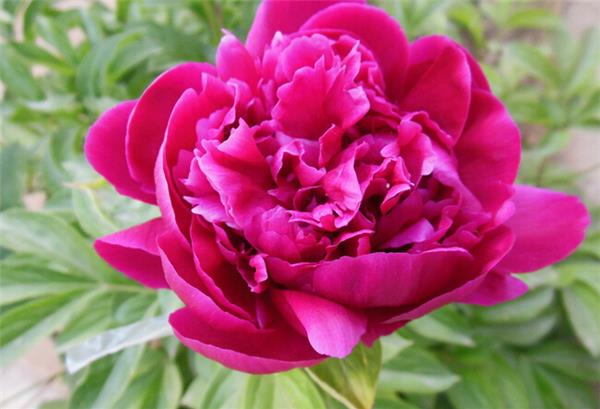
Peonies also appear in Western myths. It is said that in ancient mythology there was a famous Greek physician named Asclepius, who had a student who surpassed the master, even healing the wound of Hades, the god of the underworld. Asclepius was extremely jealous, and driven by jealousy he killed his student. Later, because the King of the Underworld remembered his kindness, he transformed him into a flower capable of healing diseases. Because in the eyes of Westerners, peonies are likewise a medicine with a certain power. In Western legends, peonies can even counteract the poison of mandrake flowers. I hope that through the editor's introduction, everyone can better understand the cultivation methods of peonies.
2. Proliferate type: Refers to the phenomenon in which, when the plant blooms, the growth point at the center of the flower (or inflorescence) or between the flowers differentiates again into flower buds and blooms. At the center of the flower (lower flower), another flower (upper flower) forms, and the upper flower overlaps with the lower flower, thereby increasing the degree of doubleness; some varieties even consist of 3 or even 4 flowers overlapping.
2.1 Thousand-layer subclass: The basal single flower (lower flower) has the basic characteristics of the thousand-layer subclass of the single-flower type. Thousand-layer proliferate type (primary proliferate type): The pistils of the lower flower are normal or slightly petaloid; the upper flower generally has normal stamens and pistils. The whole flower is relatively flat.
2.2 Tower subclass: The lower flower has 2-3 whorls of petals, stamens petaloid, pistils petaloid or degenerated. The whole flower is tall.
① Colored-petal proliferate type: The pistils of the lower flower are petaloid, and many stamens are petaloid; the stamens and pistils of the upper flower are normal or slightly petaloid.
② Layered proliferate type: The petaloid pistils of the lower flower become no different from normal petals, and the petaloid stamens are shorter and smaller than normal petals; many stamens of the upper flower are also petaloid into short petals, and the pistils are petaloid or degenerated. The whole flower has a distinct layered structure.
③ Ball-flower proliferate type: The petaloid stamens of the lower flower elongate and widen to be no different from normal petals, and the petaloid pistils also become normal petals; many petaloid stamens of the upper flower are also difficult to distinguish from normal petals, and the pistils are petaloid or degenerated. The whole flower is ball-shaped.
Everyone loves beautiful flowers. In fact, besides their ornamental value, beautiful flowers also have their own unique roles in other respects. In medicine they can be used as Chinese herbal medicine, in daily life they can bring people emotional pleasure and visual enjoyment, and placed at home they can also purify the air. Let us learn below about the benefits and effects of peony flowers.
The effects and benefits of peony flowers: Nourish the blood and soothe the liver, dissipate stagnation and remove blood stasis, improve facial chloasma, rough and aging skin, clear heat, nourish the blood and soothe the liver, strengthen the five viscera, disperse stagnant blood, and regulate menstruation. They can treat freckles, chloasma, and acne caused by endocrine disorders. Promote metabolism, improve body immunity, inhibit acne on the face, and delay skin aging. Nourish the blood and soothe the liver, making qi and blood abundant and the complexion rosy. They have functions such as clearing heat and relieving summer heat, removing spots, clearing the heart and moistening the lungs, calming the liver and brightening the eyes, and caring for the skin and preserving beauty. Regular drinking can make qi and blood abundant, the complexion rosy, and the spirit full. They can regulate women's endocrine system, remove sallow tones and pigmented spots, and make the peony flower's complexion radiant.
Peonies also appear in Western myths. It is said that in ancient mythology there was a famous Greek physician named Asclepius, who had a student who surpassed the master, even healing the wound of Hades, the god of the underworld. Asclepius was extremely jealous, and driven by jealousy he killed his student. Later, because the King of the Underworld remembered his kindness, he transformed him into a flower capable of healing diseases. Because in the eyes of Westerners, peonies are likewise a medicine with a certain power. In Western legends, peonies can even counteract the poison of mandrake flowers. I hope that through the editor's introduction, everyone can better understand the cultivation methods of peonies.