A Detailed Introduction to the Cultivation Methods and Precautions for Alocasia macrorrhizos
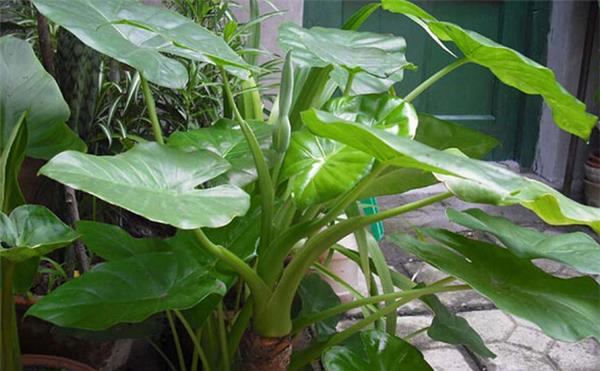
Alocasia macrorrhizos is a perennial herbaceous plant. The plant can reach up to 2 m tall, with a thick stem, long leaf stalks, and large leaves. When it blooms, the flower buds resemble the lotus shape of Guanyin, giving it high ornamental value, and it is mostly used for indoor potted decoration. So, how should Alocasia macrorrhizos be grown?
1. Soil
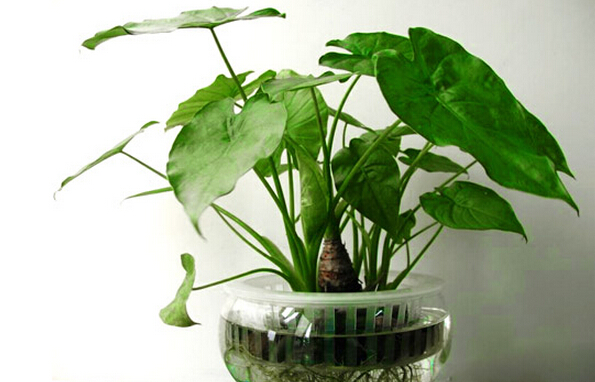
Although Alocasia macrorrhizos does not have very high requirements for soil, I have tried ordinary garden soil, nutrient soil, and pure sand, and found that Alocasia macrorrhizos grown in garden soil grows relatively slowly, is thin and weak, and seems malnourished; Alocasia macrorrhizos grown in pure sand grows well at the seedling stage, but the later effect is not good, and the Alocasia macrorrhizos is relatively short; Alocasia macrorrhizos grown in nutrient soil has sturdy plants, large leaves, and grows very fast. It took about 6 months for my Alocasia macrorrhizos to go from the seedling stage to more than one meter tall.
Summary: Flower lovers who have the conditions should preferably choose better soil. It does not have to be nutrient soil; you can mix your own relatively fertile soil with good water permeability.
2. Choice of flower pot
This varies from household to household. Some flower lovers who grow Alocasia macrorrhizos like to use small pots, while others like to use large pots. It should be mentioned here that if a flower lover wants to grow a small potted plant, then there is no problem growing Alocasia macrorrhizos in a small pot, and because the roots of Alocasia macrorrhizos are restricted, it will not grow very large. But if a flower lover wants Alocasia macrorrhizos to grow very large and place it in the living room as a large green display, then a larger pot must be chosen. According to experience, the larger the pot, the sturdier and better Alocasia macrorrhizos grows.
3. Light and watering
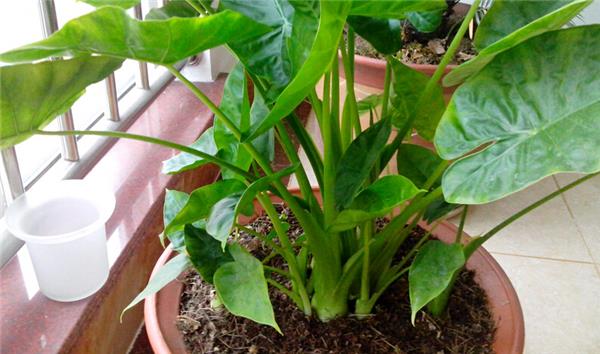
Alocasia macrorrhizos likes a semi-shaded environment, though some flower lovers' Alocasia macrorrhizos grows very well directly in the yard. Here it is necessary to explain to flower lovers why it is said that other people's flowers can grow very well in a certain environment while one's own cannot. Plants themselves have a process of adapting to the external environment. Although Alocasia macrorrhizos likes a semi-shaded environment, in order to survive, it will also adapt to other environments, but this requires a process. That is why some flower lovers say that their flowers just will not die no matter how they are grown; it is because that pot of flowers has already adapted to the environment.
Now let's talk about watering. Most plants grow fastest in slightly moist soil. Some flower lovers very earnestly ask others how often to water, and if they do exactly as others say, the flowers will basically be certain to die. Why is that said? The reason watering is needed is that the soil has dried out and it is time to water, but why does the soil dry out? Because plants absorb water and there is natural evaporation, among which evaporation accounts for most. There are many conditions for evaporation, such as the breathability of the pot, air humidity, and whether there is ventilation. So the situation in every household is different! Flower lovers must water according to their own actual conditions.
So how should Alocasia macrorrhizos be watered? For those grown in small pots, water when the potting soil is dry, and make sure the water can drain out from the bottom of the pot. For large deep pots, when the surface of the potting soil is dry, you can dig up the surface soil to look at the color (there is no need to explain how to distinguish dry soil from wet soil). If the soil below is moist or damp, then there is no need to water. Generally speaking, for that kind of deep pot, watering once can last half a month or even a month without any problem.
4. Pests and diseases
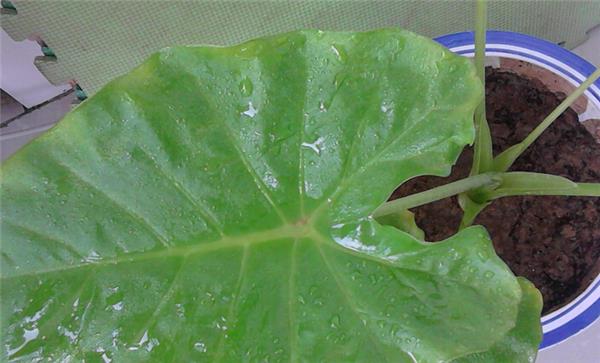
The most common pests and diseases of Alocasia macrorrhizos are red spider mites and aphids. The symptoms are yellowing leaves, white spots on the surface, a thin and weak plant, and webbing on the leaves. For treatment, you can use a cloth with diluted soapy water to wipe the leaves clean, cleaning both the back and the front, then rinse with clear water. For large pots, you can use a spray to wash them, once every two or three days, persisting continuously for a week, and the effect will be fairly obvious.
5. Propagation of Alocasia macrorrhizos
Many flower lovers have the idea of propagating their existing plants. After being grown for a long time, Alocasia macrorrhizos will produce small bulbs and sprout on their own. Flower lovers can simply transplant them out. In the early stage, they can be grown in pure sand, and when they are larger, transplant them into other pots. So what problems should be noted when growing Alocasia macrorrhizos?
Precautions for Alocasia macrorrhizos:
1. Flower lovers should be reminded that the white sap in the stem of Alocasia macrorrhizos is toxic, and the water it drips is also toxic. Accidental contact with or ingestion of its sap will cause discomfort in the throat and mouth, and a burning pain in the stomach. Special attention should be paid to preventing young children from accidentally eating it. However, Alocasia macrorrhizos does not belong to the carcinogenic plants.
2. Precisely because Alocasia macrorrhizos is toxic, skin contact with its sap will cause itching or strong irritation, and eye contact with the sap can cause severe conjunctivitis, or even blindness. Accidental eating of the stem and leaves will cause symptoms of nausea and pain, and in severe cases can also cause suffocation, leading to death from cardiac paralysis. Therefore, contact with Alocasia macrorrhizos should be minimized, and families with children had better not grow it.
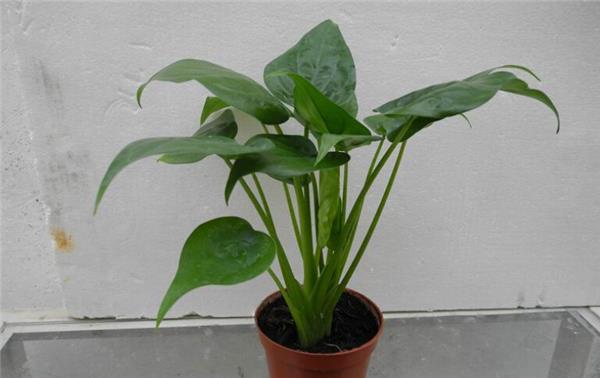
Alocasia macrorrhizos represents like-mindedness, sincerity, interest, and inner elegance, and is one of the most common household ornamental plants. Under warm and humid conditions with sufficient soil moisture, water will drip downward from the leaf tips or leaf edges; moreover, its flowers resemble Guanyin, so it is called Alocasia macrorrhizos. Alocasia macrorrhizos is deeply loved by people for its graceful plant shape, and it also has the effect of purifying the air. So what exactly are the effects of Alocasia macrorrhizos?
The effects of Alocasia macrorrhizos
1. The effects of Alocasia macrorrhizos: ornamental effect
Alocasia macrorrhizos is unanimously recommended by designers as the "overlord of the large living room," and is also the best partner for the strongly cultural East Asian style and the luxurious, grand American resort style. Therefore, placing some green plants in a room not only symbolizes the vitality of marriage, but also produces fresh oxygen, which is greatly beneficial to health.
2. The effects of Alocasia macrorrhizos: purifying effect
The green leaves of Alocasia macrorrhizos can absorb carbon dioxide from the air. Under the combined action of sunlight and chlorophyll, it can react with the water absorbed by the plant to form glucose, while releasing oxygen, and then starch is formed from glucose molecules.
Alocasia macrorrhizos has the effect of removing dust from the air. But note that the white sap in the stem of Alocasia macrorrhizos is toxic, and the water it drips is also toxic. Accidental contact with or ingestion of its sap will cause discomfort in the throat and mouth, and a burning pain in the stomach. Special attention should be paid to preventing young children from accidentally eating it. However, Alocasia macrorrhizos does not belong to the carcinogenic plants.
3. The effects of Alocasia macrorrhizos: medicinal value
Nature and flavor: pungent taste; cold nature; toxic.
Meridian entry: heart meridian; liver meridian; gallbladder meridian; large intestine meridian.
Functions: clearing heat and detoxifying; promoting qi and relieving pain; dissipating nodules and reducing swelling.
Alocasia macrorrhizos can also treat malarial fevers, acute vomiting and diarrhea, intestinal typhoid, rheumatic pain, hernia, leukorrhea with reddish discharge, carbuncles and swellings, atrophic rhinitis, scrofula, boils, scabies, and snake and dog bites.
4. The effects of Alocasia macrorrhizos: feng shui effect
The feng shui effect of Alocasia macrorrhizos is mainly that it can boost wealth. Placing it in a suitable position can attract good fortune, but attention should also be paid to its own toxicity.
In household feng shui, great care must be taken when placing green plants. Plants with pointed leaves must not be placed, because from a feng shui perspective, that can easily lead to loss of wealth. According to feng shui masters, if one wants to place this kind of plant, it needs to be tied with a red ribbon, which can serve to remedy the feng shui effect of losing wealth. The above is the cultivation methods and precautions for Alocasia macrorrhizos brought to you by the editor. It is believed that understanding the habits of Alocasia macrorrhizos can be of great help to you in growing it.
Alocasia macrorrhizos represents like-mindedness, sincerity, interest, and inner elegance, and is one of the most common household ornamental plants. Under warm and humid conditions with sufficient soil moisture, water will drip downward from the leaf tips or leaf edges; moreover, its flowers resemble Guanyin, so it is called Alocasia macrorrhizos. Alocasia macrorrhizos is deeply loved by people for its graceful plant shape, and it also has the effect of purifying the air. So what exactly are the effects of Alocasia macrorrhizos?
The effects of Alocasia macrorrhizos
1. The effects of Alocasia macrorrhizos: ornamental effect
Alocasia macrorrhizos is unanimously recommended by designers as the "overlord of the large living room," and is also the best partner for the strongly cultural East Asian style and the luxurious, grand American resort style. Therefore, placing some green plants in a room not only symbolizes the vitality of marriage, but also produces fresh oxygen, which is greatly beneficial to health.
2. The effects of Alocasia macrorrhizos: purifying effect
The green leaves of Alocasia macrorrhizos can absorb carbon dioxide from the air. Under the combined action of sunlight and chlorophyll, it can react with the water absorbed by the plant to form glucose, while releasing oxygen, and then starch is formed from glucose molecules.
Alocasia macrorrhizos has the effect of removing dust from the air. But note that the white sap in the stem of Alocasia macrorrhizos is toxic, and the water it drips is also toxic. Accidental contact with or ingestion of its sap will cause discomfort in the throat and mouth, and a burning pain in the stomach. Special attention should be paid to preventing young children from accidentally eating it. However, Alocasia macrorrhizos does not belong to the carcinogenic plants.
3. The effects of Alocasia macrorrhizos: medicinal value
Nature and flavor: pungent taste; cold nature; toxic.
Meridian entry: heart meridian; liver meridian; gallbladder meridian; large intestine meridian.
Functions: clearing heat and detoxifying; promoting qi and relieving pain; dissipating nodules and reducing swelling.
Alocasia macrorrhizos can also treat malarial fevers, acute vomiting and diarrhea, intestinal typhoid, rheumatic pain, hernia, leukorrhea with reddish discharge, carbuncles and swellings, atrophic rhinitis, scrofula, boils, scabies, and snake and dog bites.
4. The effects of Alocasia macrorrhizos: feng shui effect
The feng shui effect of Alocasia macrorrhizos is mainly that it can boost wealth. Placing it in a suitable position can attract good fortune, but attention should also be paid to its own toxicity.
In household feng shui, great care must be taken when placing green plants. Plants with pointed leaves must not be placed, because from a feng shui perspective, that can easily lead to loss of wealth. According to feng shui masters, if one wants to place this kind of plant, it needs to be tied with a red ribbon, which can serve to remedy the feng shui effect of losing wealth. The above is the cultivation methods and precautions for Alocasia macrorrhizos brought to you by the editor. It is believed that understanding the habits of Alocasia macrorrhizos can be of great help to you in growing it.