How to grow geraniums? A step-by-step guide to cultivation methods and precautions
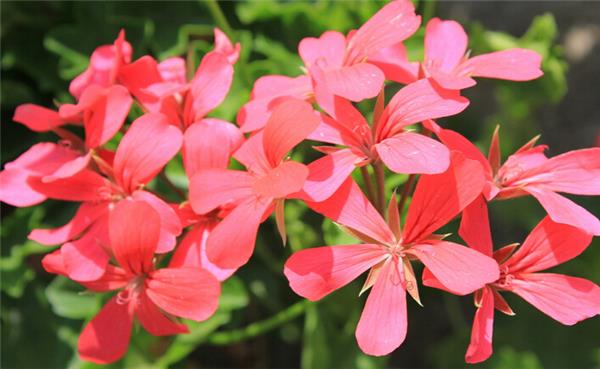
Geranium (Pelargonium), also known as zonal geranium, fish geranium, and rose-scented geranium, is a perennial herbaceous flowering plant native to South Africa. Its palmate leaves have long stalks, and the leaf edges bear ring-shaped markings; because its flowers cluster tightly together like a ball when in bloom, it is also called "foreign hydrangea." Flower colors vary widely across red, white, pink and purple, and the flowering period runs from early winter until early summer of the following year. It can be grown in pots indoors and outdoors, and can be used as a spring flowerbed plant. So how should geraniums be grown?
Geranium cultivation methods:
1. Soil: Geraniums do well in sandy soil. The potting mix can be leaf mold combined with an appropriate amount of sand and rice-hull ash, plus a small amount of bone meal. The pot should be changed once a year with fresh growing medium to encourage growth and flowering.
2. Water: Overwatering is a taboo for geraniums, as it causes root rot. Watering frequency can be kept to once every two or three days, and each watering should be generous and thorough. In winter, do not water too much; water only when the soil is dry, and let it dry between waterings.
3. Light: Geraniums need plenty of sunlight during the growing season, so in winter they must be placed in a sunny spot. With insufficient light, stems and leaves grow leggy, flower stalks become thin and weak, and inflorescences develop poorly; flower buds under weak light often fail to open properly and wither early.
4. Temperature: The most suitable temperature for geraniums is 10-20°C, meaning spring and autumn are the most suitable seasons; winter is too cold and summer too hot. So in summer, be sure to protect them from direct sun exposure and place them in a cool spot, and in winter the indoor temperature should not drop below 0°C.
5. Fertilizing: Geraniums do not like heavy fertilizing; too much fertilizer makes them grow excessively lush at the expense of flowering. To achieve abundant blooms, apply a dilute liquid fertilizer (fermented soybean cake water) once every 1-2 weeks; applying a 800-fold potassium dihydrogen phosphate solution every 7-10 days can promote normal flowering.
6. Pest and disease control: When geraniums have poor ventilation and are too humid, they are prone to leaf spot and flower blight. Once detected, improve ventilation, immediately remove diseased flowers and leaves to prevent infection, and spray with an equal-ratio Bordeaux mixture for control. The main insect pests are red spider mites and whiteflies, which damage leaves and flowering branches; they can be controlled by spraying a 1000-fold dilution of 40% omethoate emulsifiable concentrate.
7. Pruning: To encourage more branching and thus more blooms in geraniums, pinch out the growing tips of the plant several times to promote branching and flower bud formation. After flowers fade, promptly cut off spent flowers and remove overly dense and thin, weak branches so as not to consume too many nutrients, but in cold winter, heavy pruning is not advisable.
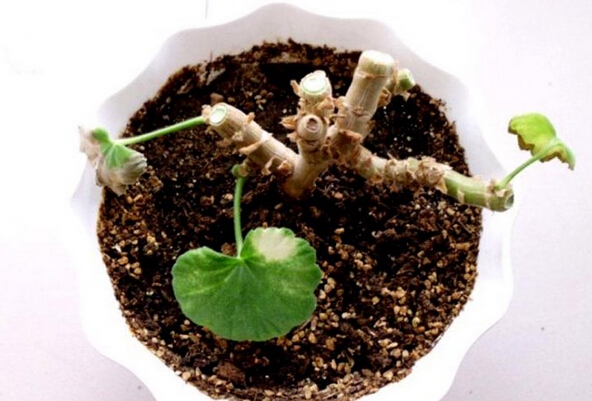
Geraniums prefer a warm, humid environment with plenty of sunlight. They have poor cold tolerance and dislike waterlogged conditions and high temperatures. The optimal growing temperature is 13-19°C from March to September, and 10-12°C in winter. From June to July they enter a semi-dormant state, during which watering should be strictly controlled. They do best in fertile, loose, well-drained sandy loam. In winter the temperature should not fall below 10°C; they can tolerate 5°C for short periods. So what should be noted during cultivation?
Precautions for growing geraniums:
When growing geraniums, pay attention to pest control, so that pests do not prevent the plants from growing healthily. Also pay attention to sun exposure, especially in summer, avoiding direct sun. Water should also be applied appropriately; do not pour a very large amount of water at once, as this can also drown the plant.
High temperatures, direct sunlight and water accumulation in the pot after rain can all disrupt geranium dormancy and even cause root rot and death. Therefore, during the dormant period, place them on a shaded balcony, windowsill, or in a courtyard spot that is sheltered from light and rain.
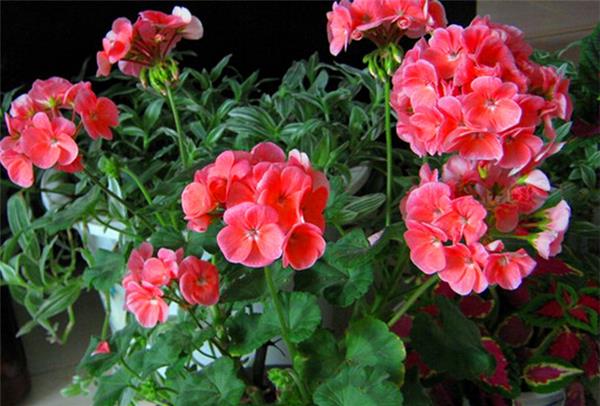
Geraniums have a long flowering period and strong adaptability to the environment; their plant size suits home pot cultivation, and they are easy to propagate, making them very popular and one of the common potted flowers in homes, as well as a commonly used flowerbed plant in warm winter regions. Geranium flowers cluster in small groups, and the large inflorescences resemble hydrangeas, with vivid colors. So what is the classification of geraniums?
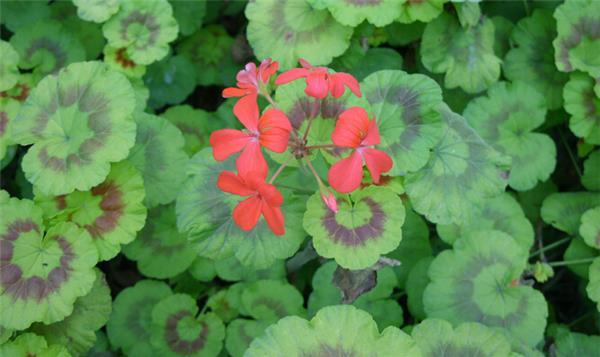
Zonal geranium (Pelargonium zonale): plant height 30-HO cm. It is named for the distinct dark brown horseshoe-shaped markings inside the leaf margins. The petals are of the same color, from deep red to white; the upper two petals are extremely short, and the petals are narrowly wedge-shaped. This species has produced a great many variegated-leaf cultivars.
Regal geranium (Pelargonium domesticum), also known as butterfly geranium or foreign butterfly. The whole plant bears soft hairs. The leaves have no horseshoe markings, and the leaf margin teeth are sharp and irregular. The flowers are large, in colors such as white, light red and light purple. It is named for the two red or purple blotches on the petals.
Ivy geranium (Pelargonium peltatum), also known as trailing geranium or ivy-leaved geranium. The stems are semi-trailing, and the plant grows in a prostrate or climbing form. The leaves are shield-shaped and slightly glossy. The flowers are small, borne in clusters of 4-8, in colors such as white, pink, red, purple and peach red. The flowering period is winter and spring.
Scented geranium (Pelargonium graveolens), also known as musk geranium or round-leaved geranium. The stems are slender and trailing, and new shoots and new leaves often cluster at the top of the stem. The umbel inflorescences bear small white flowers, with the upper two petals marked with red-purple stripes. Touching the leaves with your hand immediately releases a delightful fragrance.
Rose-scented geranium, also known as "touch-me" fragrance plant. A semi-shrub. The leaves are palmate with 5-7 deep lobes, and the lobes are further pinnately shallowly lobed. The flowers are peach red or light red, with purple-red markings at the center, and the upper two petals are larger. The flowering period is summer.
Chrysanthemum-leaved geranium: the stems bear long hairs. The leaves are palmately deeply lobed, and the lobes are further divided into linear segments. The whole plant is covered with a white powdery bloom. The flowers are rose red, with purple spots and stripes. The flowering period is summer.
Geraniums are native to southern Africa and are widely cultivated around the world. Young plants are succulent herbs, while older plants become semi-woody; in the West they are excellent flowers for decorating windowsills, and on the European continent, such as in Germany and Austria, they are especially common. So what are the uses of geraniums and their propagation methods?
Uses of geraniums
Psychological benefits
Geranium is a tonic for the nervous system; it can soothe anxiety and depression and also lift the mood. It helps restore psychological balance, and because it can also affect the adrenal cortex, it can relieve stress.
Physiological benefits
Geranium essential oil has the functions of stimulating the lymphatic system and promoting urination; these two functions reinforce each other and help the body quickly and effectively eliminate excess body fluids. It can be used to treat cellulite, fluid retention and ankle swelling; it can help the liver and kidneys detoxify; it can treat jaundice, kidney stones and various urinary tract infections; it can also help many women reduce the symptoms of premenstrual fluid retention.
Beauty value
Geranium is suitable for all kinds of skin conditions, because it can balance sebum secretion and make the skin plump. It may be beneficial for eczema, burns, shingles, herpes, ringworm and chilblains. It is also very good for sagging, pore-clogged and oily skin, and can be called an all-around cleansing oil. Because geranium can promote blood circulation, after use it makes pale skin more rosy and vibrant. Used in a diffuser or as a towel facial compress, it can stimulate the lymphatic system and strengthen the circulatory system.
Propagation methods for geraniums
Seed propagation
This can be done in spring or autumn, with indoor pot sowing in spring being preferable. The optimal germination temperature is 20-25°C. Geranium seeds are not large, so after sowing the covering of soil should not be deep; germination takes about 2-5 days. If sown in autumn, they can bloom in the summer of the following year. Seedlings grown from seed can be selected to produce excellent intermediate-type varieties.
Cuttage propagation
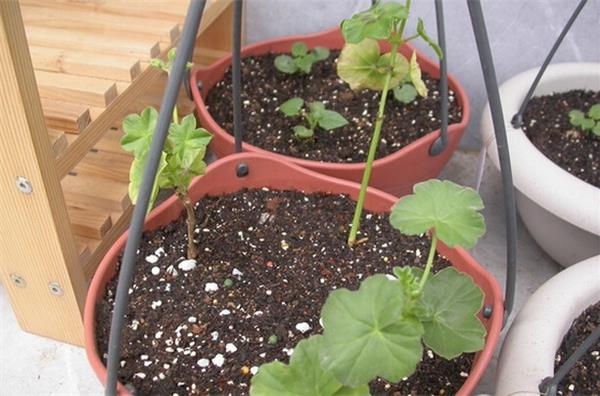
Cuttings can be taken at any time except June-July, when the plants are in a semi-dormant state. Spring and autumn are best. In high summer temperatures, cuttings tend to blacken and rot. Choose cuttings 10 cm long, with the topmost part being best, as it has vigorous growth and roots quickly. After cutting, let the cut end dry for several days to form a thin film, then insert it into a sand bed or a mixed medium of expanded perlite and peat; be careful not to damage the stem bark of the cutting, otherwise the wound rots easily. After insertion, place in a semi-shaded spot and maintain a room temperature of 13-18°C; roots form 14-21 days after insertion, and when the roots are 3-4 cm long the plant can be potted. During cuttage, soaking the base of the cutting in a 0.01% indolebutyric acid solution for 2 seconds can increase the survival rate and rooting rate of cuttings. Generally, cutting-grown plants bloom after 6 months of cultivation: cuttings taken in January bloom in June; cuttings taken in October bloom in February-March of the following year.
Greenhouse propagation
Geraniums have strong adaptability, vivid flower colors and a long flowering period, and are suitable for indoor display, flowerbed arrangement and more. The greenhouse propagation techniques are described below.
Tissue culture
Geraniums can also be propagated by tissue culture. Using MS medium as the basic medium, adding 0.001% indoleacetic acid and kinetin prompts the explants to produce callus and adventitious buds, and 0.01% indoleacetic acid promotes rooting. Tissue culture provides a new avenue for the improved-seed propagation and breeding of new geranium varieties.
The above is the information we have introduced for everyone about how to grow geraniums, the precautions, how to propagate them, their uses, and so on; we hope it can help everyone better understand geraniums.
The lobes are further pinnately shallowly lobed. The flowers are peach red or light red, with purple-red markings at the center, and the upper two petals are larger. The flowering period is summer.Chrysanthemum-leaved geranium: the stems bear long hairs. The leaves are palmately deeply lobed, and the lobes are further divided into linear segments. The whole plant is covered with a white powdery bloom. The flowers are rose red, with purple spots and stripes. The flowering period is summer.
Geraniums are native to southern Africa and are widely cultivated around the world. Young plants are succulent herbs, while older plants become semi-woody; in the West they are excellent flowers for decorating windowsills, and on the European continent, such as in Germany and Austria, they are especially common. So what are the uses of geraniums and their propagation methods?
Uses of geraniums
Psychological benefits
Geranium is a tonic for the nervous system; it can soothe anxiety and depression and also lift the mood. It helps restore psychological balance, and because it can also affect the adrenal cortex, it can relieve stress.
Physiological benefits
Geranium essential oil has the functions of stimulating the lymphatic system and promoting urination; these two functions reinforce each other and help the body quickly and effectively eliminate excess body fluids. It can be used to treat cellulite, fluid retention and ankle swelling; it can help the liver and kidneys detoxify; it can treat jaundice, kidney stones and various urinary tract infections; it can also help many women reduce the symptoms of premenstrual fluid retention.
Beauty value
Geranium is suitable for all kinds of skin conditions, because it can balance sebum secretion and make the skin plump. It may be beneficial for eczema, burns, shingles, herpes, ringworm and chilblains. It is also very good for sagging, pore-clogged and oily skin, and can be called an all-around cleansing oil. Because geranium can promote blood circulation, after use it makes pale skin more rosy and vibrant. Used in a diffuser or as a towel facial compress, it can stimulate the lymphatic system and strengthen the circulatory system.
Propagation methods for geraniums
Seed propagation
This can be done in spring or autumn, with indoor pot sowing in spring being preferable. The optimal germination temperature is 20-25°C. Geranium seeds are not large, so after sowing the covering of soil should not be deep; germination takes about 2-5 days. If sown in autumn, they can bloom in the summer of the following year. Seedlings grown from seed can be selected to produce excellent intermediate-type varieties.
Cuttage propagation
Cuttings can be taken at any time except June-July, when the plants are in a semi-dormant state. Spring and autumn are best. In high summer temperatures, cuttings tend to blacken and rot. Choose cuttings 10 cm long, with the topmost part being best, as it has vigorous growth and roots quickly. After cutting, let the cut end dry for several days to form a thin film, then insert it into a sand bed or a mixed medium of expanded perlite and peat; be careful not to damage the stem bark of the cutting, otherwise the wound rots easily. After insertion, place in a semi-shaded spot and maintain a room temperature of 13-18°C; roots form 14-21 days after insertion, and when the roots are 3-4 cm long the plant can be potted. During cuttage, soaking the base of the cutting in a 0.01% indolebutyric acid solution for 2 seconds can increase the survival rate and rooting rate of cuttings. Generally, cutting-grown plants bloom after 6 months of cultivation: cuttings taken in January bloom in June; cuttings taken in October bloom in February-March of the following year.
Greenhouse propagation
Geraniums have strong adaptability, vivid flower colors and a long flowering period, and are suitable for indoor display, flowerbed arrangement and more. The greenhouse propagation techniques are described below.
Tissue culture
Geraniums can also be propagated by tissue culture. Using MS medium as the basic medium, adding 0.001% indoleacetic acid and kinetin prompts the explants to produce callus and adventitious buds, and 0.01% indoleacetic acid promotes rooting. Tissue culture provides a new avenue for the improved-seed propagation and breeding of new geranium varieties.
The above is the information we have introduced for everyone about how to grow geraniums, the precautions, how to propagate them, their uses, and so on; we hope it can help everyone better understand geraniums.