How to grow and what pennywort is good for: learn it easily in a few simple steps
Pennywort is fairly easy to keep alive and is also a symbol of wealth and status, so many people like to grow it at home. Pennywort is mainly grown in water or in soil; water culture is simpler, so many people prefer to grow pennywort in water. Pennywort has small leaves and is popularly called "small money grass"; its flowering period is from June to August. Water money grass is suited to rough, low-effort growing: as long as it gets enough sunlight and water, it can grow very fast. So how should pennywort be grown?
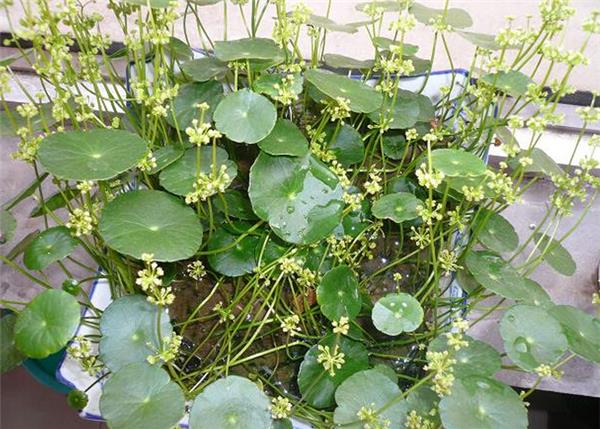
Water culture method for pennywort
1. There is no need to change the water especially often; as long as there is enough water in the basin, changing it once a week is enough. In summer, you can change the water a little more often, mainly to keep mosquitoes from laying eggs in it.
2. Keep it in enough light; only when it receives more than 4 hours of sunlight a day can pennywort grow lush and green. Pennywort especially loves sun, and under ample sunlight it can grow rapidly even without fertilizer; conversely, if the light is insufficient or it is kept in a dark indoor spot for a long time, its leaves easily turn yellow and wither.
3. As for fertilizing, there is no need to be too particular. If you keep goldfish at home, you can pour the water from a goldfish water change into the pennywort basin, which can make the pennywort grow better.
4. In the south, it grows well and survives naturally within a temperature range of 16-24°C. But too high or too low a temperature will inhibit the growth of pennywort, and at high temperatures small insects are also more likely to appear in the water.
5. When growing pennywort in water, yellowed leaves will rot in the water and spoil the water quality, so we should check the water container regularly and take out any moldy, rotting leaves as soon as we find them.
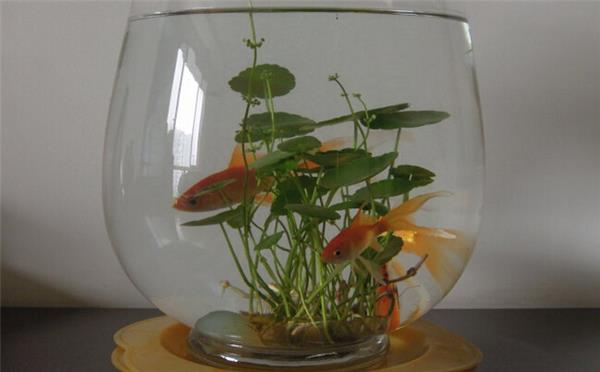
6. Vigorous pennywort can spread to fill the whole basin within a month, so we should prune and divide it appropriately, transplanting overly dense pennywort into other water basins, so that mature leaves do not shade the young leaves' light and affect normal plant growth and metabolism.
The roots, stems and leaves of pennywort can be used as a vegetable dish; they can also be used as a Chinese herbal medicine to dispel wind, firm the intestines, brighten the eyes and clear summer heat, and so on.
How to grow pennywort in soil
1. For potting, this can be done once the pennywort seedlings have formed. A medium-sized flowerpot without drainage holes is often used as the planting container. To get a better ornamental effect, 1 seedling can be placed per pot, and after the operation is finished, just water it. To make it easier for the seedlings to recover, the planting operation is best done on a cloudy day.
2. Pennywort does not need a very large pot; it can also be planted in a larger bowl. Use ordinary garden soil, mix in an appropriate amount of river sand, and add a small amount of organic fertilizer as a base fertilizer. When planting, you can plant it flat, covering the rhizome just enough that it is not visible; never plant it too deep. Then place it in a semi-shaded spot for a week and wait for new leaves to grow before exposing it to sunlight.
3. Pennywort is afraid of cold. In winter, for pennywort kept outdoors, you can pour out all the water and place it in a south-facing, sunny, wind-sheltered spot, and it can winter over safely; only some of the leaves will die off, and the underground root system will sprout again the following spring. In cold northern regions, if there is no heating, you can make a cover to cover the pot along with the plant, pour out the water, keep it moist, and as long as the room temperature does not fall below zero, it will likewise continue to grow the following year.
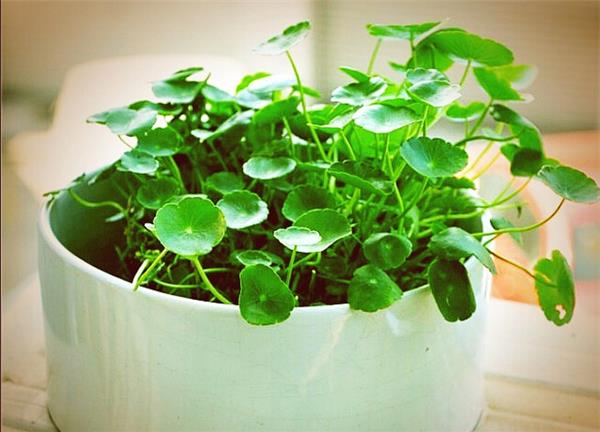
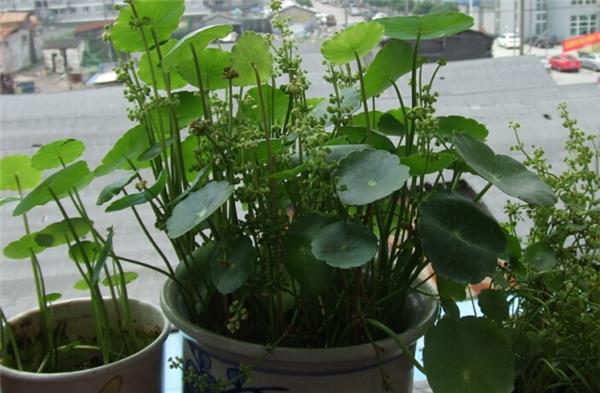
Pennywort is a perennial creeping herbaceous plant in the Apiaceae family, genus Hydrocotyle, with a plant height of 5-15 cm. It often curls up into a clump, has slender stems that root at the nodes, and well-developed runners; roots and leaves grow from the internodes. The leaves are round or kidney-shaped and peltate, with long petioles and wavy margins, and the underside is densely covered with appressed T-shaped hairs. The corolla is bell-shaped and yellow, and it blooms small yellow-green flowers in summer and autumn. So what effects does pennywort have?
Parts used: the whole plant can be used as medicine and has a diuretic effect.
Collection time: collected in summer and autumn.
Properties: slightly cold in nature, bitter and pungent in taste; clears heat and removes dampness, detoxifies and promotes urination. Other names: bengda bowl, horsetail grass, gotu kola, blood clam shell grass, pennywort, luodeda.
Preparation: remove impurities, wash clean, cut into sections, and dry in the sun.
Characteristics: this product often curls up into a clump. The root is cylindrical, 2-4 cm long, 1-1.5 mm in diameter, with a pale yellow or grayish-yellow surface. The stem is slender and curved, yellow-brown, with fine longitudinal wrinkles, and fibrous roots often grow at the nodes. The leaves are mostly shrunken and broken; when complete and flattened out, they are nearly round or kidney-shaped, 1-4 cm in diameter, grayish-green, with coarse blunt teeth at the margins; the petiole is 3-6 cm long and twisted. The umbel is axillary and short and small. The schizocarp is flat and round, with distinctly raised longitudinal ridges and fine reticulate veins, and the fruit stalk is very short. The odor is faint and the taste is bland.
Tested formulas:
1. Externally contracted summer heat, nose and throat: centella, eclipta, and sweet wormwood (all fresh) in appropriate amounts each, pound together and take the juice, and take it with cool boiled water.
2. Externally contracted wind-heat: fresh centella 60 g, white-necked earthworms 4, pound together, decoct in water and take the juice, and take it in 3 divided doses a day.
Nature, taste and meridians: bitter, pungent, cold. Enters the liver, spleen and kidney meridians.
Functions and indications: clears heat and drains dampness, detoxifies and reduces swelling. Used for damp-heat jaundice, heatstroke diarrhea, strangury from sand and blood, carbuncle swelling and sore toxin, and bruises and injuries.
Usage and dosage: 15-30 g; double the amount for fresh product. Storage: place in a dry place.
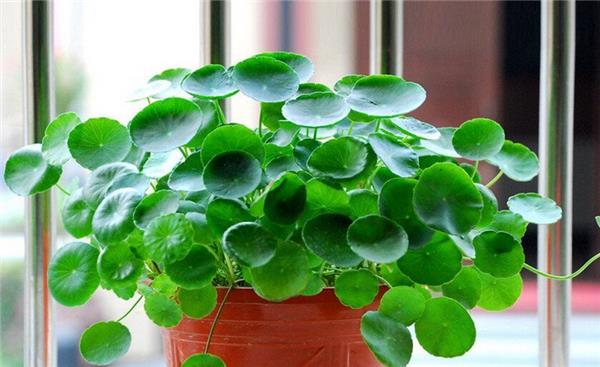
As for home style decoration and ornamentation, people nowadays have begun to move from the complicated to the simple, and from the luxurious to the natural. The home style people pursue is no longer the kind that is glittering and solemn, but has turned toward pursuing a simple and comfortable home style environment, because after struggling for a day in the dazzling world of feasting and pleasure, they hope to be able to freely enjoy happy times at home. So what effects does pennywort have?
Effect 1 of pennywort: ornamental value
The leaves of pennywort are round and peltate, like a copper coin, with long petioles and wavy margins, and it blooms small yellow-green flowers in summer and autumn. Pennywort is simple to cultivate and manage, has a beautiful plant shape, and its leaf color is emerald green and very pleasing to look at. It is currently one of the aquatic plants most loved by flower enthusiasts and is widely praised.
In warm regions, pennywort can be potted outdoors, and it is suitable for water trays, aquariums, ponds, and wetlands, as well as indoor water greening. When cultivated in an aquarium, it is often used as a foreground plant.
Effect 2 of pennywort: medicinal value
Properties of pennywort: slightly cold in nature, bitter and pungent in taste; clears heat and removes dampness, detoxifies and promotes urination.
The whole plant of pennywort can be used as medicine and has a diuretic effect. If it is to be grown in a pot or hanging basket, it is best to keep it holding water for a long time. The roots, stems and leaves can be used as a vegetable dish; they can also be used as a Chinese herbal medicine to dispel wind, firm the intestines, brighten the eyes and clear summer heat, giving people a fresh and pleasant feeling, and so on.
If it is a concise and lively modern minimalist style, growing pennywort in a round transparent glass container shows both freshness and brightness and flaunts individuality, adding quite a bit of artistic flavor to your home. If it is a pastoral home style returning to nature, there is even less need to say: pennywort is uniquely emerald green, showing even more natural, fresh and refined. Therefore, pennywort is a very good companion for home style matching. Hurry and add a pot of pennywort to your home, and make your home show even more style!
As for home style decoration and ornamentation, people nowadays have begun to move from the complicated to the simple, and from the luxurious to the natural. The home style people pursue is no longer the kind that is glittering and solemn, but has turned toward pursuing a simple and comfortable home style environment, because after struggling for a day in the dazzling world of feasting and pleasure, they hope to be able to freely enjoy happy times at home. So what effects does pennywort have?
Effect 1 of pennywort: ornamental value
The leaves of pennywort are round and peltate, like a copper coin, with long petioles and wavy margins, and it blooms small yellow-green flowers in summer and autumn. Pennywort is simple to cultivate and manage, has a beautiful plant shape, and its leaf color is emerald green and very pleasing to look at. It is currently one of the aquatic plants most loved by flower enthusiasts and is widely praised.
In warm regions, pennywort can be potted outdoors, and it is suitable for water trays, aquariums, ponds, and wetlands, as well as indoor water greening. When cultivated in an aquarium, it is often used as a foreground plant.
Effect 2 of pennywort: medicinal value
Properties of pennywort: slightly cold in nature, bitter and pungent in taste; clears heat and removes dampness, detoxifies and promotes urination.
The whole plant of pennywort can be used as medicine and has a diuretic effect. If it is to be grown in a pot or hanging basket, it is best to keep it holding water for a long time. The roots, stems and leaves can be used as a vegetable dish; they can also be used as a Chinese herbal medicine to dispel wind, firm the intestines, brighten the eyes and clear summer heat, giving people a fresh and pleasant feeling, and so on.
If it is a concise and lively modern minimalist style, growing pennywort in a round transparent glass container shows both freshness and brightness and flaunts individuality, adding quite a bit of artistic flavor to your home. If it is a pastoral home style returning to nature, there is even less need to say: pennywort is uniquely emerald green, showing even more natural, fresh and refined. Therefore, pennywort is a very good companion for home style matching. Hurry and add a pot of pennywort to your home, and make your home show even more style!