What plant is passionflower? Let us take a detailed look at this plant
Passionflower (Passiflora) originated in South America and is a world-famous plant that can be grown as an ornamental garden plant. Let us now learn more about passionflower.
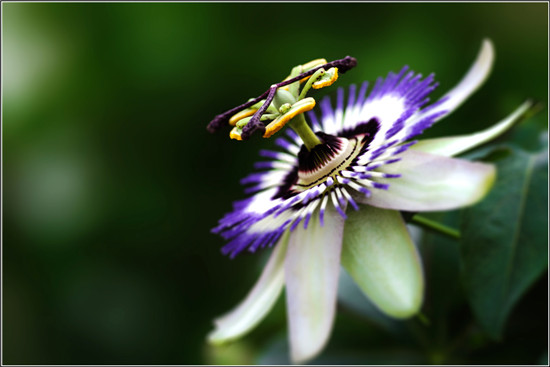
Passionflower (Passiflora) originated in South America and is a perennial evergreen herbaceous or semi-woody climbing vine. Its original home is the highlands of Mexico at an altitude of 1500 m. It is neither cold-tolerant nor heat-tolerant; the climate there is cool and mild, with a low-temperature period during which it goes dormant. Passionflower is also known as egg fruit or passion fruit, and is elegantly called the "fruit of passion". The fruit is sweet and sour, delicious, richly flavored and delightfully aromatic.
Passionflower is not only highly nutritious and thirst-quenching, but also has disease-preventing and health-promoting effects. According to measurements, passionflower juice contains more than 60 volatile compounds, with soluble solids content as high as 10-14% and organic acid content of 1.5-3%. The soluble solids are mainly glucose, fructose, sucrose and trace amounts of mannoheptulose, sedoheptulose and others. It is also quite rich in amino acids, mainly leucine, proline, threonine, lysine and others, and also contains a variety of vitamins and mineral elements, with considerable amounts of vitamin C, A, B, B1 as well as calcium, phosphorus, iron, sodium and others. Passionflower seeds have an oil content as high as 25% and can be pressed into edible oil, whose quality is comparable to sunflower oil. Using it as a raw material, it can be processed into products such as juice, fruit syrup, jam and jelly, and it has effects such as beautifying the skin, clearing summer heat and stimulating the appetite, eliminating fatigue, refreshing the mind and sobering one up, reducing inflammation and fading spots, lowering lipids and blood pressure, and preventing arteriosclerosis.
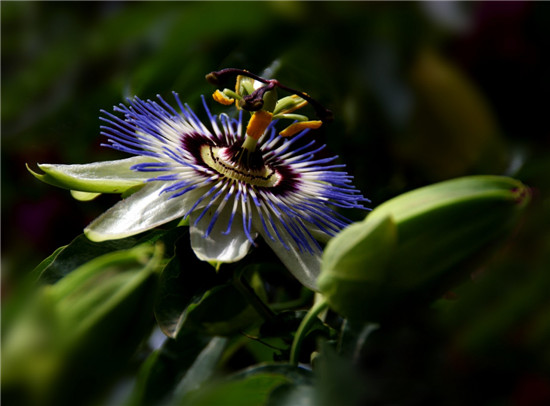
Although the passionflower is native to South America, it can also be grown in a greenhouse as long as you spend a little more time on it, and it will produce yellow and very delicious fruit. People often cultivate it precisely because they want to eat this fruit. The fruit of the passionflower is like an egg, and its juice is also as golden and enticing as an egg yolk, so it is also called egg fruit. Its fruit colors include yellow, purple and purple-yellow hybrid varieties. Once the fruit is ripe, its fragrance fills the air. After analysis, scientists found that it has the fragrance of fruits such as pomegranate, pineapple, banana, sour plum and strawberry, and it can be said to be the most fragrant fruit in the world. That is why people also call it "passion fruit".
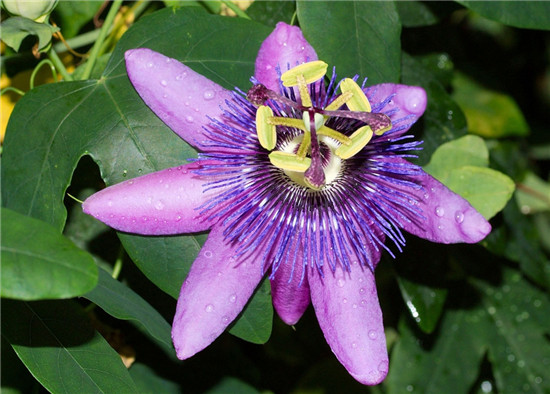
In the legends of the American Indians, the passionflower is the daughter of the day. She inherited the passionate sunlight given by her father, always brimming with a brilliant smile, and she was the most beautiful flower in the forests and grasslands. One day, when the morning star first rose, passionflower was awakened from her sleep by a clamor. She opened her eyes and saw a young man playing in the water by the river. His handsome appearance attracted the princess, and passionflower fell in love with him at first sight. This young man, unlike the other people passionflower saw during the day, was the guide of the night and appeared only at night. The princess admired this night guide greatly, counting the time every moment, waiting for night to come, hoping to see the night guide once.
Passionflower fruit ripens in December, and after harvesting it needs 4 to 7 days of after-ripening before it can be eaten. The fruit of egg fruit is mainly eaten fresh, and can also be made into juice, fruit wine, jam and so on. According to scientific predictions, passion fruit contains very rich natural vitamin C, with 34.6 mg of vitamin C per 100 grams of juice, and is also rich in vitamins A, B1, B2 and others, as well as abundant calcium, phosphorus, iron and various amino acids and trace elements.
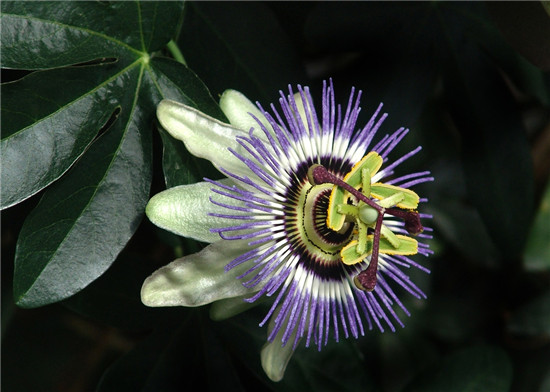
Passion fruit is rich in organic acids, nicotinic acid, amino acids, linoleic acid, minerals, beta-carotene, lycopene, soluble dietary fiber, alkaloids, flavonoids and more than 160 kinds of beneficial components essential to the human body, making it a natural food with very high health-care and medicinal value. Passion fruit contains fruit acids and edible fiber, which act on the digestive system and are very effective for poor appetite, stomach bloating and constipation. Passion fruit contains vitamin E and lycopene, whose effects on the reproductive system should not be underestimated.
The super fiber in passion fruit can promote excretion, relieve constipation symptoms, clear out irritating substances adhering to and retained in the intestinal tract, and prevent irritation of the intestines and reabsorption by the human body, thereby reducing the incidence of colon cancer. The super fiber also has antitumor activity. The VC in passion fruit participates in cholesterol metabolism, can lower cholesterol and purify the blood. In addition, the VC, carotene and SOD enzymes richly contained in passion fruit can clear free radicals in the body and have a beautifying and anti-aging effect.
The above is the full content of the introduction to the passionflower plant that I have summarized for everyone. I hope this article can help you. Please also continue to follow us.
I hope this article can help you. Please also continue to follow us.