How to Grow Clematis? A Detailed Guide to Clematis Cultivation Methods
Many people say that clematis is a difficult plant to grow, but in fact it is a very easy plant to cultivate. Let's take a look at how to grow clematis together!
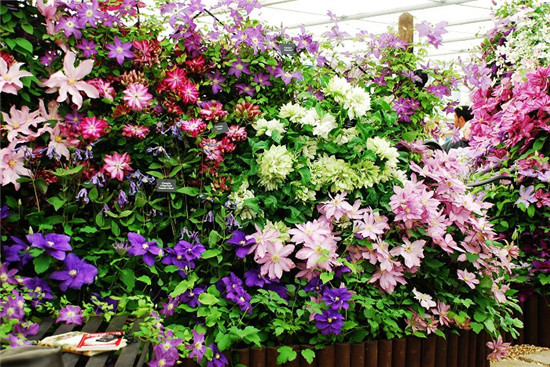
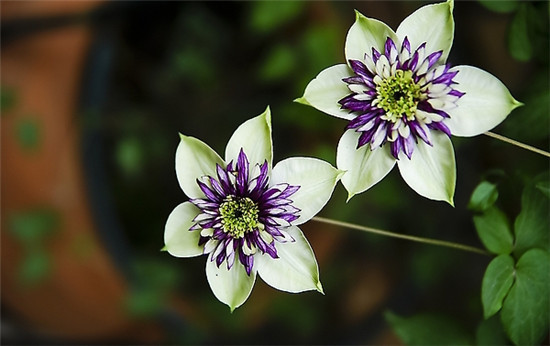
Clematis is a perennial herbaceous or woody vine in the Ranunculaceae family, genus Clematis. Plant height: about 3-6 m. The trailing stems are slender and long, reaching about 4 m, highly flexible, with sparse short hairs all over. Leaves are opposite, petiolate, simple or 1- or 2-pinnately trifoliolate, the petioles able to twine around other objects; leaflets are ovate or ovate-lanceolate, entire, or with 2-3 notches. Flowers are solitary or in panicles, bell-shaped, urn-shaped or wheel-shaped, formed from petaloid sepals; the pedicels arise from the leaf axils, 6-12 cm long, with opposite bracts at the middle; the tip of the pedicel bears large white flowers, flower diameter: 2.5-6 cm; 4-6 sepals, ovate, acute, margins slightly undulate, with three thick longitudinal veins in the center, the outer central longitudinal vein tinged purple and bearing short hairs; petals absent or replaced by staminodes. Stamens numerous, often modified, filaments flattened and enlarged, dark purple; pistils also numerous, the styles with filamentous hairs or not. Usually it often does not set fruit; only those with unmodified stamens can set seed. The achenes aggregate into a head and bear long tail-like hairs. Flowering period: May-July.
Clematis does not have high requirements for the growing medium, and it is not mandatory for everyone to use soilless mixes; good results can also be achieved with soil, provided that the medium drains well. Avoid heavy clay soils; some heavy clay soils must be improved by mixing in tile fragments, broken clay pot pieces, perlite, foam granules, etc. to increase the drainage of the medium, which is very important.
This point is especially important for the growth of clematis. Clematis actually has a certain degree of drought tolerance; long-term moist medium will bring many potential disease risks to clematis. In addition to the medium, when growing in pots it is also very important to add a drainage layer at the bottom of the flower pot; filling at least 5 cm of large-diameter clay pebbles or brick and tile fragments is essential.
Clematis Cultivation Methods
1. Soil: Prefers fertile, well-drained alkaline loam; avoid waterlogged soil or soil that cannot retain water during summer drought.
2. Watering: Tolerates drought and fears waterlogging. During the plum rain season, due to high temperature and high humidity, it is prone to disease and death, so during the growing season just keep the potting soil moist; never water too much, otherwise the roots are prone to rot.
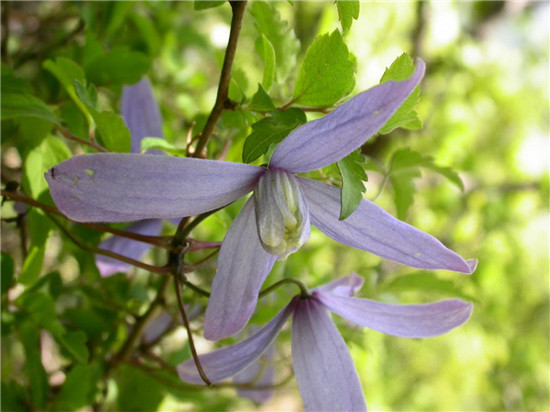
3. Sunlight: For potted clematis, from autumn to early spring of the following year, place it under full-light conditions for cultivation without shading. After entering summer, intense sunlight will cause the leaves of clematis to age and turn yellow and grow poorly, so appropriate shading is needed.
4. Temperature: Highly adaptable, relatively cold-hardy, can tolerate low temperatures of -20.
5. Fertilizing: It does not have high fertilizer requirements; during the peak growing season, apply liquid fertilizer about once every half month.
6. Pests and diseases: Clematis has relatively strong resistance to pests and diseases. Serious damage from pests and diseases rarely occurs. Diseases include wilt, which is especially likely to occur in summer when the rain clears and the temperature rises sharply; branches suddenly wilt, and new shoots often sprout in autumn or the following spring. Others include powdery mildew (damaging leaves or flowers), viral disease (yellow spots on leaves, deformed flowers), etc.; spray with a 1000-fold dilution of 10% antibacterial agent 401 acetic acid solution. Pests include red spider mites and slug moths; spray with a 1000-fold dilution of 50% fenitrothion emulsifiable concentrate to kill them.
The above is the full content of the clematis cultivation methods I have summarized for everyone. I hope this article can help you. Please also continue to follow us.