The Language and Symbolism of Daisies and an Introduction to Common Varieties
The daisy is a type of plant in the Asteraceae family, also known as the horse-head orchid and the long-life chrysanthemum, and it blooms in spring. Next, let us take a look at the language and varieties of daisies.
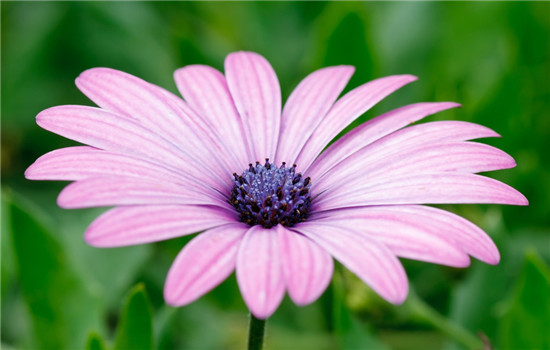
The daisy is a perennial herbaceous plant in the Asteraceae family. It is often sown in autumn and grown as a biennial (in high-altitude cold regions, it is sown in spring and grown as an annual). The plant height is 15-20 cm. The leaves are clustered at the base and spoon-shaped. The flower head is solitary, with a flower diameter of 3-5 cm, and the ligulate florets are strip-shaped. The colors include white, pink, red and so on. Usually each plant produces about 10 flowers. The flowering period is from March to June. Daisies are cold-resistant and prefer a cool climate. Under hot conditions, flowering is poor and the plants easily wither and die. They can be sown and propagated in an open-field seedbed in mid-August or early September. After sowing, it is advisable to shade with reed curtains, and plastic film must not be used as cover.
When the seedlings have all emerged, remove the curtains. When two or three leaves have grown, transplant them for the first time, bare-rooted without keeping the original soil. The soil in the bed needs to be moist, and watering should be timely. If necessary, shade with reed curtains. Two or three days after pricking out the seedlings, when the soil is dry, water once more. After two days, loosen the soil to preserve moisture and harden the seedlings. When the seedlings have grown 3-4 true leaves, transplant them with soil balls once or twice, which can promote the development of a large number of lateral roots and prevent excessive leggy growth. Apply an appropriate amount of base fertilizer in the bed. The following year, the plants will be compact and sturdy, with strong stress resistance, and the flowers will be large, full and brightly colored. At the end of October, water thoroughly once. When the bed soil is neither sticky nor crumbly, lift the soil balls and store them in a sunny cold frame to overwinter, covering them with cattail mats at night to protect against the cold.
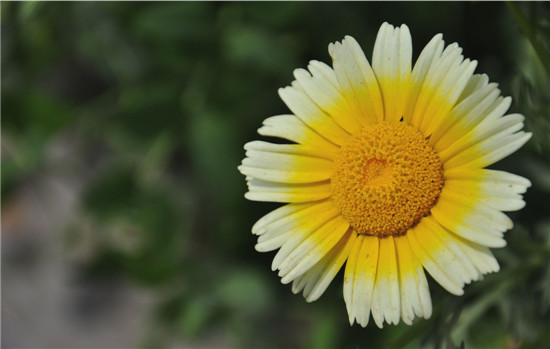
Daisies are tolerant of cold and cool conditions during winter, but fear severe frost and dry wind. The thickness of the cattail mats and the timing of covering and removing them should be flexibly controlled according to the growth of the flower seedlings and the temperature, so as to prevent leggy growth and effectively control the flowering period. For those that have been transplanted once or twice in autumn, they can be directly planted in flower beds in spring when flowers appear. For those that have been pricked out in autumn but not transplanted again, in spring it is best to maintain them in a bed with sufficient base fertilizer until they are well formed, and then plant them in flower beds or sell them from the nursery. When planting, apply leaf mold or barnyard manure as base fertilizer. After planting, water once every 7-10 days. During the growing period, daisies like sufficient sunlight and are not tolerant of shade.
What is the language of daisies?
Pure beauty, innocence, naivety, joy, happiness, peace, hope, and my favorite, "love deeply hidden in the heart." It is like a pure and innocent shy maiden. Although she is not the kind of woman who immediately catches people's attention, the more carefully you look, the more you can discover her beauty and virtues. In mythology, she was transformed from the forest spirit Belides. When Belides was playing happily with her lover, she was discovered by the god of the orchard, and so she was turned into a daisy while being pursued.
A daisy is like a light and elegant song. It is as if someone is softly singing by your ear.
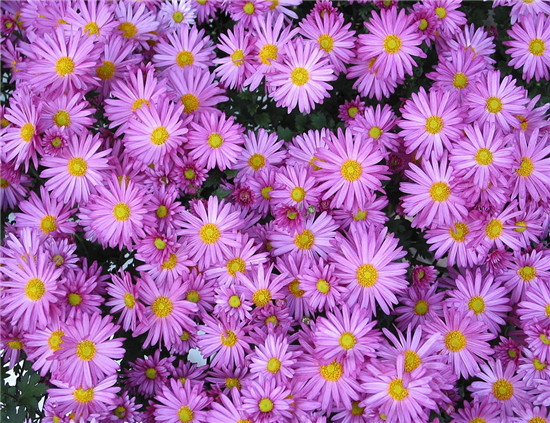
"I love you very much. So I am willing not to hold you back, and let you fly toward happiness." Just like the daisy's flower language, "love deeply hidden in the heart."
Love in memory is more painful than love in waiting. That is the daisy's flower language of the painter Hye-young.
Love that cannot be spoken is more earnest than love that can be confessed. That is the daisy's flower language of the killer Park Yi.
Love realized too late is more sorrowful than love that can never meet. That is the daisy's flower language of the detective Jung-woo.
It is said that the daisy, with its small white petals, has several meanings.
The first is eternal happiness. Legend says that the fairy Bertis in the forest transformed into a daisy; she was a lively and happy child.
The second is, do you love me or not? Therefore, daisies are usually flowers given by secret admirers.
The third is -- parting.
The fourth is love concealed in the heart. It is similar to the second.
There is another one: the daisy's flower language also carries the meaning of strength.
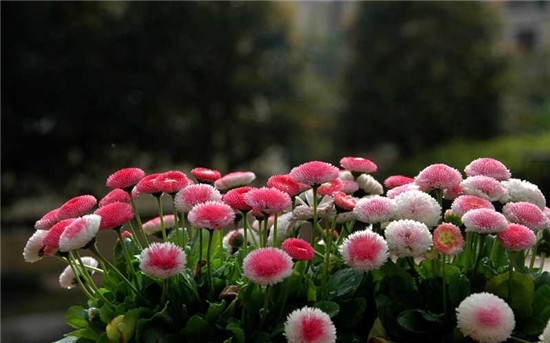
Common cultivated daisy varieties include:
First, the Habanera series: petals are long, flower diameter reaches 150px, and colors include white, pink, and red.
Second, the Pomponette series: petals are wrinkled, flower diameter is 100px, and colors include white, pink, and red.
Third, the Roggli series: early flowering period, flower diameter is 75px, and colors include red, rose pink, pink, and white.
Fourth, the Tasso series: petals are wrinkled, flower diameter is 150px, and colors include pink, white, and red.
Morphological Characteristics of Daisies
First, it is a perennial or annual scapose herb, generally about 250px in height, and blooms in spring.
Second, the leaves are basal, spoon-shaped, herbaceous, with rounded blunt tips and bases that gradually narrow into stalks.
Third, they have sparse blunt teeth or wavy teeth. The flower head is solitary, generally 25-35 mm in diameter, and the scape is hairy.
Fourth, the involucre is hemispherical or broadly bell-shaped, with nearly 2 layers of involucral bracts, oblong, with slightly blunt tips, and the outside is covered with soft hairs.
Propagation Methods of Daisies
First, seed propagation
Daisy seeds are relatively small, so broadcasting is often used. However, seedlings grown from seed often cannot retain the characteristics of the mother plant. Mix the seeds evenly with fine sand and broadcast them, then cover with fine soil about 12.5px thick. After sowing, cover with a shade net and water, and maintain the temperature at around 28°C.
Second, division propagation
For some superior varieties, division can be used for propagation, but the growth vigor will be inferior to that of seedlings, and seed setting is poor.
Third, cutting propagation
Cutting propagation can be carried out throughout the entire growing season, and the survival rate of cuttings from April to June is the highest. Cut branches with 3-5 nodes and a length of 80-100 mm, remove the leaves at the base, and the depth inserted into the soil is generally 1/3-1/2 of the length of the cutting.
The above is all the content I have summarized for everyone on the language and varieties of daisies. I hope this article can help everyone. Please also continue to follow us.