What Is the Flower Language of the Daisy? Symbolism and Meaning Explained
The daisy is a perennial herbaceous plant and is deeply loved by Italians. Let's take a look at what the flower language of the daisy is!
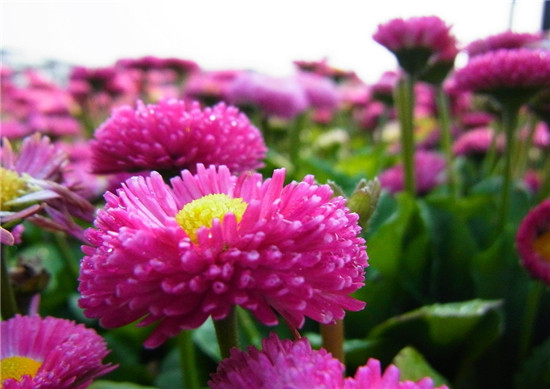
The Origin of the Daisy
The daisy got its name because it closely resembles the chrysanthemum, with linear petals. The difference is that chrysanthemum petals are slender, curled and glossy, while daisy petals are short, small and straight, like an unformed chrysanthemum. Hence the name daisy. In mythology, she was transformed from the forest sprite Belides. When Belides was happily playing with her lover, she was discovered by the god of the orchard, and so, while being pursued, she was transformed into a daisy.
Daisies for Divining Love
In Western countries, daisies are also often used to divine love. Pluck the petals of a daisy one by one, and with each petal plucked, silently say in your heart: loves me, loves me not. The last petal represents the beloved's true feelings. Another method of divining marriage is: if you want to know at what age you will marry, simply pull up a handful of flowers at random and see how many daisies are among them; the number of daisies is the number of years until your wedding day.
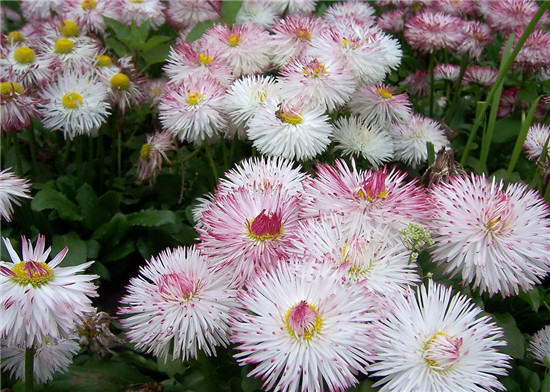
The Flower Language of the Daisy
The daisy has many different legends and many different flower languages. Among them, the most important one is: secretly in love with you, so, do you love me? When you have a secret crush on someone of the opposite sex, whether it is a secret crush between a man and a woman, or even a secret crush between people of the same sex, if you do not dare to confess in person, then giving the other person a flower that represents secret love is more appropriate than anything.
Daisy flowers are small, delicate and lovely, and have high ornamental value. Italians are very fond of the clear, elegant and charming daisy, considering it to have the character of a gentleman, and therefore have designated the daisy as the national flower.
The daisy has many different legends and many different flower languages. Among them, the most important one is: secretly in love with you, so, do you love me?
When you have a secret crush on someone of the opposite sex, whether it is a man secretly in love with a woman, or a woman secretly in love with a man. If you do not dare to confess in person, then giving the other person a flower that represents secret love is the most appropriate thing of all.
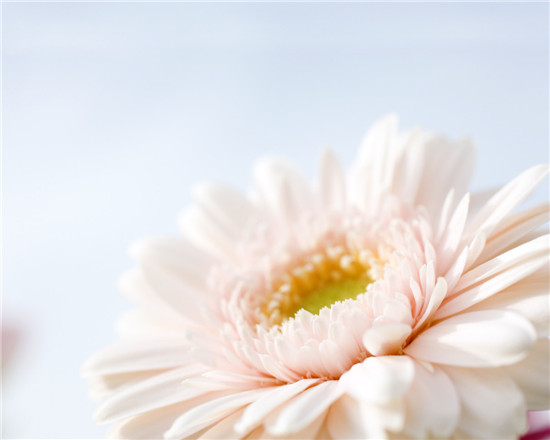
And what I most agree with is: the flower language of the daisy is -- love hidden in the heart, just as written in Musset's poem: "I love, and say nothing; I love, and only my heart knows; I cherish my secret, and I also cherish my pain; I once swore that I love without harboring any hope, yet it is not without happiness -- as long as I can see you, I feel content."
How to Grow Daisies
1. Sow and propagate in open-ground seedbeds in mid-August or early September.
2. After sowing, shade with reed curtains; do not cover with plastic film.
3. Once the seedlings have all emerged, remove the curtains.
4. When two or three leaves have grown, prick out for the first time with bare roots and no original soil; the soil in the bed needs to be moist, and watering must be timely. If necessary, shade with reed curtains. Two or three days after pricking out, when the soil is dry, water once more.
5. Two days later, loosen the soil to conserve moisture and harden the seedlings. When the seedlings have grown 3-4 true leaves, transplant them with a soil ball once or twice, which can promote a large number of lateral roots and prevent leggy growth. Apply an appropriate amount of base fertilizer in the bed. The following year the plants will be short and sturdy, with strong resistance, and the flowers will be large, full and brightly colored.
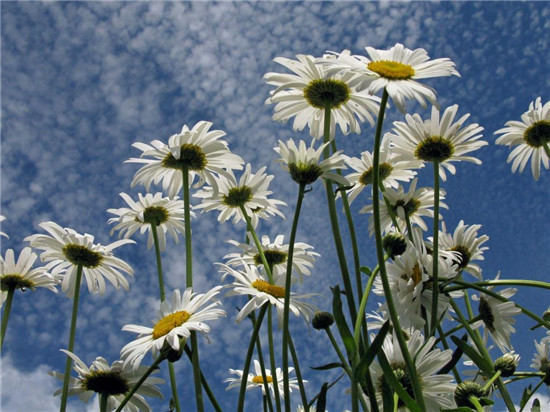
6. At the end of October, water thoroughly once. When the bed soil is neither sticky nor crumbly, lift the soil balls and store them in a sunny bed to overwinter, covering with cattail mats at night to protect against the cold.
7. Daisies are tolerant of cold and cool conditions when overwintering, but fear severe frost and dry wind. The thickness of the cattail mats and the timing of covering and removing them should be flexibly adjusted according to the growth of the seedlings and the temperature, so as to prevent leggy growth and effectively control the flowering period.
8. For those that have been transplanted once or twice in autumn, they can be directly planted out in the flower bed in spring when flowers appear. For those that were pricked out in autumn but not moved between beds, in spring it is best to maintain them in a bed with sufficient base fertilizer until they are well formed, then plant them out in the flower bed or sell them from the nursery.
9. When planting out, apply leaf mold or barnyard manure as a base fertilizer, with a plant spacing of 15 cm. After planting out, water once every 7-10 days.
10. Fertilizing need not be too frequent; apply dilute manure water once every 2-3 weeks, cultivate the soil once a month, and after flowering in February, stop fertilizing.
The above is the full content of my summary on what the flower language of the daisy is. I hope this article can help everyone. Please also continue to follow us.