How to Grow Epiphyllum? A Detailed Guide to Cultivation Methods
Epiphyllum, a perennial evergreen epiphytic plant of the Cactaceae family. Next, I will introduce the cultivation methods and precautions for Epiphyllum.
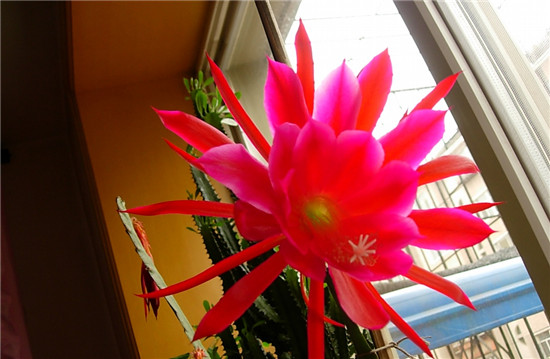
Growth Habits of Epiphyllum
Epiphyllum prefers a warm and humid environment, dislikes direct sunlight, is drought-tolerant, tolerates partial shade, fears rain, and requires fertile, loose, well-drained neutral or slightly acidic sandy loam soil. The optimal temperature during the growing season is 20-25°C, the optimal temperature for flower bud differentiation is between 10-15°C, the winter temperature must not drop below 5°C, and the flowering period is in April.
Epiphyllum should be planted in loose, fertile, and well-drained soil, and it is a heavy feeder. During the growing season, it needs frequent fertilization so that it can bloom on schedule and produce beautiful flowers. It is suited to a warm and humid environment; do not let it receive direct sunlight on a balcony. It is drought-tolerant and fears rain. Although it likes humidity, the soil for growing Epiphyllum should still be on the drier side; otherwise, root rot may occur.
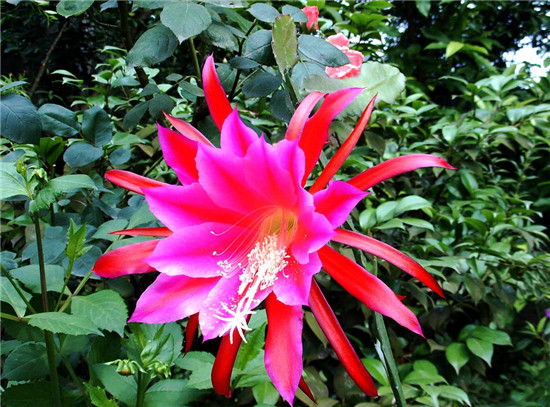
Four-Season Cultivation of Epiphyllum
Spring
During the growing season of Epiphyllum, ensure sufficient light and timely fertilization. Apply a fertilizer combining nitrogen and phosphorus once every 10-15 days to promote robust growth of flowers and leaves. Avoid water accumulation in the pot to prevent root rot. Starting in April, flower buds emerge at the edges of the upper half of the fleshy stem segments and gradually swell, blooming fully after half a month. If the plant lacks nutrients at this time and its growth is weak, it will not bloom or will bloom sparsely. To prevent this, apply 1-2 additional doses of quick-acting phosphorus fertilizer in advance. At the same time, remove excess lateral buds and basal branch buds.
Summer
During the period of vigorous growth, promptly apply 1-2 top dressings primarily of nitrogen. This both encourages new branches and leaves and helps produce more buds and flowers next spring. To increase the number of stem segments, take advantage of this favorable period to retain buds. During the high temperatures of midsummer, Epiphyllum enters a semi-dormant period. It should be placed in a cool, ventilated, semi-shaded spot, fertilization should be stopped, watering should not be excessive, and the potting soil should be kept slightly dry. Avoid excessive shading to prevent leggy growth that affects flowering.
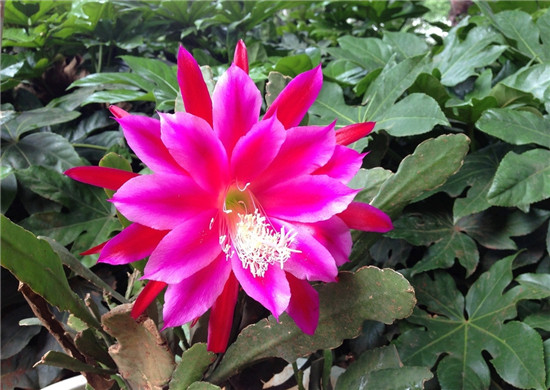
Autumn
This is the second period of vigorous growth in the year. New leaves gradually age and mature. The management and care methods are basically the same as in spring and early summer from May to June. Apply 2-3 top dressings, mainly phosphorus and potassium fertilizers. Also increase the duration of light exposure.
Winter
After Frost's Descent, as the weather turns cold, the plant needs to be moved indoors for warmth. It can be placed in a sunny indoor spot, with the room temperature maintained at 8°C. Stop fertilization and restrict watering. It is best to keep the potting soil on the dry side; excessive moisture will cause leaf wilting, lodging, and root rot. After spring, from mid-March to early April, as temperatures rise, gradually extend the time for open-window ventilation to acclimate the plant, laying the foundation for moving it outdoors for care later.
Propagation Methods for Epiphyllum
Epiphyllum is commonly propagated by cuttings. Because its leaf-like stems are relatively thick, the cut surface is very sensitive to soil moisture. If too wet, the cuttings rot easily; if too dry, the branches shrivel and become weak. Even for cuttings that have successfully rooted, during consecutive rainy days, the original cut surface is prone to rotting. Therefore, many hobbyists consider household propagation of Epiphyllum rather difficult. Through years of observation, practice, and comparison, the author found that the inverted cutting method can overcome many unfavorable factors, greatly improve the survival rate, and produce growth noticeably superior to the ordinary cutting method.
The specific method is as follows: Bury the upper end of a stem segment about 10 cm long with its tip into the soil to a depth of about 7 cm, leaving the lower cut end exposed above the soil surface. Roots will form in 20 days, and new branches can emerge from the soil in about 40 days. The section from the new roots to the cut end naturally shrivels and dries up within 1 year. This method effectively solves the problem of the cut end rotting easily and does not restrict soil moisture. Moreover, unlike the ordinary cutting method, the more abundant the water and nutrients in the soil, the more vigorous the growth of the cuttings. Even with controlled water and fertilizer, they can still grow completely normally, without branches shriveling and becoming weak. The survival rate is above 90%. From a botanical perspective, this can also be reasonably explained: Epiphyllum has no leaves, so plant respiration is limited. Therefore, the tissue at the tip of the modified stem and at some stem node areas gradually develops into aerial roots (adventitious roots) to aid respiration. When adventitious roots encounter soil and moisture, they rapidly develop into permanent roots, enabling the plant to survive. The inverted cutting method was successfully tested based on this principle.
Water and Fertilizer Management
When watering Epiphyllum, in spring and autumn, water thoroughly once every 5 or 6 days. In summer, water less and keep the potting soil half-dry. In particular, avoid water accumulation in the pot and exposure to rain, to prevent root rot caused by excessive moisture. In the morning, spray water on the stem segments and around the plant to increase air humidity. In winter, control watering and keep the potting soil slightly moist. Note that Epiphyllum is susceptible to waterlogging, so after watering, loosen the soil promptly to speed up water evaporation. Epiphyllum is a heavy feeder but cannot tolerate raw or concentrated fertilizers. During its growing season, apply diluted water from decomposed and fermented sesame paste residue about once every ten days. After buds appear, some phosphorus and potassium fertilizers can be applied as well. Do not apply nitrogen fertilizer, otherwise flowering will be affected. Generally, do not fertilize in winter and early spring.
Light and Temperature Control
Epiphyllum likes light. In spring and autumn, when placed outside a greenhouse, it should be put in a wind-sheltered, sunny location. In summer, 50% of the light should be shaded to avoid direct strong sunlight at noon. In winter, in the greenhouse, it should receive as much light as possible. Epiphyllum prefers a warm environment and is not tolerant of low temperatures. In winter, the humidity in the greenhouse should be maintained above 10°C. If the temperature is too low, it is prone to cold damage; if too high, it easily causes leggy growth of the stem segments. Move it indoors in mid-October in autumn and move it outdoors after Grain Rain in spring.
Pruning and Shaping
When pruning and shaping, first, remove excessive branch buds at the base so that each pot keeps 3 to 4 main stem segments. Too many main stems are not conducive to the plant's shape. Second, promptly remove excessive new lateral buds on the main stem segments to prevent excessive nutrient consumption that affects bud formation and flowering. In addition, appropriately pinching the growing tips of the plant is also very necessary, as it can make the stem segments thick, plump, and strongly upright.
The above is the complete content of the introduction to Epiphyllum cultivation methods that I have summarized for everyone. I hope this article can help you. Please also continue to follow us.
Keep the potting soil half-dry. In particular, avoid water accumulation in the pot and exposure to rain, to prevent root rot caused by excessive moisture. In the morning, spray water on the stem segments and around the plant to increase air humidity. In winter, control watering and keep the potting soil slightly moist. Note that Epiphyllum is susceptible to waterlogging, so after watering, loosen the soil promptly to speed up water evaporation. Epiphyllum is a heavy feeder but cannot tolerate raw or concentrated fertilizers. During its growing season, apply diluted water from decomposed and fermented sesame paste residue about once every ten days. After buds appear, some phosphorus and potassium fertilizers can be applied as well. Do not apply nitrogen fertilizer, otherwise flowering will be affected. Generally, do not fertilize in winter and early spring.Light and Temperature Control
Epiphyllum likes light. In spring and autumn, when placed outside a greenhouse, it should be put in a wind-sheltered, sunny location. In summer, 50% of the light should be shaded to avoid direct strong sunlight at noon. In winter, in the greenhouse, it should receive as much light as possible. Epiphyllum prefers a warm environment and is not tolerant of low temperatures. In winter, the humidity in the greenhouse should be maintained above 10°C. If the temperature is too low, it is prone to cold damage; if too high, it easily causes leggy growth of the stem segments. Move it indoors in mid-October in autumn and move it outdoors after Grain Rain in spring.
Pruning and Shaping
When pruning and shaping, first, remove excessive branch buds at the base so that each pot keeps 3 to 4 main stem segments. Too many main stems are not conducive to the plant's shape. Second, promptly remove excessive new lateral buds on the main stem segments to prevent excessive nutrient consumption that affects bud formation and flowering. In addition, appropriately pinching the growing tips of the plant is also very necessary, as it can make the stem segments thick, plump, and strongly upright.
The above is the complete content of the introduction to Epiphyllum cultivation methods that I have summarized for everyone. I hope this article can help you. Please also continue to follow us.