Canna Lily Cultivation Methods and Care Key Points
The canna lily originated in tropical regions such as the Americas, India, and the Malay Peninsula. Today this plant can be enjoyed at home. Let's take a look at its cultivation methods!
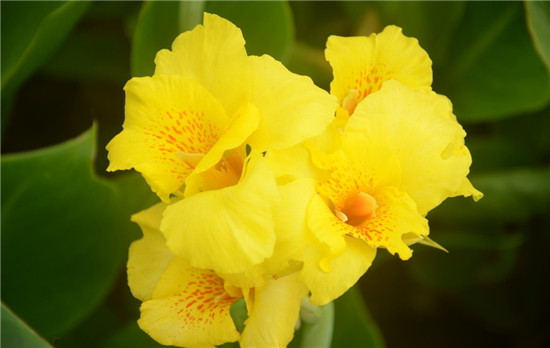
The canna lily is a tropical broadleaf plant, with flower colors mainly in two types: yellow canna lily and red canna lily. In addition, improved varieties also display purple, pink, and multicolored speckled flowers. Because the canna lily blooms in the scorching heat of midsummer, bringing travelers a refreshing beauty, its brave spirit of fearing not the harsh sun at all is praised by people, and its flower meaning is "a beautiful future."
Perennial herb, plant height can reach 100 cm-150 cm, rhizome thick and fleshy with block-like underground stems; leaves large, arranged in a spiral, with obvious midribs and pinnate parallel veins, leaf stalks sheath-like and clasping the stem, no ligule, leaf stalks round, green or purplish red; stems and leaves covered with white powder, leaf blades broadly elliptic. Flowers relatively large, can reach 20 cm in size, petals straight and extended, with 4 petaloid stamens, flower colors include creamy white, yellow, orange-red, pink, bright red to purplish red.
The canna lily is a perennial upright herb of the genus Canna in the family Cannaceae. Also known as red brilliant canna, Tanhua, orchid canna, and dwarf canna. It is native to tropical America and Africa and other places.
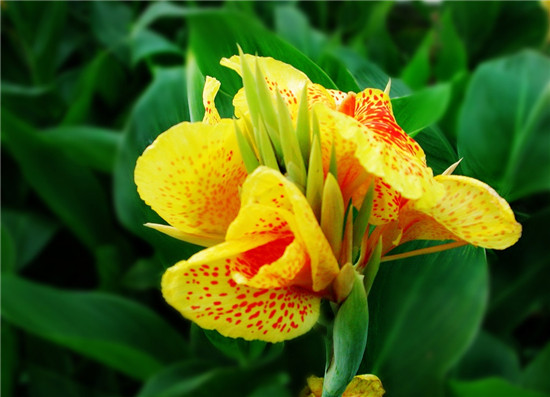
It has thick, fleshy rhizomes, and leaves that are alternate and broad. The petals are sepal-like; the brilliant petals are actually petaloid stamens, in raceme inflorescences, and the petals vary by variety in yellow, red, and with spots, etc. Seeds are relatively large, blackish brown, with a hard seed coat. The flowering period opens successively from early summer to late autumn.
Flower colors include bright red, pink, orange-red, purplish red, creamy white, purple, and red-yellow mixed, red petals with golden edges, etc. The flowering period is from May to July, blooming continuously. Among them, the large red-flowered canna lily is the most beautiful, named "red canna," hence the name canna lily. It likes warmth and humidity, fears severe cold, likes sufficient sunlight, likes deep soil layers and fertile soil, can tolerate poor soil, has strong rhizome and bud branching ability, reproduces quickly, and has a long flowering period; it is a good groundcover plant and can also be used as material for flower beds, flower paths, and flower landscapes.
Canna Lily Variety Classification
Large-flowered canna lily: also known as French canna lily, it is an improved variety of canna lily, plant height 15 m, stems and leaves all covered with white powder, leaves large, broadly elliptic, about 40 cm long and about 20 cm wide, total peduncle long, florets large, colors rich, sepals and petals covered with white powder, petaloid petals upright and not curved.
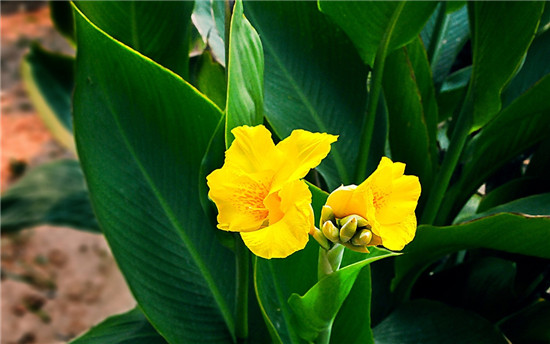
Purple-leaf canna lily: plant height about 1 m, stems and leaves all purplish brown, involucre brown, sepals and petals all purplish red, petaloid petals deep purplish red, lip petals bright red. The fruit of the canna lily is a slightly spherical capsule, with wart-like protrusions, and seeds black and hard.
Aquatic yellow canna lily: plant height about 1 m, leaves green, flowers yellow, generally growing by riversides and wetlands, with a water level of about ten cm, likes moisture, tolerant of cold.
Aquatic red canna lily: plant height about 1 m, leaves green, flowers bright red, likewise growing by riversides and wetlands, with a water level of about ten cm, grows best, likes moisture, tolerant of cold. Compared with terrestrial canna lilies, aquatic canna lilies are more suitable for decorating artificial lakes, wetland parks, river channels, and other waterscape greening.
How to Plant Canna Lilies
Light and temperature: during the growing period, sufficient light is required, ensuring at least 5 hours of direct sunlight every day. If the environment is too shady and light is insufficient, the flowering period will be delayed. It likes warmth and avoids severe cold, and the suitable growing temperature is 16-30°C. When flowering, to prolong the flowering period, it can be placed in a low-temperature place without sunlight, and the ambient temperature should not be lower than 10°C.
Watering and fertilizing: after planting, before the rhizomes have grown new roots, water less. Keep the potting soil moist. Soil that is too wet easily causes root rot. After the flower scape grows out, water frequently to keep the potting soil moist; if water is lacking, the phenomenon of "flowers hidden among the leaves" easily appears after flowering. In winter, reduce watering, following the principle of "water when dry, stop when wet." In addition to applying sufficient base fertilizer before planting, during the peak growing season, apply 3-4 times a month of thin cake liquid fertilizer as topdressing. If 20-30 days before the scheduled flowering date the flower scape has not yet emerged, spray the leaves once with a 0.2% potassium dihydrogen phosphate aqueous solution to force flowering.
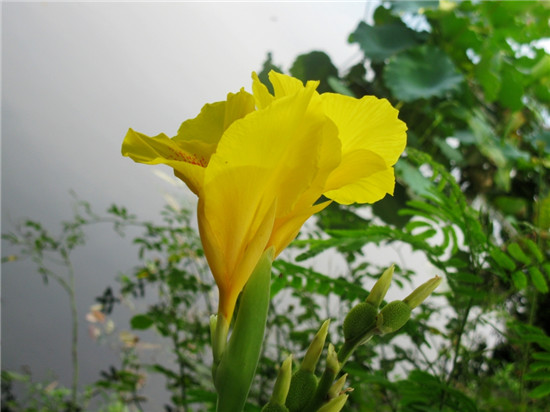
Flowering period control: if you want it to bloom for May Day, in January cover the stored rhizomes with soil mixed with a small amount of fertilizer, requiring an ambient temperature of 30°C during the day and about 15°C at night; after 10 days, they can sprout. After sprouting, plant the rhizomes with 2-3 buds left into pots, keep the potting soil moist, and apply topdressing as appropriate. In early April, flower buds appear; pay attention to ventilation, and it can bloom by May Day.
Rhizome harvesting: in cold regions, after 1-2 frosts in autumn and when most of the stems and leaves have withered and yellowed, cut off the aboveground parts, dig out the rhizomes, dry them properly, and pile them indoors; at a temperature of 5-7°C they can overwinter safely. In warm regions, they can overwinter outdoors in winter without needing to be harvested, but after 2-3 years they must be dug out and replanted, and at the same time the planting scale can also be expanded.
The above is the entire content of the canna lily cultivation methods I have summarized for everyone. I hope this article can help you. Please also continue to follow us.
In autumn, after 1-2 frosts and when most of the stems and leaves have withered and yellowed, cut off the aboveground parts, dig out the rhizomes, dry them properly, and pile them indoors; at a temperature of 5-7°C they can overwinter safely. In warm regions, they can overwinter outdoors in winter without needing to be harvested, but after 2-3 years they must be dug out and replanted, and at the same time the planting scale can also be expanded.The above is the entire content of the canna lily cultivation methods I have summarized for everyone. I hope this article can help you. Please also continue to follow us.