A detailed introduction to daisies, taking you through a comprehensive understanding of this flower
The daisy gives people a feeling of being small and delicate, and its colors are diverse. Next, let us learn about this plant together!
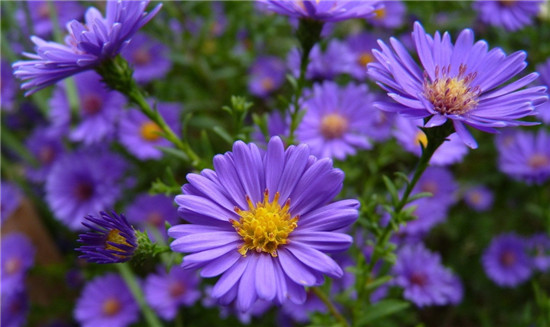
The daisy is a type of plant in the Asteraceae family, also known as changming ju or yanming ju. It is native to Europe, and the original species is regarded as a clump-forming weed. Its flowering period is in spring. The daisy is a perennial herbaceous plant. Daisies are deeply loved by Italians, and for this reason they were chosen as the national flower.
The daisy is a perennial herbaceous plant in the Asteraceae family. The daisy is also called gan ju or bai ju and can be used as a medicinal plant. It is often sown in autumn and grown as a biennial (in high-cold regions, sown in spring and grown as an annual). The plant height is 15-20 cm. The whole plant is hairy, and the leaves are clustered at the base of the stem, spoon-shaped or obovate, with blunt tips and toothed edges.
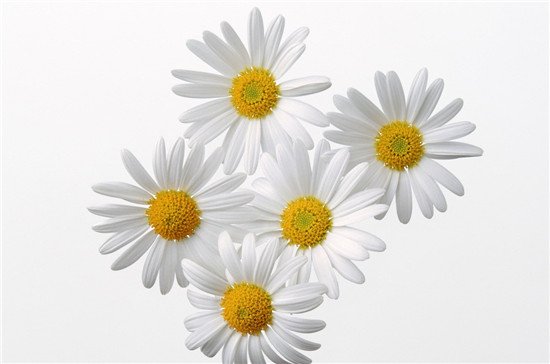
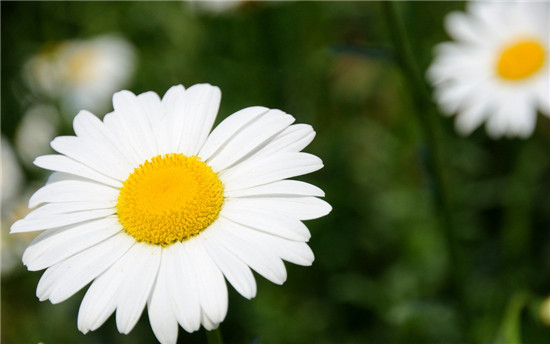
The flower stem of the daisy is 2.5 to 4 cm, the common peduncle is hairy, and the capitulum is solitary at the top of the flower stem. The inflorescence diameter is 3-5 cm. Daisy flowers can be white, pink, red, purple, or red-and-white mixed, with yellow tubular flowers. The seeds are very small and grayish-white. Usually, each plant produces around 10 flowers.
The flowering period of daisies is generally from March to June. However, in very few cases, depending on the sowing time, the flowering period can be in spring or summer. Daisies are usually cold-resistant and suitable for cool climates. Under hot conditions, flowering is poor and the plants easily wither and die. They can be sown and propagated in open-field seedbeds in mid-August or early September.
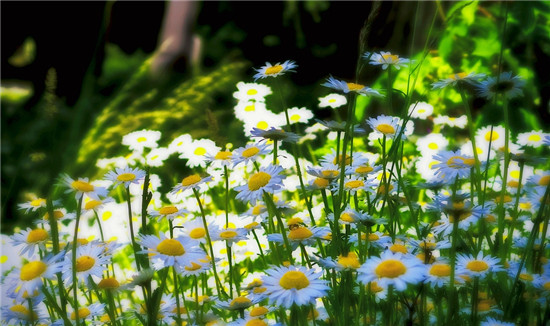
Daisies have excellent medicinal value. The daisy is also called gan ju or bai ju, and its medicinal value is very high. The cultivation history of daisies is very long, and their medicinal value ranks first among the four famous chrysanthemums. They also contain volatile oil, amino acids, and various trace elements. Among these, the brassica content is 32% to 61% higher than that of other chrysanthemums, and the tin content is even more exaggeratedly high, 8 to 50 times higher than that of other chrysanthemums. Agronomist Zhang Luxiang once wrote in his work Supplement to the Book of Agriculture: "White chrysanthemum is sweet and warm in nature, and taking it for a long time is most beneficial. The ancients ate the sprouts in spring, the flowers in summer, and the roots in winter, and there was a reason for this."
The care of daisies mainly requires pest and disease control and appropriate routine maintenance. The main daisy diseases include leaf blight, chrysanthemum longhorn beetle, cotton aphid, Qichao, cutworm, and green leafhopper. Pest and disease control should focus on prevention. Spraying targeted pesticides plus Xinguo lipid film can greatly increase the effective ingredient rate of pesticides. It is not afraid of evaporation under strong sunlight, can regulate water absorption, and prevents drought and rain damage. Carry out intertillage and weeding, watering, and fertilizing. After planting and seedling recovery, intertillage and weeding should be carried out to enhance soil permeability. After planting, it is suitable to water once every 7-10 days.
Fertilizing does not need to be too frequent. Apply dilute manure water once every 2-3 weeks, and carry out intertillage once a month. After flowering begins, stop fertilizing. Spray Xinguo lipid film to retain fertilizer and moisture. How can flowering be bright in color and fragrant? Spraying flower-strengthening stem agent during the bud stage can promote strong buds, larger petals, brighter flower color, richer fragrance, and a longer flowering period.
The flower language of the daisy is innocence, peace, hope, pure beauty, and love hidden deep in the heart.
Flowers generally have mythological backgrounds, and their origins and stories can be found in myths. The beautiful daisy is certainly the same.
According to myth, when the forest spirit Belides was playing happily with her lover in an orchard, she was discovered by the god of the orchard. While being chased, she transformed into the petite, delicate, and romantic daisy.
In the film Daisy:
For the painter Huiying, the daisy represents love in memory. This kind of love is more painful than love in waiting, because it has already become an eternal past.
For the assassin Park Yi, the daisy represents love that cannot be spoken. This kind of love, because it can never be confessed, appears even more earnest.
For the detective Zheng You, the daisy represents love that is realized too late. This kind of love is more sorrowful than never being able to meet again. Because it could originally have been very beautiful.
Perhaps the love represented by the daisy always carries a touch of sadness, just as written in Musset's poem:
I love, and say nothing, only watching you smile across from me.
I love, as long as I am aware in my heart, and I do not need to know what you think of me in your heart.
I cherish my secret, and I also cherish the faint sorrow, the sorrow that has never turned into pain.
I swear: I love, without harboring any hope, but it is not without happiness: as long as I can remember, that is happiness enough, even if I can no longer see you smiling across from me.
In Musset's writing, love without hope also becomes beautiful. Perhaps, in many people's lives, there has been such love, hidden in the heart, hidden in memory, hidden in happiness that will never change.
This is unrequited love.
Perhaps, when you have a secret crush on someone and do not want to confess, you can quietly give her or him a bunch of daisies, to commemorate that pure love.
The above is the full content of the detailed introduction to daisies and the complete guide to daisies that I have summarized for everyone. I hope this article can help everyone. Please also continue to follow us.
Perhaps, in many people's lives, there has been such love, hidden in the heart, hidden in memory, hidden in happiness that will never change.This is unrequited love.
Perhaps, when you have a secret crush on someone and do not want to confess, you can quietly give her or him a bunch of daisies, to commemorate that pure love.
The above is the full content of the detailed introduction to daisies and the complete guide to daisies that I have summarized for everyone. I hope this article can help everyone. Please also continue to follow us.