How to Grow Cuban Oregano? A Complete Guide to Cuban Oregano Cultivation Methods
Cuban oregano (scientific name: Plectranthus tomentosa), also known as velvet rosemary, is a subshrub-like perennial herbaceous plant. It is much branched, with the entire plant covered in fine white fuzz. The fleshy leaves are opposite and decussate, green, ovate, with bluntly serrated margins. The stems are slender and creeping, with many branches; the leaves are round and fuzzy, and the flowers are small and white. Because it releases a pleasant fragrance when touched, it enjoys the reputation of "touch-me fragrance," and because its scent is sweet and rich, much like the aroma of apples, it also enjoys the reputation of "apple scent." Smelling it is refreshing and invigorating, making it a market favorite. So, what are the cultivation methods for Cuban oregano?
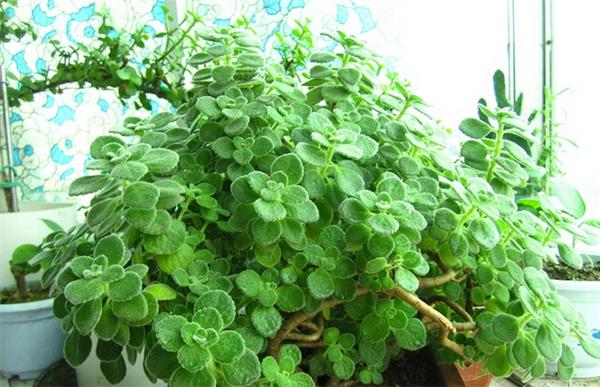
Cultivation Methods for Cuban Oregano:
1. Soil: Cuban oregano prefers loose, well-drained soil.
2. Sunlight: Cuban oregano prefers sunlight. Only in an environment with sufficient sunlight will its fleshy leaves be thick and full; with insufficient light, the leaves will become flat and thin.
3. Temperature: Cuban oregano is shade-tolerant and afraid of cold. It needs to be cultivated in a greenhouse. It is not tolerant of waterlogging and prefers warmth. It is not tolerant of cold, and in winter it needs a temperature of 5°C-10°C.
4. Watering: Cuban oregano is not tolerant of moisture, but if it is too wet, it easily suffers root rot and dies. The soil should be allowed to dry out between waterings. On cloudy days, watering and fertilizing should be reduced or stopped. After summer, be sure to water less, and in winter even more control watering. Generally, water only when the leaves have wilted; otherwise, it easily grows leggy.
5. Pruning: Because Cuban oregano branches very easily and grows along a horizontal plane, the plant and row spacing should be wide when planting so that the branches and leaves can spread out. Moderate pruning can promote branching and robust growth.
6. Fertilizing: It is not tolerant of heavy fertilizer; once a month during the growing season is enough. Phosphorus and potassium fertilizers should be the main type, with less nitrogen fertilizer applied.
Cuban oregano is a variety that is very easy to keep alive and has strong drought tolerance. Therefore, during cultivation, the principle of watering less should be followed. Once there is too much water, it will affect the plant's healthy growth, and in severe cases, root rot will occur. Since such an easy-to-grow Cuban oregano exists, is it toxic?
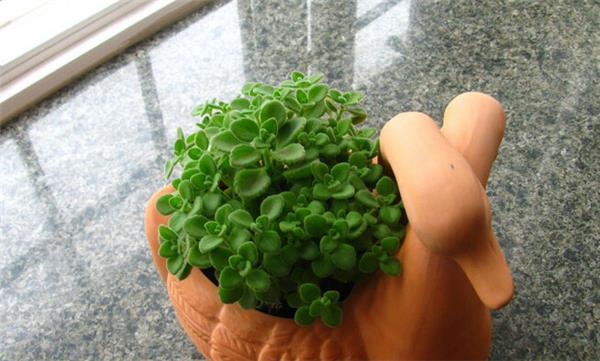
Is Cuban Oregano Toxic?
Cuban oregano is definitely not toxic, and it also has certain medicinal value: blended into juice and eaten raw with honey, it relieves sore throat; brewed as a tea, it can relieve stomach bloating; in our hometown, it is usually pounded and added to piping hot plain rice porridge, and after eating it, it has the effect of relieving stomach bloating.
Pregnant women can also keep Cuban oregano plants at home. The mint fragrance mixed with apple scent is quite refreshing. However, those who have allergic reactions to floral scents should not keep it.
To cultivate Cuban oregano, you must first understand its growth habits. Cuban oregano is a drought-tolerant herbaceous plant, but it is not tolerant of moisture; so the first point in cultivating Cuban oregano is to absolutely avoid wetness, otherwise it will cause root rot. The correct approach is to place Cuban oregano in a sunny spot and let it fully receive sunlight; another point is that Cuban oregano is rather afraid of cold, and below 5 degrees it is difficult for it to grow well.
Can Cuban Oregano Be Grown at Home with a Baby?
Yes, it can.
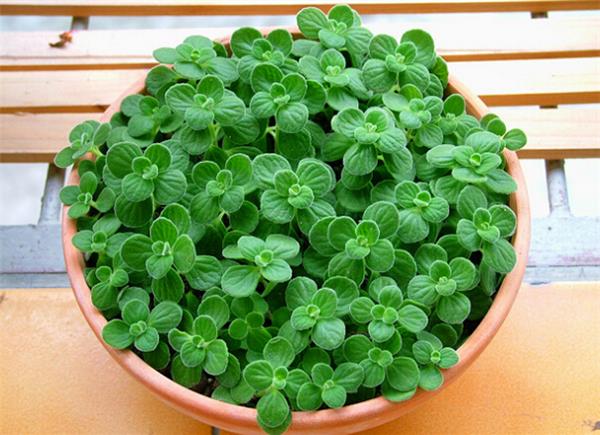
Cuban oregano is a herbaceous plant whose stems and branches are brown, while the tender stems are green and may even have a slight red tinge. The leaves are ovate or obovate, very smooth, with sparse teeth along the margins, and the petals are umbel-like. It is a perennial herbaceous plant, much branched, with the entire plant surrounded by fine white fuzz. It feels fuzzy and springy to the touch. The fleshy leaves are green, opposite and decussate, and ovate. Even if there is a baby at home, planting Cuban oregano is of no great concern, because experts have confirmed that Cuban oregano is non-toxic and harmless. However, when growing Cuban oregano at home with a baby, you still need to pay attention to the following:
1. Although the fragrance of Cuban oregano is non-toxic and harmless, it is unknown whether some babies will have an allergic reaction to this scent, so when growing Cuban oregano at home, pay close attention to the baby's reaction.
2. Cuban oregano is best placed out of the baby's reach, so that they do not accidentally eat it out of curiosity. However, even if eaten by mistake, it is not a big deal; Cuban oregano just has a rather strong taste.
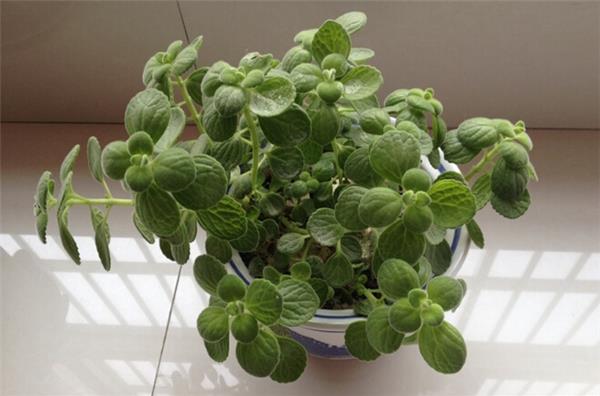
When you touch Cuban oregano, it automatically releases an apple-scented fragrance, very comfortable, giving an unforgettable sense of relaxation. It can also refresh the mind, clear heat and relieve summer heat, and reduce inflammation and swelling. Since Cuban oregano has such great value, why not grow a few more pots of Cuban oregano at home when there is a baby?
Cuban oregano is a plant in the genus Plectranthus (also known as the genus Isodon) of the Lamiaceae family. It is also called velvet rosemary and is a subshrub-like perennial herbaceous plant. It is much branched, with the entire plant covered in fine white fuzz. The fleshy leaves are opposite and decussate, green, ovate, with bluntly serrated margins. The stems are slender and creeping, with many branches; the leaves are round and fuzzy, and the flowers are small and white. Cuban oregano is a potted plant that gives off a faint fresh fragrance, generally used as an accent piece on indoor desks, tea tables, and the like. So, what uses does Cuban oregano have?
Cuban oregano, also known as velvet rosemary, is a subshrub-like perennial herbaceous plant. It is much branched, with the entire plant covered in fine white fuzz. The fleshy leaves are opposite and decussate, green, ovate, with bluntly serrated margins. Because it releases a pleasant fragrance when touched, it enjoys the reputation of "touch-me fragrance," and because its scent is sweet and rich, much like the aroma of apples, it also enjoys the reputation of "apple scent." Smelling it is refreshing and invigorating, making it a market favorite.
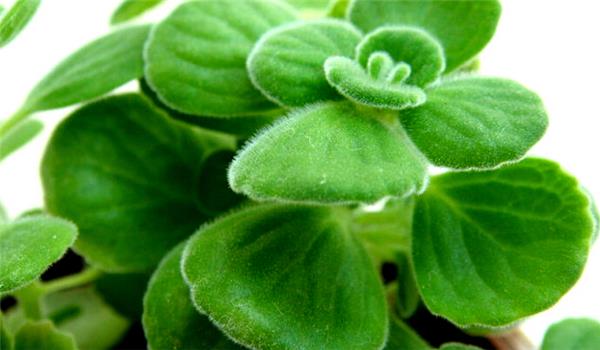
1. Suitable for potted ornamental display. Smelling it is refreshing and invigorating, making it a market favorite.
2. Or hung indoors, it is best placed in a high spot, and it can also serve as an accent piece for tea tables and desks. The leaves can be brewed in tea or wine, with a wonderfully enticing fragrance. They can also be used in cooking: soups, stir-fries, and cold dishes are all fine. It refreshes the mind, clears heat and relieves summer heat, and repels mosquitoes.
Cuban oregano is a relatively small potted flower and plant, generally placed on desks and other places at home. That is all for the introduction to Cuban oregano cultivation methods. We hope everyone has gained a better understanding of how to grow Cuban oregano.
The entire plant is covered in fine white fuzz. The fleshy leaves are opposite and decussate, green, ovate, with bluntly serrated margins. The stems are slender and creeping, with many branches; the leaves are round and fuzzy, and the flowers are small and white. Cuban oregano is a potted plant that gives off a faint fresh fragrance, generally used as an accent piece on indoor desks, tea tables, and the like. So, what uses does Cuban oregano have?Cuban oregano, also known as velvet rosemary, is a subshrub-like perennial herbaceous plant. It is much branched, with the entire plant covered in fine white fuzz. The fleshy leaves are opposite and decussate, green, ovate, with bluntly serrated margins. Because it releases a pleasant fragrance when touched, it enjoys the reputation of "touch-me fragrance," and because its scent is sweet and rich, much like the aroma of apples, it also enjoys the reputation of "apple scent." Smelling it is refreshing and invigorating, making it a market favorite.
1. Suitable for potted ornamental display. Smelling it is refreshing and invigorating, making it a market favorite.
2. Or hung indoors, it is best placed in a high spot, and it can also serve as an accent piece for tea tables and desks. The leaves can be brewed in tea or wine, with a wonderfully enticing fragrance. They can also be used in cooking: soups, stir-fries, and cold dishes are all fine. It refreshes the mind, clears heat and relieves summer heat, and repels mosquitoes.
Cuban oregano is a relatively small potted flower and plant, generally placed on desks and other places at home. That is all for the introduction to Cuban oregano cultivation methods. We hope everyone has gained a better understanding of how to grow Cuban oregano.