How to Grow a Jade Plant? A Detailed Guide to Four-Season Care
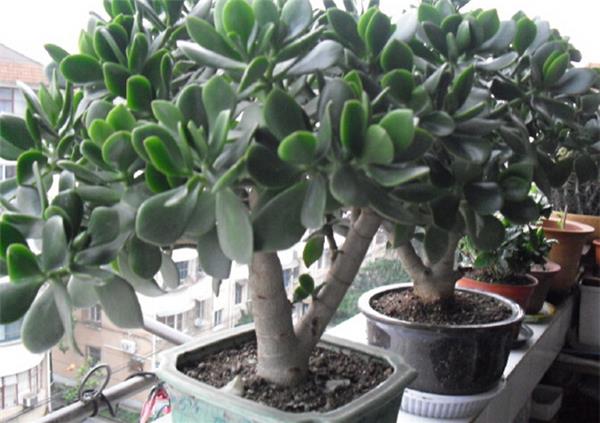
The jade plant (Crassula ovata) is also known as "Jing Tian". Its leaves are fleshy, oval and gray-green. There is also a cultivated variety with slender leaves (also called "Golden Branch and Jade Leaf"). It likes a warm, dry climate and plenty of light. The optimum growing temperature is 20-25°C. The jade plant has thick leaves and stays evergreen all year round. Depending on its size, it can be placed on a sunny bedroom windowsill or balcony. Because it releases oxygen at night, it is good for people and suitable for long-term placement in a bedroom. So how should a jade plant be grown?
Temperature for Growing a Jade Plant
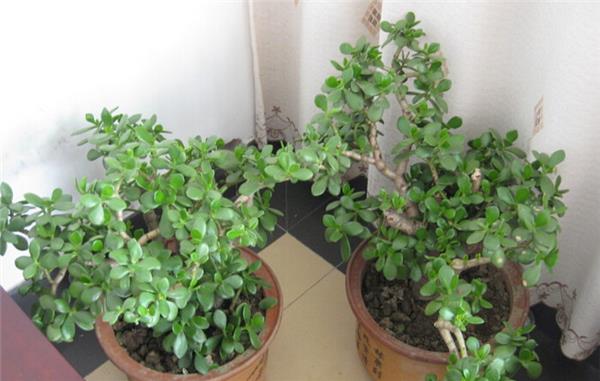
The suitable growing temperature for a jade plant is 20-30°C. Spring and autumn are the suitable growing seasons. In summer, when temperatures are high, it should be shaded or placed under tree shade to avoid direct strong sunlight. When the temperature exceeds 38°C, growth slows or the plant enters a brief dormancy. In winter, it should be moved into a greenhouse or placed in a sunny spot indoors, with the room temperature kept at 7-10°C, and never lower than 5°C. If it drops below 0°C, the plant will freeze and die. During the growing season, apart from needing shade during the hot summer, it should always be placed in a spot with plenty of sunlight.
Humidity for Growing a Jade Plant
During the growing season, water the jade plant once every 2-3 days, but do not let the potting soil become too wet, and especially do not let water accumulate. In the hot summer, watering must be strictly controlled and ventilation increased, otherwise leaf drop is likely. In winter, watering should be reduced, and the potting soil is best kept slightly dry. After autumn begins, watering should be gradually reduced. When grown outdoors, avoid heavy rain beating down on it, otherwise too much water will accumulate at the roots and easily cause root rot and death.
Fertilizing a Jade Plant
During the growing season, apply topdressing, generally 2-3 times a month with thin, well-rotted cake fertilizer liquid. When repotting or before planting, apply enough base fertilizer; well-rotted organic fertilizers such as chicken manure, pigeon manure, bone meal, human excrement and urine, and various cake fertilizers can all be mixed into the potting soil as base fertilizer. To keep the plant full and compact, do not use too much fertilizer or water, so as to avoid leggy growth.
Propagating a Jade Plant
Jade plants are commonly propagated by cuttings. During the growing season, cut a plump, solid tip stem 8-10 cm long, let it dry slightly, then insert it into a sand bed; it will root in about 3 weeks after insertion. Single-leaf cuttings can also be used; after cutting the leaf, wait for it to dry, then insert it into a sand bed. It will root in about 4 weeks after insertion, and when the roots are 2-3 cm long, pot it up.
Pruning a Jade Plant
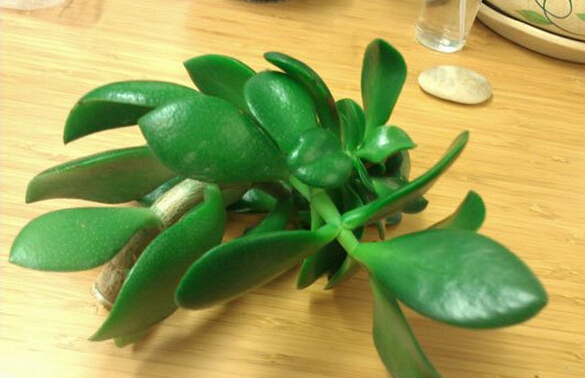
Jade plants can be pruned according to personal preference. If you prefer a round, full canopy, cut off leggy branches and branches that are too overlapping and crowded when pruning, so that the outer canopy is full and round and the inner branches are properly spaced. If the plant is old, with a thick old trunk and a canopy that is not very round, it can be pruned or styled as a stump bonsai, cutting off some branches and leaves as needed for the shape. Jade plants are very easy to grow; the main things are more sunlight and not watering too much.
Pest and Disease Control for Jade Plants
When overwatered, root rot is easily triggered, and the leaves will also turn yellow and even develop gray mold spots and rot. Pay attention to ventilation and drainage, and if necessary, spray carbendazim wettable powder for control. In addition, mealybugs can also harm the leaves, forming white waxy powder. Remove the infested leaves promptly to prevent them from spreading.
The jade plant has thick branches and leaves, is green all year round, has unusual leaf shapes and a dignified plant form, is easy to grow and simple to care for. It is suitable for pot culture and can be placed on a balcony or as an accent on an indoor table, appearing very elegant and refined. Its canopy is upright and beautiful, its stems and leaves are green, and its white flowers are borne at the tips, very elegant and distinctive. As the saying goes: the sago palm blooms once in a thousand years, the jade plant once in ten thousand years. In folk custom, "the jade plant blooming" is often regarded as an auspicious sign. Although the jade plant is extremely easy to keep alive and can even be propagated from a single leaf, blooming is rare; it will only bloom when climate, nutrients, management and all other aspects have reached certain conditions. So how can you make a jade plant bloom?
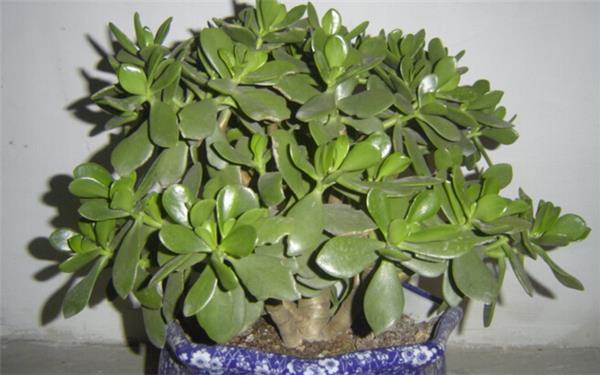
1. It likes light, so place it in a warm environment with plenty of light all year round; this is the key to blooming.
2. The jade plant is a fleshy, succulent plant and is very drought-tolerant. Normally it should not be watered too much; water only when dry and let it dry out before watering again.
3. In the hot summer season, be careful to avoid sudden heavy watering after exposure to the sun, which can cause leaf drop.
4. During the growing season, apply a thin liquid fertilizer containing nitrogen, phosphorus and potassium once every 7-10 days, and never make it too concentrated. If the above points are followed, by mid-to-late November flower buds can appear at the leaf tips, and from January to March the tree will be covered with flowers.
Four-Season Care Methods for Growing a Jade Plant
(1) Spring Care
Seedlings grow relatively fast; repot once a year, while established plants are repotted once every 2-3 years. Repot when the spring temperature is stable above 10°C. Stop watering for several days before repotting, so that the potting soil dries and the plant can be removed from the pot. Because its branches and leaves are rich in water and break easily, handle it gently to avoid breaking the plant. After removing it from the pot, prune off dead roots and broken roots, let it dry for 1-2 days, then plant it. After planting, place it in partial shade and do not water for the time being; after 2-3 days, water lightly and keep the potting soil on the dry side.
Jade plant cultivation and care are simple; controlling the moisture in the potting soil and ensuring sufficient light are the keys. The jade plant likes a sunny and well-ventilated environment and should not be grown together with other plants that like humid air.
(2) Summer Care
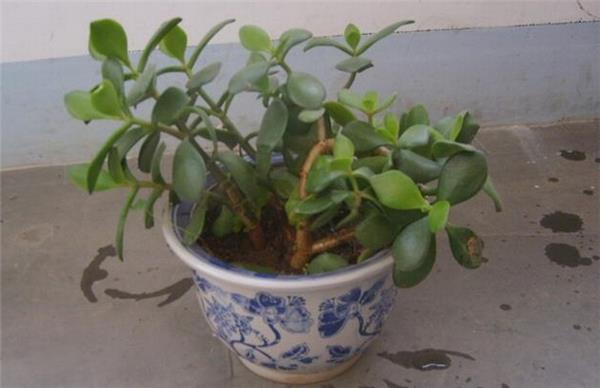
The jade plant likes strong light. When summer temperatures are not high, it does not need shading; just maintain an appropriate water supply. When placed indoors, it should receive some light and the room should be ventilated. When summer temperatures are relatively high (above 35°C), growth comes to a standstill, so pay attention to controlling water to prevent root rot from too much water at high temperatures, and at the same time shade it from the light around midday and stop fertilizing. After the temperature cools at the end of summer, fertilizing can resume.
(3) Autumn Care
In autumn, it should be placed in a spot with plenty of light. Water after the potting soil has dried out; as the weather gradually turns cooler, gradually reduce the amount of watering and stop fertilizing, so that the potting soil is dry but not parched. When the temperature drops to around 5°C, it should promptly be moved into a closed balcony or room with light.
(4) Winter Care
The jade plant is not cold-tolerant; in winter the indoor temperature should be kept above 5°C. At this time growth comes to a standstill. Potted plants should be placed on a windowsill with plenty of light or inside a closed balcony, care should be taken to control water so that the potting soil is dry but not parched, and no fertilizer should be applied.
Summary: I believe that after reading the above, everyone should have some understanding of the cultivation methods and precautions for jade plants, and I hope it will be helpful for growing them well.
(2) Summer Care
The jade plant likes strong light. When summer temperatures are not high, it does not need shading; just maintain an appropriate water supply. When placed indoors, it should receive some light and the room should be ventilated. When summer temperatures are relatively high (above 35°C), growth comes to a standstill, so pay attention to controlling water to prevent root rot from too much water at high temperatures, and at the same time shade it from the light around midday and stop fertilizing. After the temperature cools at the end of summer, fertilizing can resume.
(3) Autumn Care
In autumn, it should be placed in a spot with plenty of light. Water after the potting soil has dried out; as the weather gradually turns cooler, gradually reduce the amount of watering and stop fertilizing, so that the potting soil is dry but not parched. When the temperature drops to around 5°C, it should promptly be moved into a closed balcony or room with light.
(4) Winter Care
The jade plant is not cold-tolerant; in winter the indoor temperature should be kept above 5°C. At this time growth comes to a standstill. Potted plants should be placed on a windowsill with plenty of light or inside a closed balcony, care should be taken to control water so that the potting soil is dry but not parched, and no fertilizer should be applied.
Summary: I believe that after reading the above, everyone should have some understanding of the cultivation methods and precautions for jade plants, and I hope it will be helpful for growing them well.