How to care for bromeliads? A full breakdown of care methods and points to note
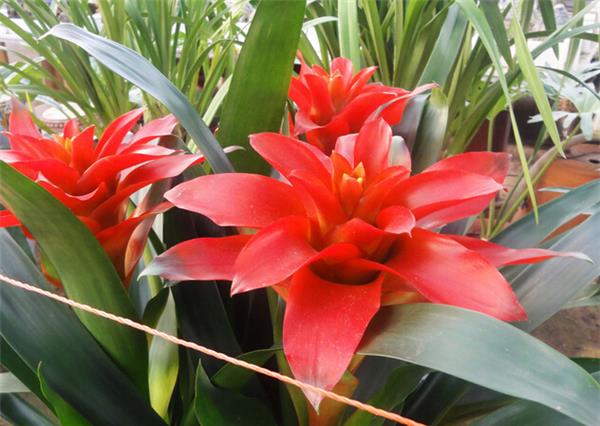
If you have ever seen a bromeliad, you will immediately understand where its name comes from: as you can see, its petals and leaves look very much like those of a pineapple, and its flowers are brilliant and its patterns gorgeous and mesmerizing. Beyond its appearance, it can also purify indoor air, filling the home with green vitality while living up to its flower meaning - perfection. Such a wonderful flower is, of course, also easy to grow. Below we introduce the cultivation methods for bromeliads.
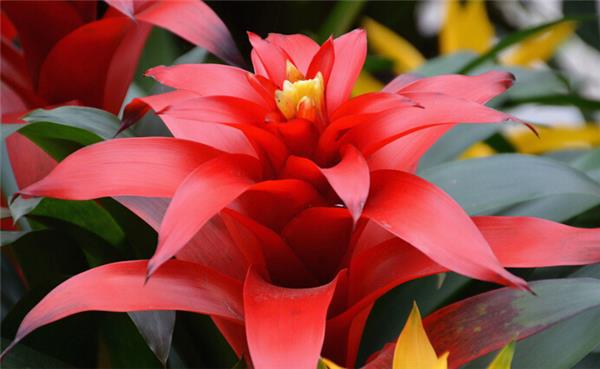
Cultivation methods for bromeliads
Light:
Bromeliads of different genera tolerate different levels of light. Some can withstand full tropical sunlight, while others may scorch quickly. In general, however, bromeliads prefer plenty of light on a bright windowsill rather than direct sunlight. A south, west or east window is often perfect. Yellow plants may be receiving too much light, while plants that are dark green or elongated may be receiving too little light.
Temperature:
Bromeliads tolerate a very wide temperature range, but remember that plants in hot conditions will need more humidity. Ideally, bromeliads prefer temperatures between 55 degrees and 80 degrees, and they should not be exposed to temperatures below 40 degrees.
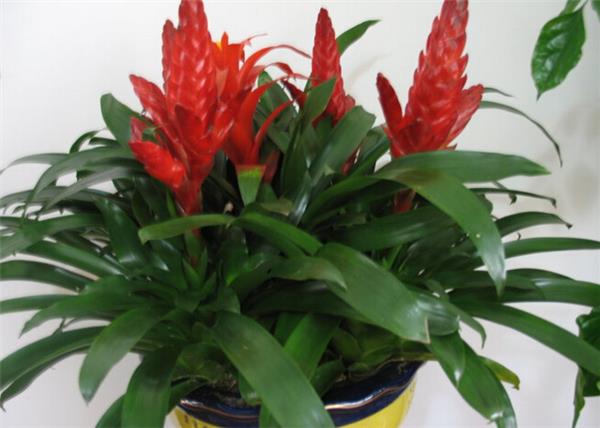
Water:
Bromeliads are highly resistant to drought conditions. In a normal house, it is not necessary to keep the central cup filled with water, but if light intensity, temperature and humidity are high enough, this is an option. If you do keep water in the central cup of a bromeliad, make sure to flush the central cup every so often to remove any built-up salts. In general, however, it is enough to water these plants through the soil once a week during the growing season and reduce watering during the winter rest period. When waterlogged, do not let your plant sit in it.
Potting soil:
Although they are epiphytes, bromeliads can grow in a fast-draining potting soil. A mixture of 2/3 peat soil and 1/3 sand is one of the best approaches. Bromeliads can also grow when planted in other soils. These plants need frequent watering.
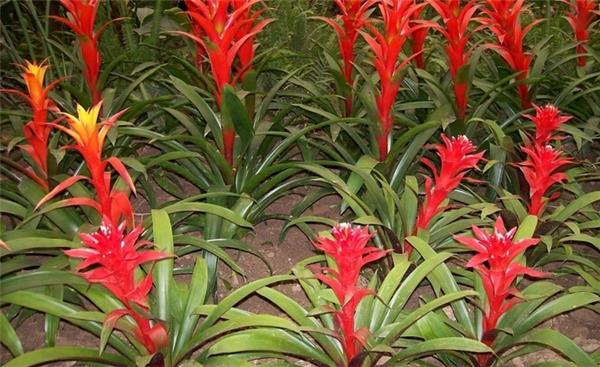
Fertilizer:
Bromeliads. Throughout the growing season, use liquid fertilizer at 1/2 or 1/4 strength. If you use slow-release granular fertilizer and water the central cup, a single granule falling into the cup once a season is enough. Slow-release granules can also be mixed into the soil as compost.
Propagating bromeliads
Bromeliads reproduce by sending out offsets, or pups. During its natural growth cycle, a mature plant will send up a flower spike, including small, sometimes even insignificant flowers, surrounded by showy bracts (this is true, and these are the bromeliad bracts people love). The flower bracts are often long-lasting, sometimes for several months. After flowering the plant dies, and the plant also begins to die and will decline over the following months.
Bromeliads are highly ornamental plants. Bromeliads are mostly sky blue or light purplish red in growth habit. Bromeliads like at least 3 hours or more of full sunlight each day, but also tolerate partial shade. In summer they prefer cool, ventilated conditions, and can also tolerate slightly dry climates. So what are the things flower lovers should know about bromeliads?
What flower lovers should know: the bromeliad is an ornamental flower. Although it is a perennial herb, in most cases after flower lovers buy one and bring it home, especially large bromeliad plants, the leaves will slowly turn yellow and withered after the flowering period, which is a symptom of dying. Some flower lovers rush to try to save it, but this is useless, because a bromeliad flowers only once in its lifetime. If you want it to bloom again, you need to propagate new small bromeliads, and this cycle is very long, and it is difficult for a home to provide the high-temperature, high-humidity environment, so in many cases bromeliads can be described as one-time flowers: buy them during the flowering period, and throw them away when the flowering period ends.
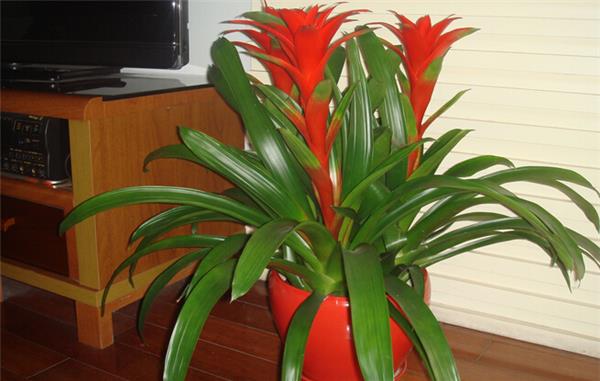
For dedicated flower lovers: after flowering, a bromeliad will grow one to several offset buds at the base of the old plant. At this point it is not suitable to divide them too early. Otherwise they will not easily survive. The division method is: first cut off the flower stem from the base, then leave 5-8 cm of the old plant's leaves and remove all the rest. The base of the remaining leaves just happens to form a tube that can hold water. When cutting, be very careful not to damage the small buds. When the buds are about 10 cm tall, use a sharp knife to gently cut at the connection point between the bud and the mother plant, plant the small buds into potting soil made with leaf mold, and after careful care for one year, they can once again produce brilliant flowers.
Bromeliads are mainly ornamental flowers. In many places, they are seen as representing perfection and good luck, among which Guzmania, meaning "fortune arriving," is the most popular and most representative. What they can express in home decoration cannot be replaced by many plants, being both subtle and comfortable. For example, among the more famous ones, Neoregelia is best known as a potted plant, with beautiful flower form and bright leaves, and is regarded as a premium bromeliad for its fresh and elegant look. Of course, common ones also include billbergia and nidularium. So, are bromeliads toxic?
Of course, as green plants, bromeliads also have landscaping value and purify the air. Many people call the varieties of bromeliads with very strong purifying functions air plants. This is because they can reduce the formaldehyde content in a newly decorated house by 80%, making them not only practical but also beautiful.
Bromeliads are subtropical plants. Like datura flowers, they form a certain toxicity within their bodies to protect themselves. In modern medicine, the ingredients of many anesthetics are extracted from bromeliads. Moreover, the substances formed by long-term photosynthesis, if inhaled in excess without prolonged ventilation, can cause discomfort, such as hallucinations and partial paralysis. So even if you grow them, place them in a well-ventilated spot.
The above is the introduction brought to you by the editor on bromeliad cultivation methods and points to note for bromeliads. We hope it has helped everyone.
Plant the small buds into potting soil made with leaf mold, and after careful care for one year, they can once again produce brilliant flowers.Bromeliads are mainly ornamental flowers. In many places, they are seen as representing perfection and good luck, among which Guzmania, meaning "fortune arriving," is the most popular and most representative. What they can express in home decoration cannot be replaced by many plants, being both subtle and comfortable. For example, among the more famous ones, Neoregelia is best known as a potted plant, with beautiful flower form and bright leaves, and is regarded as a premium bromeliad for its fresh and elegant look. Of course, common ones also include billbergia and nidularium. So, are bromeliads toxic?
Of course, as green plants, bromeliads also have landscaping value and purify the air. Many people call the varieties of bromeliads with very strong purifying functions air plants. This is because they can reduce the formaldehyde content in a newly decorated house by 80%, making them not only practical but also beautiful.
Bromeliads are subtropical plants. Like datura flowers, they form a certain toxicity within their bodies to protect themselves. In modern medicine, the ingredients of many anesthetics are extracted from bromeliads. Moreover, the substances formed by long-term photosynthesis, if inhaled in excess without prolonged ventilation, can cause discomfort, such as hallucinations and partial paralysis. So even if you grow them, place them in a well-ventilated spot.
The above is the introduction brought to you by the editor on bromeliad cultivation methods and points to note for bromeliads. We hope it has helped everyone.