How to Master the Cultivation Methods of the Night-Blooming Cereus and What Are Its Uses
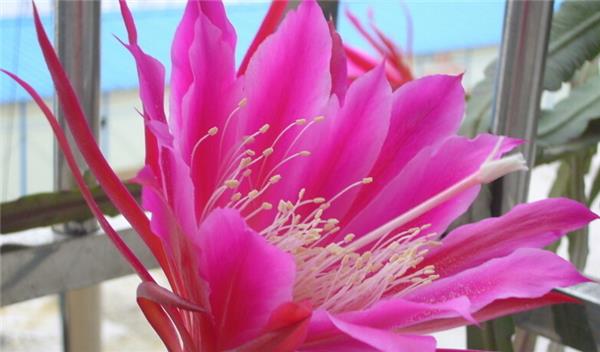
The night-blooming cereus (Epiphyllum oxypetalum) originated in Mexico. It is a shrub-like plant with a cylindrical, woody main stem; its branches are flat and leaf-like, mostly with 2 ridges and occasionally 3 wings, with wavy rounded teeth along the edges. Young branches have bristle-like spines, while old branches are spineless. It prefers a warm, humid, and semi-shaded environment, is not tolerant of frost, and dislikes intense direct sunlight. So, what are the cultivation methods for the night-blooming cereus?
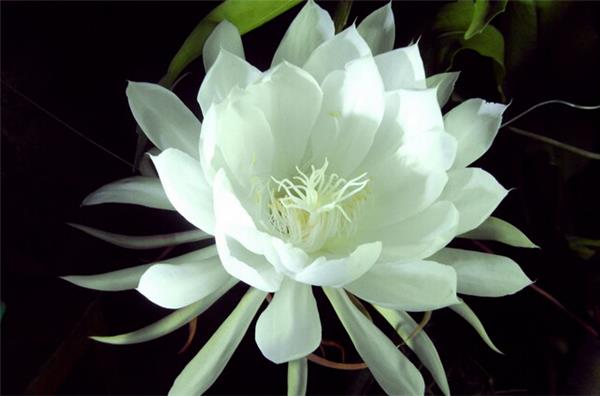
Cultivation methods for the night-blooming cereus:
1. Soil: The night-blooming cereus has low soil requirements. For potted plants, a mix of 2 parts peat soil, 1 part coarse sand, and 1 part furnace slag can be used. The potting soil should not be too wet.
2. Sunlight: The night-blooming cereus prefers semi-shade. In spring and autumn, place it outdoors in a semi-shaded spot to prevent direct sunlight. In summer, it is best kept indoors in a bright, well-ventilated place, or on a north-facing balcony or under the shade of a large tree, but avoid intense direct sunlight, otherwise the modified stems will easily turn yellow and wilt, reducing its ornamental value.
3. Temperature: The night-blooming cereus likes a warm, humid, and semi-shaded environment, so attention must be paid to temperature. From March to September, it should be kept at 13-19°C; from September to December, maintain 12-18°C; from December to March of the following year, keep it at 10-16°C. In particular, the temperature in winter must not fall below 0°C. In northern regions, potted plants can generally be moved indoors for overwintering in early to mid-October. During overwintering, place them in a sunny spot and keep the room temperature at around 10°C, control watering, and just keep the potting soil from becoming excessively dry.
4. Watering: In spring and autumn, water the night-blooming cereus by the principle of watering when dry and letting it dry between waterings. In summer, water slightly more, but do not let water accumulate in the pot, otherwise the roots will easily rot. In dry, hot weather, spray the plant with clean water once in the morning and once in the evening each day to increase air humidity and promote growth and flowering.
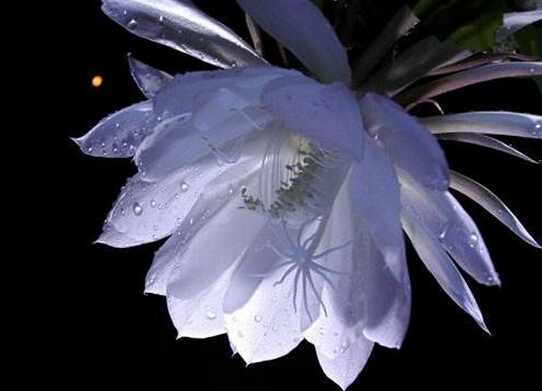
5. Fertilizing: The night-blooming cereus is quite fond of fertilizer and has relatively high nutrient requirements. Well-rotted organic fertilizer is best, with a small amount of bone meal or superphosphate added. During the growing season, apply a dilute cake fertilizer solution about once every half month. If a small amount of rice vinegar or ferrous sulfate is added to the liquid fertilizer, growth will be even better. After buds appear, apply 1-2 additional doses of 0.2% potassium dihydrogen phosphate, and the flowers will be larger and more vividly colored. After the flowers fade, apply 1-2 more doses of liquid fertilizer to benefit flowering the following year.
The night-blooming cereus is one of people's favorite flowers. Its blooming period is very short, yet it has a holy charm and its own unique appeal. Its cultivation methods are not troublesome either, so if you have a special fondness for the night-blooming cereus, you might consider growing one.
Beautiful flowers are always so attractive. The value of the night-blooming cereus lies in its beauty, and even more in its rarity. If you want to admire the brief blooming of the night-blooming cereus, you must cultivate it carefully. Placing a few pots of flowers and plants in the home can beautify the environment, add pleasure, and also regulate air quality, benefiting our health. What role can the night-blooming cereus play in our lives?
1. The night-blooming cereus can absorb carbon dioxide and release oxygen at night. Although ordinary flowers can purify the air, they only do so during the day. When night falls, they become like the human body, absorbing oxygen and exhaling carbon dioxide. Therefore, if too many such flowers are placed indoors, they will compete with people for oxygen, affecting people's health. The night-blooming cereus is exactly the opposite. It is a common plant with CAM metabolism. It closes the stomata on the underside of its leaves during the day, and at night, after the surrounding temperature drops to an appropriate level, it opens the stomata on the underside of its leaves, releasing oxygen and absorbing carbon dioxide.
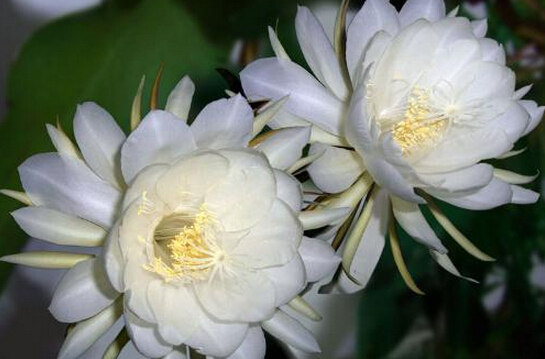
2. The night-blooming cereus can increase the negative ion content indoors. When it blooms, it is beautiful and noble, with a fragrance that fills the air, and it has always been a beautiful flower favored by people. Not only that, it can release negative ions, making the indoor air fresh and pleasant. Negative ions can be called the vitamins of the air. If the negative ion content in a room decreases, people will feel suffocated and short of breath. Therefore, the night-blooming cereus, which can increase the concentration of negative ions in the air, is truly a rare, beautiful, and beneficial flower.
3. The night-blooming cereus is a flower of the cactus family. Through people's sense of sight and smell, it can lower blood pressure, stabilize mood, and bring many benefits to human health. Its scent has the ability to kill and inhibit bacteria, filling the home environment with a healthy atmosphere.
As people's living standards improve, growing flowers has become an important part of life. Placing a night-blooming cereus in the home can beautify the environment, purify the air, and enrich people's daily lives. What are you still hesitating about? What exactly are the feng shui applications of the night-blooming cereus?
Growing flowers fills our lives with color and makes them more beautiful. But when growing flowers, attention should also be paid to feng shui. The night-blooming cereus also has its own role in feng shui.
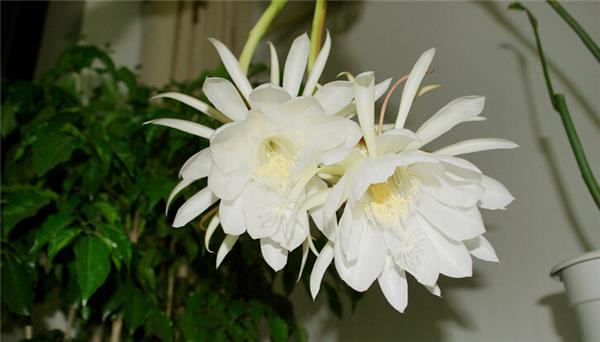
1. Placing the night-blooming cereus on the balcony. Plants are divided into the five elements, and we can cultivate flowers and plants according to these five elements. For balconies, growing flowers has become a very common practice. Depending on the orientation of the balcony, we can choose to place the night-blooming cereus on a south-facing balcony. This is because a south-facing balcony is the Li position in the bagua directions. It faces the sun, has ample sunlight, and very good air circulation. The night-blooming cereus, which belongs to metal within water, can be grown here, together with plants belonging to fire and wood, such as gladiolus and Aglaia odorata, to form a plant energy field. This is beneficial for regulating the heart and gastrointestinal health of family members, and can even correct certain personality problems in some household members, such as being introverted, timid, and lacking self-confidence.
2. Placing the night-blooming cereus at the window. If, looking out from the window or balcony, there are objects opposite that produce sha qi, plants of the cactus family can be chosen to dissolve the sha. Although cactus family plants have this effect, some people prefer elegant plants with beautiful flowers and fragrance, and have little interest in ordinary cacti. In that case, the night-blooming cereus is very suitable. It belongs to metal within water, with metal within water; while dissolving sha, it can also beautify the home.
3. If the five elements and feng shui are subdivided according to the hours of the day, it can be seen that during the Hai hour, that is, between 9 p.m. and 11 p.m., which is the time when people rest, according to the principles of plant feng shui, a biological field belonging to metal and water should be arranged. The night-blooming cereus belongs to metal within water and can also absorb carbon dioxide and release oxygen at night, making it exactly a good component of such an energy field.
The five elements of plants can interact with the human body and bring good fortune to our lives. The night-blooming cereus is just such a plant. So, how can the night-blooming cereus be made to bloom during the day?
The night-blooming cereus generally blooms between 9 p.m. and 12 a.m., and withers after 4-5 hours, hence the saying "a fleeting glimpse of the night-blooming cereus."
Horticultural workers have now, through research, found a way to change the living habits of the night-blooming cereus and make it bloom during the day. The specific method is: when the flower buds swell, move the plant into a dark room during the day, carefully carry out light-blocking treatment, and completely isolate it from light. From the evening of the next day, expose it to strong light. After such reversed treatment, after about 10 days, the night-blooming cereus can bloom during the day, and the flowering period is noticeably extended.
The above is what the editor has introduced about the cultivation methods and uses of the night-blooming cereus. We hope it can help everyone.
1. Placing the night-blooming cereus on the balcony. Plants are divided into the five elements, and we can cultivate flowers and plants according to these five elements. For balconies, growing flowers has become a very common practice. Depending on the orientation of the balcony, we can choose to place the night-blooming cereus on a south-facing balcony. This is because a south-facing balcony is the Li position in the bagua directions. It faces the sun, has ample sunlight, and very good air circulation. The night-blooming cereus, which belongs to metal within water, can be grown here, together with plants belonging to fire and wood, such as gladiolus and Aglaia odorata, to form a plant energy field. This is beneficial for regulating the heart and gastrointestinal health of family members, and can even correct certain personality problems in some household members, such as being introverted, timid, and lacking self-confidence.
2. Placing the night-blooming cereus at the window. If, looking out from the window or balcony, there are objects opposite that produce sha qi, plants of the cactus family can be chosen to dissolve the sha. Although cactus family plants have this effect, some people prefer elegant plants with beautiful flowers and fragrance, and have little interest in ordinary cacti. In that case, the night-blooming cereus is very suitable. It belongs to metal within water, with metal within water; while dissolving sha, it can also beautify the home.
3. If the five elements and feng shui are subdivided according to the hours of the day, it can be seen that during the Hai hour, that is, between 9 p.m. and 11 p.m., which is the time when people rest, according to the principles of plant feng shui, a biological field belonging to metal and water should be arranged. The night-blooming cereus belongs to metal within water and can also absorb carbon dioxide and release oxygen at night, making it exactly a good component of such an energy field.
The five elements of plants can interact with the human body and bring good fortune to our lives. The night-blooming cereus is just such a plant. So, how can the night-blooming cereus be made to bloom during the day?
The night-blooming cereus generally blooms between 9 p.m. and 12 a.m., and withers after 4-5 hours, hence the saying "a fleeting glimpse of the night-blooming cereus."
Horticultural workers have now, through research, found a way to change the living habits of the night-blooming cereus and make it bloom during the day. The specific method is: when the flower buds swell, move the plant into a dark room during the day, carefully carry out light-blocking treatment, and completely isolate it from light. From the evening of the next day, expose it to strong light. After such reversed treatment, after about 10 days, the night-blooming cereus can bloom during the day, and the flowering period is noticeably extended.
The above is what the editor has introduced about the cultivation methods and uses of the night-blooming cereus. We hope it can help everyone.