How to Grow Phalaenopsis Orchids: A Detailed Guide to Care Methods and Precautions
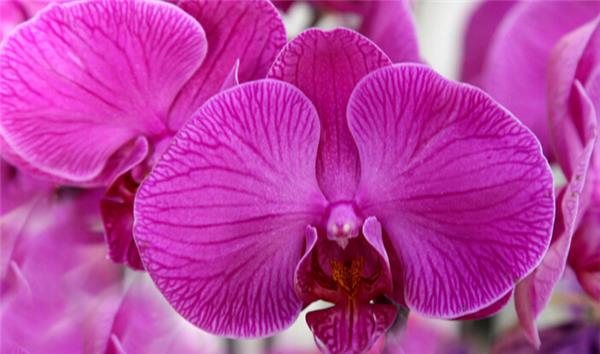
Phalaenopsis (moth orchid) is one of the plants suited to indoor cultivation. Its flowers resemble butterflies, elegant and refined, and it enjoys the reputation of "Queen of Orchids." However, most Phalaenopsis orchids originate from humid Asia, which determines their growth characteristics: they must have ventilation, air permeability, moderate temperatures, and high humidity. This kind of environment can be called the perfect setting for growing Phalaenopsis. So how do you grow Phalaenopsis orchids?
1. The care of Phalaenopsis is divided into two stages: early-stage management and late-stage management.
At each different period, you need to adjust the care temperature and moisture properly and pay attention to pest control. For example, during the flowering period of late-stage care, water and fertilizer management is especially important.
2. During care, focus on the following issues.
1. Watering too frequently can cause root rot. Friends who grow Phalaenopsis always worry that the orchid lacks water, so they water it every day regardless of whether the growing medium is dry, causing severe root rot.
2. Maintain an appropriate temperature and do not let the temperature get too low. Usually, flowering Phalaenopsis plants are mostly marketed in early spring, and after being bought and taken home they are generally placed in places such as the living room for appreciation. Although the daytime temperature in these places is adequate, the nighttime temperature is somewhat on the low side. On the other hand, professionally cultivated orchids are mostly kept in well-equipped greenhouses. By comparison, the temperature and humidity at home are somewhat insufficient, so the plants tend to weaken day by day. Therefore, sometimes no matter how well they are cared for, the orchids still may not bloom.
3. Disease prevention. Phalaenopsis mainly has the following diseases, which we should pay special attention to.
1. Bacterial brown spot is the most serious disease of Phalaenopsis. The symptom is brown spots appearing on the leaves. They are oily or heart-shaped, surrounded by yellow halos. Treatment methods include adjusting the nitrogen level in the fertilizer solution, removing diseased plants, and maintaining stable relative humidity. Chemical agents have no effect on this disease. Only by using plants in good growing condition and healthy plants can this bacterial problem be avoided.
2. Mold. Too much variation in the moisture in the medium or an unsuitable EC value can cause root damage, which in turn prompts mold to attack the tissue. The way to deal with it is to lower the EC value of the irrigation water and temporarily reduce the moisture content of the medium.
Phalaenopsis has a beautiful face and stands out among many plants; decorating a home with it will add a touch of purple to the house. Whether a house is full of vitality or not, color is very important. So what exactly are the cultivation methods for Phalaenopsis?
1. Seed propagation method for Phalaenopsis
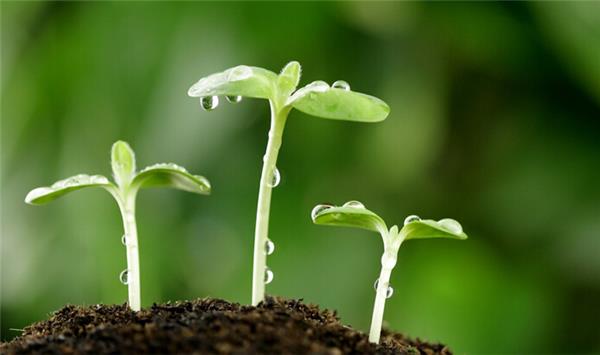
Seed propagation is currently a commonly used method in the commercial production of Phalaenopsis. Seedlings grown from seed are called seedling plants. Phalaenopsis must undergo artificial pollination to obtain seeds, but its seeds are underdeveloped, have no endosperm, and have only an extremely thin seed coat, so sowing under natural conditions is not easy to succeed.
There are 2 ways for orchid plants to germinate in sterile seeding. One is the protocorm method. At the initial stage of seed germination, white spherical protocorms are formed. As the protocorms increase in volume, hairy rhizoids appear on them, and then the protocorms turn green, but the protocorms do not elongate; buds sprout from the tips of the protocorms. Generally, protocorms can differentiate into seedlings. Epiphytic orchids germinate in this way; the seeds of Phalaenopsis, Cattleya, and Cymbidium all germinate by the protocorm method. The other is the rhizome method. When its seeds germinate, they also initially appear as white spheres, but they quickly elongate into long columnar shapes, forming rhizomes. Then, clusters of root-hair-like rhizoids grow at intervals on the surface of the rhizomes. Only on differentiation medium can the terminal buds of the rhizomes grow seedlings, but the differentiation rate into seedlings is extremely low. Terrestrial orchids germinate in this way.
2. Peduncle bud induction propagation method
Phalaenopsis belongs to the monopodial type of orchids. Under normal circumstances, it has only one growing point in its lifetime, that is, only one main stem. However, in many varieties of Phalaenopsis, after the flowers fade, small plantlets with roots can often grow from the internodes of the flower stalk. Cutting them off and planting them separately allows them to grow into a new Phalaenopsis plant. This propagation method for Phalaenopsis is the simplest and easiest under ordinary home growing conditions, but not every orchid plant's flower stalk will naturally produce stalk plantlets. Using artificial bud induction methods can ensure that the flower stalk of Phalaenopsis produces stalk plantlets.
3. Crown-cutting bud induction propagation method
During the cultivation of Phalaenopsis, we can find that after the growing point of an orchid plant is damaged due to freezing injury, insect pests, diseases, or human factors, after a period of time, 1 to 2 new shoots will grow from the stem nodes near the base of the orchid plant. Using this characteristic, we can use the crown-cutting bud induction method to propagate Phalaenopsis, but the propagation coefficient of this method is not high. The specific operation method is: remove the highest central leaf at the top of the stem, taking care to destroy the stem-tip growing point so that it cannot grow upward; let the wound dry or apply fungicide to disinfect and sterilize it, and after a period of time, 2 to 3 new shoots can grow from the stem nodes near the base; when the new shoots have grown larger and roots have emerged from the base, they can be cut off and planted separately, becoming a new plant.
4. Stem-cutting propagation method
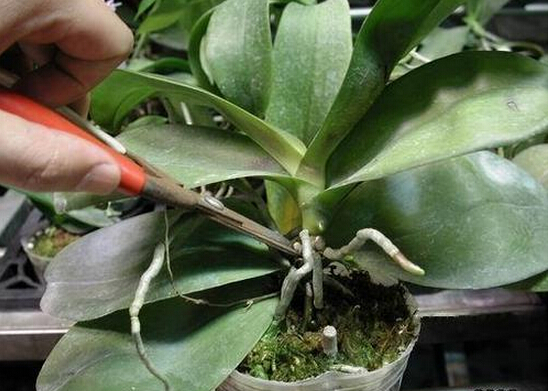
The principle of the stem-cutting propagation method is the same as that of the crown-cutting bud induction propagation method: it also destroys the stem-tip growing point to induce dormant buds to grow. Although there are 1 to 3 dormant buds in the leaf axils of a Phalaenopsis plant, most of them cannot sprout into plants. You can wait until the plant has continuously grown upward and the stem nodes are relatively long, then cut off the upper part of the plant with roots using a sterilized sharp blade or scissors, and plant it in a new pot so it continues to grow. The lower part with the rhizome left behind is given proper water management, and before long 1 to 3 new shoots can sprout (depending on the plant's own characteristics and the management method). If the plant's stem is relatively long, you may also consider cutting it into multiple sections. As long as each section has 2 to 3 internodes or is more than 2 to 3 cm long and has more than one root, it may grow into a new plant. However, if the plant's rhizome and roots have all dried up and died, this method is ineffective.
5. Tissue culture propagation method
Tissue culture asexual propagation is also called meristem propagation. Explants of Phalaenopsis such as stem tips, leaves, root tips, young flower stalks, flower stalk axillary buds, and flower stalk internodes can all be used for tissue culture asexual propagation. However, the commonly used explants are mainly flower stalk axillary buds, flower stalk internodes, or the leaves of small test-tube plantlets.
Besides its appearance, Phalaenopsis actually has many other uses. Let me introduce them to you below.
1. It serves as a standard for the quality of a home's air environment. Phalaenopsis likes high temperatures, high humidity, and a ventilated semi-shaded environment. It dislikes waterlogging and stuffy air. Its overwintering temperature should not be lower than 15 degrees. When it encounters cold, immediately move it indoors and maintain the temperature so it can overwinter safely. Phalaenopsis likes an environment with high air humidity and ventilation. Ventilation is the key to growing Phalaenopsis well, but it should avoid being blown by dry, hot wind. In northern winters, cultivation should not place it on radiators or directly facing air-conditioning airflow. Therefore, the more beautiful the Phalaenopsis that can be grown, the better the home environment there is and the more suitable it is for people to live in. In addition, red-centered Phalaenopsis means great fortune and a lifelong union; red Phalaenopsis represents a smooth career and happiness; striped Phalaenopsis represents everything going smoothly and wishes coming true; yellow Phalaenopsis implies a flourishing career and booming business; and mini Phalaenopsis can convey the blessings of a happy angel and vigorous youth.
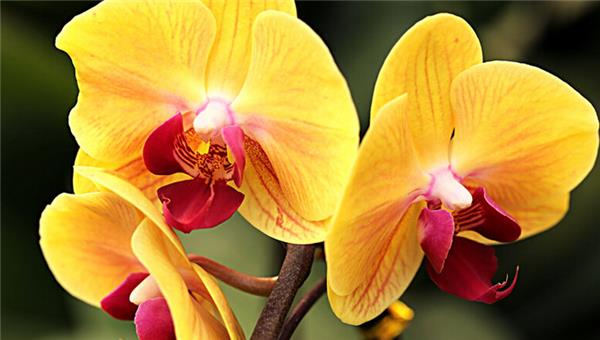
2. It is a "homing pigeon" that conveys friendship, love, and even family affection. Phalaenopsis has many very interesting meanings. For example, the flower language of Phalaenopsis is "I love you; happiness flies to you." It can be seen here that if a boy or a girl gives a Phalaenopsis, it is enough to embody the meaning they want to express. While being reserved, it also expresses their true feelings. For another example, white Phalaenopsis represents purity in love and precious friendship. If one day an old friend whom you have not been in contact with for a long time sends you a bunch of white Phalaenopsis, from the price and meaning of Phalaenopsis it can be seen that this friend places great importance on this relationship.
3. Phalaenopsis can beautify and purify the home. Phalaenopsis is the most beautiful among flowers. Using it to decorate a home is an unquestionable practice. Its beauty can surpass any other flower. How beautiful and vibrant a home with Phalaenopsis is can be imagined. At the same time, it can purify the home, absorb waste gases in the air, and then release the oxygen we need, achieving an air-exchange effect.
The above is the introduction to the cultivation methods of Phalaenopsis orchids that I have provided for everyone. I hope it can help everyone better understand Phalaenopsis orchids.
so that it cannot grow upward; let the wound dry or apply fungicide to disinfect and sterilize it, and after a period of time, 2 to 3 new shoots can grow from the stem nodes near the base; when the new shoots have grown larger and roots have emerged from the base, they can be cut off and planted separately, becoming a new plant.4. Stem-cutting propagation method
The principle of the stem-cutting propagation method is the same as that of the crown-cutting bud induction propagation method: it also destroys the stem-tip growing point to induce dormant buds to grow. Although there are 1 to 3 dormant buds in the leaf axils of a Phalaenopsis plant, most of them cannot sprout into plants. You can wait until the plant has continuously grown upward and the stem nodes are relatively long, then cut off the upper part of the plant with roots using a sterilized sharp blade or scissors, and plant it in a new pot so it continues to grow. The lower part with the rhizome left behind is given proper water management, and before long 1 to 3 new shoots can sprout (depending on the plant's own characteristics and the management method). If the plant's stem is relatively long, you may also consider cutting it into multiple sections. As long as each section has 2 to 3 internodes or is more than 2 to 3 cm long and has more than one root, it may grow into a new plant. However, if the plant's rhizome and roots have all dried up and died, this method is ineffective.
5. Tissue culture propagation method
Tissue culture asexual propagation is also called meristem propagation. Explants of Phalaenopsis such as stem tips, leaves, root tips, young flower stalks, flower stalk axillary buds, and flower stalk internodes can all be used for tissue culture asexual propagation. However, the commonly used explants are mainly flower stalk axillary buds, flower stalk internodes, or the leaves of small test-tube plantlets.
Besides its appearance, Phalaenopsis actually has many other uses. Let me introduce them to you below.
1. It serves as a standard for the quality of a home's air environment. Phalaenopsis likes high temperatures, high humidity, and a ventilated semi-shaded environment. It dislikes waterlogging and stuffy air. Its overwintering temperature should not be lower than 15 degrees. When it encounters cold, immediately move it indoors and maintain the temperature so it can overwinter safely. Phalaenopsis likes an environment with high air humidity and ventilation. Ventilation is the key to growing Phalaenopsis well, but it should avoid being blown by dry, hot wind. In northern winters, cultivation should not place it on radiators or directly facing air-conditioning airflow. Therefore, the more beautiful the Phalaenopsis that can be grown, the better the home environment there is and the more suitable it is for people to live in. In addition, red-centered Phalaenopsis means great fortune and a lifelong union; red Phalaenopsis represents a smooth career and happiness; striped Phalaenopsis represents everything going smoothly and wishes coming true; yellow Phalaenopsis implies a flourishing career and booming business; and mini Phalaenopsis can convey the blessings of a happy angel and vigorous youth.
2. It is a "homing pigeon" that conveys friendship, love, and even family affection. Phalaenopsis has many very interesting meanings. For example, the flower language of Phalaenopsis is "I love you; happiness flies to you." It can be seen here that if a boy or a girl gives a Phalaenopsis, it is enough to embody the meaning they want to express. While being reserved, it also expresses their true feelings. For another example, white Phalaenopsis represents purity in love and precious friendship. If one day an old friend whom you have not been in contact with for a long time sends you a bunch of white Phalaenopsis, from the price and meaning of Phalaenopsis it can be seen that this friend places great importance on this relationship.
3. Phalaenopsis can beautify and purify the home. Phalaenopsis is the most beautiful among flowers. Using it to decorate a home is an unquestionable practice. Its beauty can surpass any other flower. How beautiful and vibrant a home with Phalaenopsis is can be imagined. At the same time, it can purify the home, absorb waste gases in the air, and then release the oxygen we need, achieving an air-exchange effect.
The above is the introduction to the cultivation methods of Phalaenopsis orchids that I have provided for everyone. I hope it can help everyone better understand Phalaenopsis orchids.